
Halloween in Scotland has a flavor of its own. Long before plastic masks, Scots carved turnips, ducked for apples, and burned nuts.
There are six classic Halloween traditions in the country. These are:
Neep lanterns
Apple dookin'
Treacle scones
Nut burning
Guising
Kale pulling
Some were games and treats. Others involved disguise, protection or a peek at the future.
Records let us rebuild those nights. Luckily, several poems, newspaper columns and folklore recordings survive. Robert Burns's poem "Halloween" appeared in 1786. A University of St Andrews collection follows these customs through church minutes, travel books and local papers.
Here is what each custom involved, what people believed, and how it changed. We also keep evidence and legend apart. You can see what is documented and what is folklore.
Samhain and the Roots of Scottish Halloween
Samhain is a Celtic festival that marked the end of the harvest. It split the year into a light half and a dark half. In Gaelic Scotland, it fell on 1 November, and the celebrations began the night before. The National Records of Scotland translates the name as "summer's end."
Spirits and the Dead
People believe the line between worlds grew thin at this time. It would weaken, "allowing ancestors and fairies to roam." Dead relatives might visit as ghosts. Witches and fairies were thought to be out too.
Poet Alexander Montgomerie gave an early written hint in 1584. He described the fairy king and his court riding out on Halloween.
Fires and Protection
Bonfires called samhnagan burned until sunrise to keep evil spirits away. These fires were quite widespread, as church and travel records show:
| Date | Record | What it shows |
|---|---|---|
| 1648–49 | Cupar Presbytery, Fife | An order to abolish "superstitious fyres" before Hallow Eve |
| 1772 | Thomas Pennant's A Tour in Scotland | Bonfires in the Highlands and west |
Telling the Future
Most Halloween customs tried to predict love and marriage. Divination is a part of almost every custom below.
Old Roots, Later Records
Older writers often saw Samhain behind every Halloween custom. Careful writers today are less sure. The Celtic link is a tradition, not proven history. The earliest record of a specific custom is often far later than the festival itself.
Neep Lanterns: Scotland's Original Halloween Lanterns
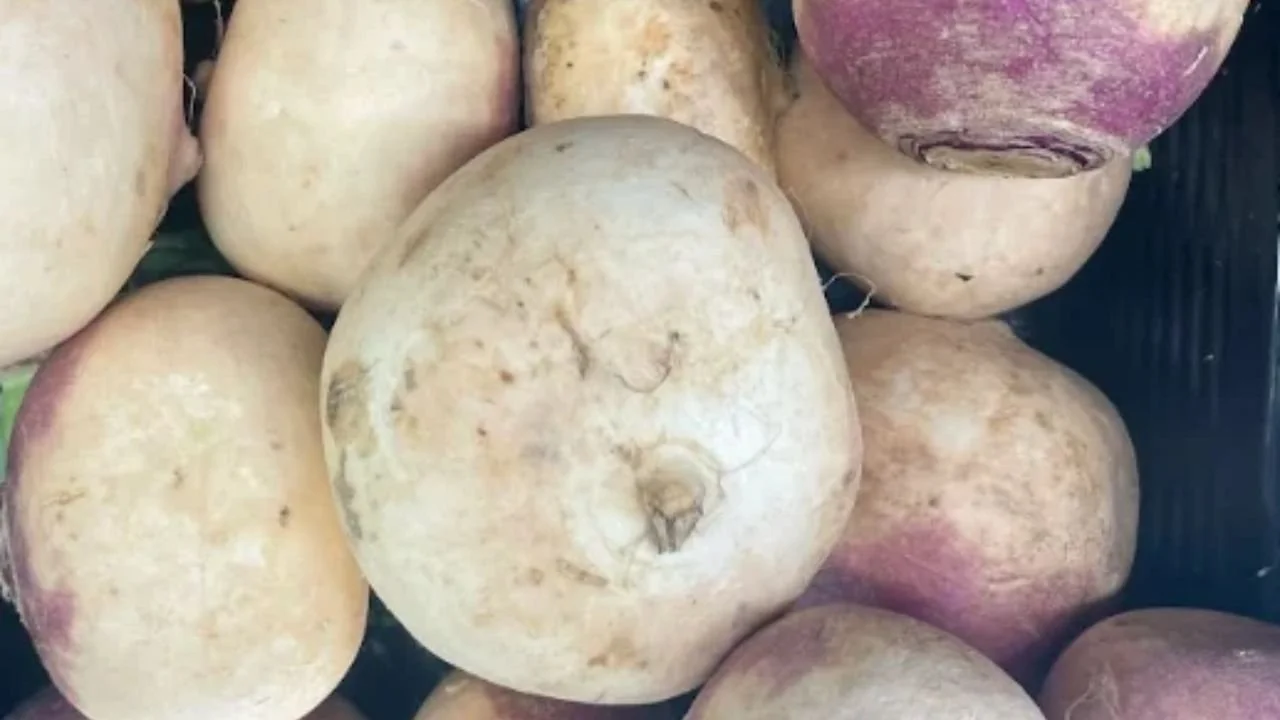
Scots call a turnip a neep. Another word is tumshie. Children hollowed one out, carved a grim face, and lit it from inside. The National Trust for Scotland calls these "tumshie lanterns." People believed the glow warded off evil spirits. Other accounts say the faces frightened fairies and ghosts.
Written records back this up. In an 1871 novel, C. Gibbon described village boys parading with "neep-lanterns," "turnips hollowed out, grotesque figures cut on the sides." A 1937 St Andrews Citizen piece described carving one into a skull.
The Hard Work of Carving One
Turnips have thick, hard flesh and tough skin. So, it takes much effort to cut and scoop them. It is way harder than carving a pumpkin. Here’s how it was done:
Cut a lid from the top.
Mark a border about 3cm in from the skin.
Scoop out the flesh.
Carve triangular eyes and a nose.
Add a tealight.
The leftover flesh becomes "champit neeps."
Neeps Versus Pumpkins
Turnips grow well in Scotland's cool, damp climate. Pumpkins arrived later and took over. Even so, loyalty lingers. At a 2003 Halloween festival in Huntly, organizers banned pumpkins and allowed only north-east neeps.
Apple Dookin': The Halloween Game of Apples and Water
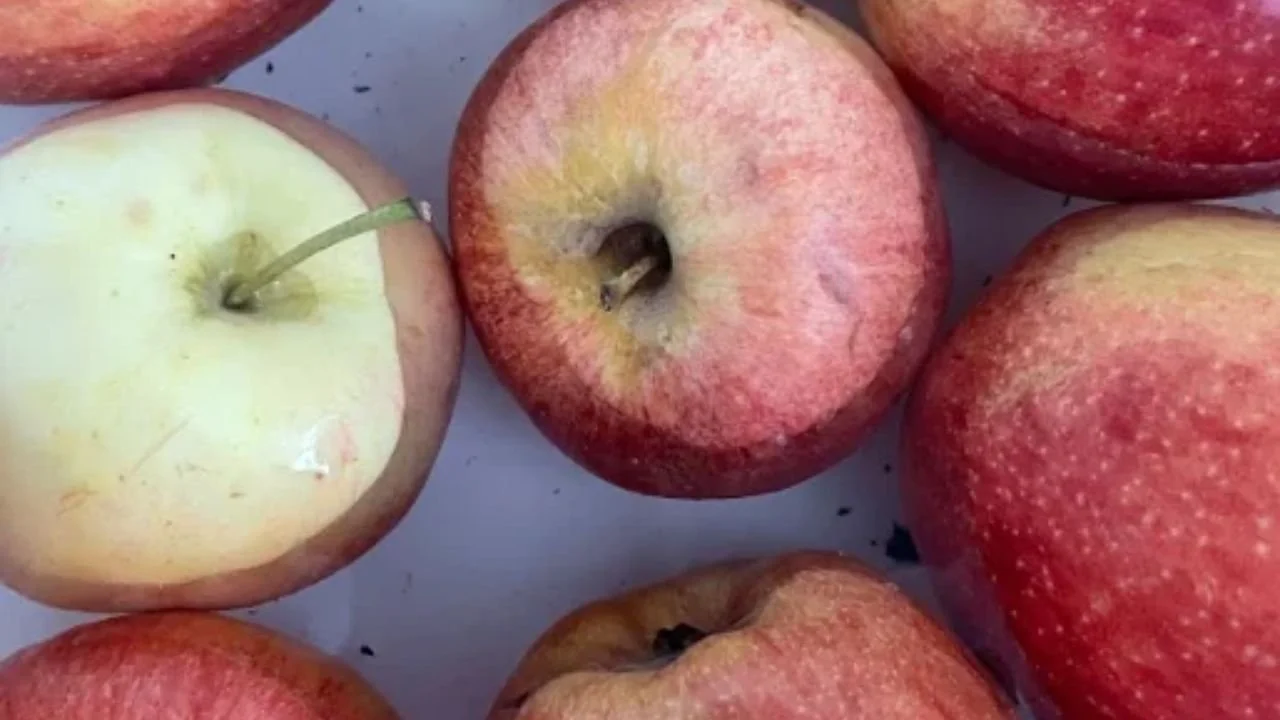
Dook is the Scots form of "duck." It means to plunge or dip. To dook for apples is to catch a floating apple with your teeth. English speakers call it apple bobbing.
Players keep their hands out of the game. Some versions add a twist:
Players spear a floating apple with a fork held in their teeth.
Players stand on a chair and spear an apple with a fork held in the mouth.
The game has a long paper trail. Dictionary entries from 1985 to 2003 record it in memoirs and school news.
Where Did It Come From?
Nobody knows for certain. It has been linked to an ancient Celtic tradition. But the Halloween link is unclear. A Scotsman columnist points to a pagan festival that held fruit sacred. That claim cites no source, so treat it as folklore, not proof. Apples also appear in divination. Burns's poem has a girl eat one before a mirror to glimpse her future husband.
Treacle Scones: A Sticky Halloween Challenge
Here the game turns messy. A scone coated in treacle hangs from a string. Players must bite it with no hands. This was a lived tradition. Margaret Fay Shaw's footage of South Uist in 1932 comes with a transcript. Children dooked for apples and ate treacle scones hung on strings.
Other voices confirm it:
Writer Christopher Rush recalled being "home to dooking for apples and eating treacle scones."
A 1993 Renfrewshire elders' forum described biting a treacle scone hanging from the ceiling.
The game fit neatly beside the others. It sat in the same evening as apple dookin', guising and the fireside charms.
Its origin is unclear. One Scotsman writer said she did not know it. A Glasgow friend had never played, so it may have been regional. A food feature suggests an older game came first. It used a candle and an apple spinning on a string.
Nut Burning: Could a Fire Predict Your Romantic Future?
Hazelnuts were thought to carry knowledge and wisdom. A couple would each name a nut and set the pair on the fire. Then they watched.
Nuts burning quietly together meant a happy union.
Nuts that hissed or crackled hinted at a stormy one.
That reading appears in Burns's poem that was published in the 1786 Kilmarnock edition. He added notes explaining the charms for readers outside the west of Scotland.
On South Uist in 1932, a pair of nuts that burst together meant "they were away together."
Not Everyone Read the Fire the Same Way
Folklore recordings show real variety. In 1964, William Forbes described the custom in Perthshire.
| Result | Reading |
|---|---|
| Burned together steadily | A good match |
| Burned to ash | The union would not prosper |
| Cracked or fused | A good sign |
| Cracked (Perthshire variant) | The person could make a wish |
| One jumped out | Trouble ahead |
The last reading comes from Simon Fraser University. Rules varied from place to place.
Guising: The Tradition Behind Scottish Trick-or-Treating
Guising means going out in disguise. Children went from house to house in costume. Unlike modern trick-or-treaters, they had to perform. A song, a joke, a trick or a recitation earned the reward. Some Scots also called it galoshin.
Why Disguise?
Costumes did more than entertain. Historic Environment Scotland notes that parents disguised children so fairies would not take them. Disguise may also have kept returning spirits from knowing you. Food was left out to soothe visiting spirits.
Halloween on South Uist, 1932
Hebridean children called the night Oidhche nan Cleas, the Night of Tricks. Costumes were made at home using:
Sheepskins
Haystack wigs
Sheep ears
Scraped-out skulls
One boy spent a whole day peeling the skin from a sheep skull for his mask. Guisers sang and told jokes. Canna House archivist Fiona Mackenzie links the costumes to Samhain's thin boundary between worlds. Disguise aimed to please spirits and win protection through winter.
From Nuts to Sweets
Rewards changed throughout the time. Early treats were often nuts, apples and other fruit. Later came chocolate and sweets.
The rules changed too. In the early 1900s, guising could run for weeks before settling on 31 October. Authorities worried it could hide child begging. A 1929 Aberdeen Press and Journal article, "Legality of Guising," covered a case under the Children Act. But the charge was dismissed.
Kale Pulling: Reading Your Future in a Vegetable
Kale once served mostly as cattle fodder. At Halloween it became a fortune-teller. Young people went to the garden after dark and closed their eyes or wore blindfolds. Then each pulled up a stalk.
What the Stalk Told You
People believed the stalk revealed a future partner:
Length and shape: The partner's height and figure.
Soil on the roots: Plenty meant wealth; a clean root meant lean times.
An 1892 Newcastle Courant wrote, "Each must pull the first stalk he comes to in the garden." An 1862 Newry Telegraph added, "hand-in-hand, with eyes shut." Both newspapers were published outside Scotland. However, they show that people knew about the custom beyond the country, too.
Burns and the Shetland Recordings
Burns's poem shows the practice in 1786, so it was well known by the late 1700s. A Shetland recording adds detail. A blindfolded woman was led to the kaleyard. She tied a garter to a stalk, pulled it, and hung it over her door. For a newly married woman, shoots on one side forecast her children.
Another Shetland speaker described "Casting Kale." Stalks were thrown into houses as a prank. So kale was both a charm and a joke.
How Scottish Halloween Traditions Have Changed
Here’s how traditions changed over time:
| Custom | Then | Now |
|---|---|---|
| Lanterns | Hollowed turnips | Mostly pumpkins |
| Guising | Songs, jokes and fruit | Often costumes and sweets |
| Games | Apple dookin', treacle scones | Less common |
| Fortune-telling | Nuts, kale, mirrors | Rare |
The decline is not new. In 1888, the Greenock Telegraph said Hallowe'en was "getting less" popular "every year."
Memory survives in the records. Poems, newspapers and oral histories all preserve what might be lost. Today a Scottish columnist feels pumpkins are crowding out older customs.
Place and family influenced every tradition. A friend in Glasgow had never played the treacle scone game. Perthshire read nuts differently from other regions. So there is no single Scottish Halloween.
What Scottish Halloween Traditions Teach Us About Dark History
Halloween customs show what people feared, valued, and hoped to learn. They feared spirits and valued marriage and luck. They also hoped to peek at the future.
A tradition means more once you check the records behind it. The same rule applies in New Orleans, too. The city has its own ghost stories, tied to events that left records. The 1788 Good Friday fire is one. Documents describe the fire, and legend adds the ghostly figures in the smoke. Hottest Hell Tours draws that same line.
Explore New Orleans Through Its Dark History with Hottest Hell Tours
Scottish Halloween customs show how folklore keeps old beliefs and fears alive. New Orleans has a similar history. Local legends, supernatural traditions, and documented events have shaped the city's identity over centuries. Looking into these stories reveals how people understood the world around them and what they feared.
Hottest Hell Tours explores this darker side of history through historian-led walking tours. Our groups are small, and each guide brings a different perspective to the route. The experience goes beyond familiar ghost stories to explore the history behind New Orleans' darker reputation.
If you enjoy uncovering the facts behind folklore, you can explore more stories on our blog. From historical events to the origins of local legends, these articles offer more ways to discover the stories that shaped New Orleans.
Frequently Asked Questions
1. Did Scotland celebrate Halloween?
Yes. Scots marked Halloween for centuries. Poet Alexander Montgomerie mentioned it in 1584, and Robert Burns published his poem "Halloween" in 1786. Customs included guising, apple dookin', nut burning, and kale pulling. Many are still remembered and enjoyed there today.
2. What are three main traditions that Scottish people do on Halloween?
Three classic traditions are guising, apple dookin' and carving neep lanterns. Children dress up and perform for treats, dunk for floating apples, and light carved turnips. Treacle scones, nut burning and kale pulling are also well known across Scotland today.
3. What is the Scottish name for Halloween?
In Scottish Gaelic, Halloween is Oidhche Shamhna, tied to the festival of Samhain. In the Hebrides it was also called Oidhche nan Cleas, the Night of Tricks. Older Scots writers spelled it Alhallow Evin. Today most Scots simply say Halloween.