
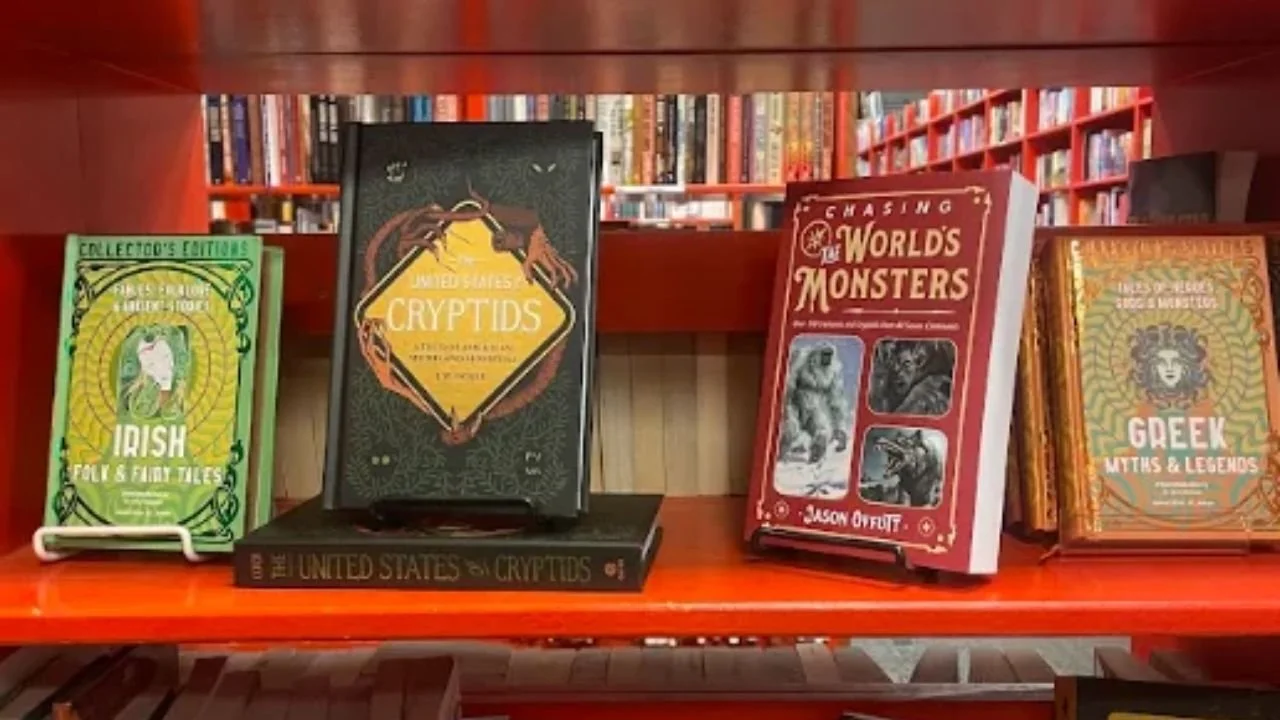
Massachusetts has more than witches and whaling tales. It also has creature legends that refuse to fade. Massachusetts cryptids range from a 1977 night sighting to tales of a huge swamp.
Here are the three best-known strands:
The Dover Demon: A short series of sightings in one small town.
The Bridgewater Triangle: A label for an area of southeastern Massachusetts, full of strange reports.
Pukwudgies: Beings from Indigenous storytelling that modern retellings often turn into monsters.
These stories differ. Some come from named eyewitnesses. Others come from older folklore. Many were retold so often that the source is hard to find.
No creature here has been confirmed as real.
The Dover Demon: Massachusetts' Most Famous Cryptid
The Dover Historical Society calls it an "alleged cryptozoological creature." It was sighted three times in Dover, Massachusetts, on April 21 and 22, 1977. Dover is about 15 miles south of Boston.
The Three Sightings
GBH's report names the three teenagers behind the reports:
| Witness | Age | When and where | What they reported |
|---|---|---|---|
| Bill Bartlett | 17 | April 21, driving on Farm Street | A creature on a rock with glowing eyes, like an animal's eyes in headlights |
| John Baxter | 15 | A few hours later, near midnight, Miller Hill Road | A bulbous head, long spindly arms and fingers, then it ran into the woods |
| Abby Brabham | 15 | The next night, in a car | Something like a naked child, but not like anything they had seen |
The whole series covered about 26 hours. That is a very short window.
The Sketches
Bartlett drew what he saw at home, on notebook paper. Baxter drew his version too. Researcher Belanger says the two drawings, side by side, show the same thing. Baxter's account adds a bulbous head and long, spindly limbs.
How One Weekend Became a Legend
Writer Loren Coleman put the story in his book Mysterious America. Belanger credits Coleman with the name "Dover Demon." The name came from the town, not from any belief that it was evil.
The legend grew from there. Locals kept telling the story. Books and news features repeated it. The Dover Historical Society sold a T-shirt with a cartoon of Bartlett's sketch. Its slogan read, "Dover Demon, do you believe?"
What Is Still Missing
No photo, video, or physical trace has been reported. Bartlett also described a possible second encounter about a year later. He heard a thump on his car and saw a blur. That was a personal impression, not confirmation.
Belanger says, "We don't know what it is." That is the honest summary.
What Makes a Creature a Cryptid?
A cryptid is an animal that some people say exists. Science has not confirmed it. The word comes from cryptozoology, the study of hidden animals.
Cryptids Versus Folklore
The terms overlap, but they also differ.
| Type | Core claim | Example |
|---|---|---|
| Cryptid | A real, unrecorded animal lives somewhere | The Dover Demon |
| Folklore creature | A being from stories and belief, often with a spiritual meaning | Spirits tied to a place |
| Paranormal claim | Something supernatural happened | Ghosts and strange lights |
Regional labels blur these lines. The Bridgewater Public Library describes the Triangle as a site of "alleged paranormal phenomena." That one label covers creatures, UFOs, and poltergeists together.
Reports Versus Proof
Eyewitness accounts, sketches, and old news stories are real records. They show what people said they saw and what a town talked about.
But they cannot prove a new species exists. Proof needs a body, bones, or clear DNA. A report records a story, but it does not record the creature.
The Bridgewater Triangle: A Hotspot for Strange Reports
The Bridgewater Triangle covers about 200 square miles of southeastern Massachusetts. The library does not give exact boundaries. This name was coined by Loren Coleman, a cryptozoologist from New England.
What People Report There
The library lists these "alleged paranormal phenomena":
UFOs
Poltergeists
Bigfoot-like creatures
Giant snakes
Thunderbirds
Joseph DeAndrade added to the lore. He founded the Bridgewater Triangle Expedition Team in 1985. In 1992, he started the Paranormal Investigation Organization. The library has his writings and clippings.
A Label, Not a Fact
The Triangle is a cultural label. No study has shown that odd events cluster there more than elsewhere. The library says it "does not endorse any of the claims" in its resources.
Still, the archive is useful. Its press coverage shows how the legend grew:
| Date | Headline |
|---|---|
| 5 Jul 1988 | "Bizarre Beings Lurk in Devil's Triangle over New England" |
| 16 May 1989 | "Investigators Explore Fearsome Swamp Known as America's Deadly Triangle of Terror" |
| 6 Apr 1998 | "Bigfoot of Bridgewater: Is it Man-beast or Hockomock Crock?" |
| 24 Oct 2003 | "A Tale for Halloween, The Bridgewater Triangle" |
The headlines grow louder over time. That shows how the story spread.
Hockomock Swamp and Its Reported Creatures
The swamp is the Triangle's best-known spot. The Bridgewater Public Library calls it a 16,950-acre wetland. It is the largest freshwater swamp in the state.
A Real Place with Real Wildlife
MassWildlife says the swamp spans parts of six towns. They are Bridgewater, Raynham, Easton, Norton, Taunton, and West Bridgewater. Its habitats include:
Red maple swamps
Atlantic white cedar bogs
Acidic fens
Marshes
Mixed hardwood, pine and hemlock forest
Lake Nippenicket, the Snake River and Gushee Pond lie within it. At least 13 rare and endangered plants and animals live there. The Hockomock Swamp Wildlife Management Area lists deer, coyotes, waterfowl, wading birds, reptiles and amphibians. The state-managed area is 6,157 acres, only part of the wider wetland.
The Stories
Over 50 years, people have reported strange lights, ghostly figures and beasts. Some saw Bigfoot-like beings. Others described huge winged creatures overhead.
MassWildlife calls these stories "alleged" and treats them with a wink. It does not confirm any creature. It even jokes that you should not wander too deep at sunset.
An Old Name with Meaning
Hockomock comes from an Algonquin word. It is translated as "place where spirits dwell." In Wampanoag tradition, the swamp was tied to Hobomock, the spirit of death. During King Philip's War in the 1670s, Wampanoag warriors used it as a stronghold. English soldiers reportedly called it "Devil's Swamp."
Why the Setting Feels So Spooky
A big wet forest is hard to cross and easy to get lost in. That does not prove a creature lives there. But it does show why the tales feel real to many people.
Pukwudgies: Indigenous Folklore and Modern Cryptid Culture
Pukwudgies are linked to Wampanoag storytelling. Our sources do not give a full or authoritative account of them. So we will not repeat popular retellings as fact.
Two Different Kinds of Story
There is an important divide here:
Traditional stories: Told within Indigenous communities, with their own meanings.
Modern retellings: Often cast Pukwudgies as small, dangerous forest creatures.
Triangle sighting claims: Recent reports that attach the name to the swamp.
These are not the same thing. Treating them as one story flattens a living culture.
What We Can Say with Confidence
The swamp's name connects to Wampanoag belief. MassWildlife links Hockomock to Hobomock, the spirit of death. That shows the area carried spiritual meaning long before cryptid writers arrived.
The Mashpee Wampanoag Tribe's museum is the best place to start for cultural context. It is the only museum devoted only to Wampanoag history. On English settlement, it calls the story one "only Wampanoag people can truly tell." It also honors a local storytelling center. The page does not mention Pukwudgies.
Handle with Care
No single version speaks for all Wampanoag beliefs. Anyone retelling these stories should name their sources. It’s important to not turn cultural material into pure monster lore.
What Does the Evidence Actually Tell Us?
The Dover Demon and the Triangle stories are very different kinds of evidence.
| Dover Demon | Bridgewater Triangle | |
|---|---|---|
| Time span | Two nights in 1977 | Decades of reports |
| Witnesses | Named teenagers | Many, often unnamed |
| Records | Sketches and later interviews | Newspapers and clippings |
| Physical proof | None reported | None confirmed |
Different Records Do Different Jobs
News reports from the time capture the first reaction. Later interviews add memory, and memory shifts. Archives show how a story spread. Each helps, but none proves an animal exists.
Why Matching Descriptions Are Not Proof
Bartlett's and Baxter's sketches look alike. That is interesting. Still, it does not prove a creature, since details can be shared. It does not prove a hoax either.
Natural Explanations
Skeptics have suggested an animal with mange, or an owl. Belanger rejects both. He notes that Bartlett had lived in Dover all his life. He would know deer, coyotes, and skunks.
Misidentification, memory, and retelling are fair ideas to test. But never treat them as automatic answers for every report. Belanger also notes no copycat sightings followed in nearly 50 years.
Unresolved Is Not the Same as Confirmed
An unsolved story is still just a story. A confirmed species needs physical evidence. The Dover Demon has none, and neither do the Triangle creatures.
Why Massachusetts Cryptid Legends Endure
Several things keep these stories alive:
Local identity: Dover and Bridgewater wear their legends with pride.
Newspapers: Decades of headlines kept the Triangle in view.
Oral storytelling: Tales change a little with each retelling.
Popular culture: Books, T-shirts and Halloween features spread them further.
One Short Case, One Wide Label
The Dover Demon story has a clear timeline and named witnesses. The Bridgewater Triangle covers a much larger area and includes many different reports. A place can become part of a legend without proving it is true. The real swamp gives these stories a setting.
These stories can remain important to local culture even without strong evidence. This lasting interest keeps people reading about them.
The Mystery Is in the Story
The Dover Demon is a brief set of sightings that became a local icon. The Bridgewater Triangle is a label that gathers many reports. Pukwudgies belong to a deeper tradition that deserves respect.
Tracing where a story came from can be as fun as the story. It makes you think about questions like: Who told it first? What did they see? What did later tellers add?
That is how Hottest Hell Tours works in New Orleans. Our guides say they will tell you in advance when they share legend or lore. They clearly state that they are "not interested in presenting them as documented facts." Our signature walk, Walking the Devil's Empire, puts documented history first.
Respecting a legend and presenting it as fact are two different things. Good storytelling keeps them apart.
Frequently Asked Questions
1. Which US state has the most cryptids?
No official count exists, so no state can claim the title. Washington is tied to Bigfoot, New Jersey to the Jersey Devil, and West Virginia to Mothman. Massachusetts has the Dover Demon and Triangle stories, and many states have more.
2. What are the most famous cryptids in the world?
The best-known cryptids include Bigfoot, the Loch Ness Monster, the Yeti, the Chupacabra and Mothman. Each began with reported sightings first. None has been confirmed by science. No body or bones have ever been recovered, tested or shown to experts.
3. Are there any cryptids that might be real?
No cryptid has been confirmed. History holds surprises, though. The giant squid was long seen as sailors' legend before it was photographed alive. The coelacanth, thought extinct, was found in 1938. Both needed physical proof to count as real species.
4. What is the most famous cryptid in America?
Bigfoot is America's best-known cryptid. Reports describe a tall, hairy, ape-like creature, mostly in forests of the Pacific Northwest. Sightings and footprint casts exist. Science has not confirmed the animal, and nobody has been found despite decades of searching today.