
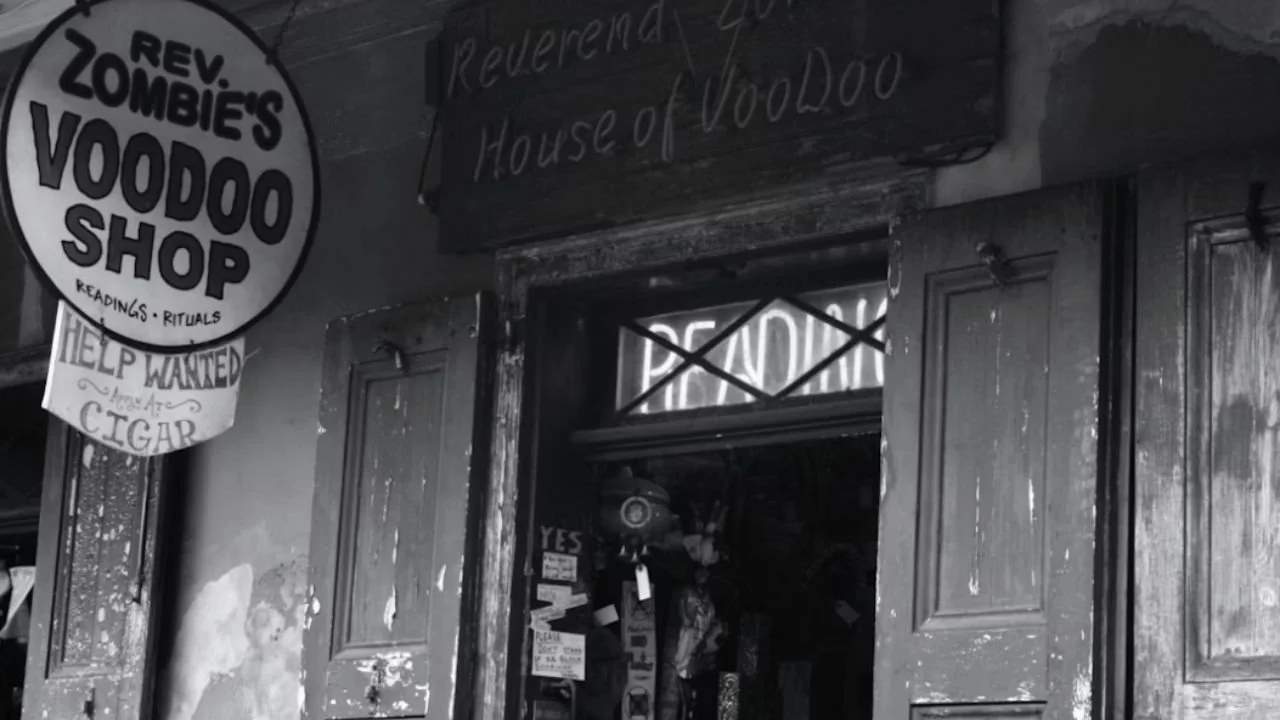
New Orleans is famous for Voodoo. Walk through the French Quarter and you will see Voodoo dolls in shop windows. But locals talk about something else too; Hoodoo. Often, they mash both words into one phrase, "Voodoo Hoodoo." This mix causes real confusion for visitors.
Voodoo and Hoodoo are not the same thing. One is a religion. The other is a system of folk magic. They grew up side by side in this city and share deep roots. But they are two different traditions, each with its own job to do.
Where the Confusion Started
New Orleans was once a major port city. Ships arrived from West Africa, Haiti, Cuba, and the wider Caribbean. Enslaved people carried their spiritual practices with them. Free people of color did too. Over time, these practices blended together in one place.
Cuban Santeros settled here. So did Haitian-trained Mambos and Houngans. Rootworkers came from Belize, the Bahamas, and the Dominican Republic. Followers of the Yoruba tradition arrived from Nigeria. Native American spirituality mixed in as well. One example is still honored today. The Sauk war leader Black Hawk. Local Spiritualist churches treat him as a Voodoo Saint.
As all this blended, language blended too. Southern African Americans often used the word "hoodoo." White New Orleanians often said "voodoo" for the very same practices. Over generations, the two words melted together in everyday speech. That is why you still hear "Voodoo Hoodoo" used as one term today.
But inside the tradition itself, practitioners know the difference well.
What Is New Orleans Voodoo?
Voodoo is a religion. The word itself is believed to mean "spirit of God." Believers hold that one Creator exists above everything. This distant Creator is sometimes called Bondye or Grand Maître. Below the Creator are many spirits, known as the Loa.
The Loa handles the daily business of life. They deal with family, love, money, health, and justice. People build relationships with them through prayer and ritual. Despite its scary reputation in movies, Voodoo is mostly about healing.
New Orleans Voodoo is sometimes called Creole Voodoo. It grew from West African Dahomean traditions and Central African beliefs. It shares roots with Haitian Vodou, but it is not the same religion.
Here is why they split apart. Slave owners banned African religious practice outright. Enslaved people were forced to convert to Catholicism instead. In response, they quietly matched their Loa to Catholic saints with similar traits. This let the old religion survive, hidden inside a new one. Under the cover of Catholic worship, Voodoo lived on.
Meet the Loa
The Loa are not gods in themselves. They act as go-betweens for people and the Creator. Each Loa has a distinct personality. Each one has favorite colors, foods, and rhythms. Practitioners do not just pray to a Loa. They serve them, the way you might care for a respected elder.
The Loa are grouped into families, sometimes called nations. Two major ones are Rada and Petro. Rada spirits are described as "cool." They trace back to Africa's old Dahomey kingdom. Petro spirits are described as "hot." They are said to have formed in Haiti, born out of the pain of slavery. Neither group is simply good or bad. Both kinds can heal. Both kinds can also be called on to cause harm.
The most famous Loa are known as the Seven African Powers. They trace back to the Yoruba people of Nigeria. A few examples include:
Papa Legba: Guardian of the crossroads. He opens and closes the path between people and spirits. Because of this, he is always called on first in any ceremony.
Oshun: The Loa of romantic love, beauty, and luxury.
Ogun: The Loa of iron, war, and hard labor.
Each Loa is paired with a Catholic saint who shares similar traits. Papa Legba, for instance, is linked to St. Peter and, in some traditions, St. Anthony. This pairing is not confusing on the practitioner's part. Believers know exactly who they are speaking to. The saint and the Loa are treated as close companions, not the same being.
Marie Laveau, the Voodoo Queen
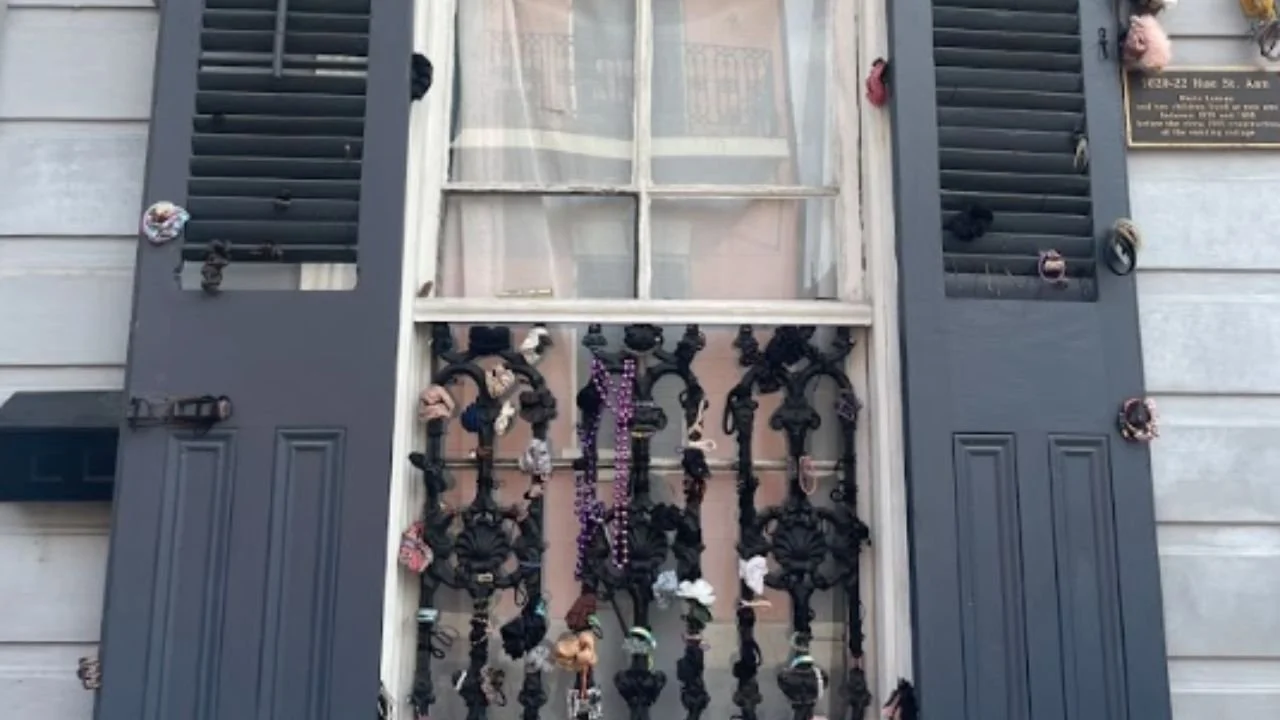
No talk of New Orleans Voodoo skips Marie Laveau. Records show she was born a free woman of color in September 1801. In 1819, she married Jacques Paris at St. Louis Cathedral.
Laveau became known across the city as its Voodoo Queen. She held ceremonies at her home on St. Ann Street. She also held gatherings at Congo Square and Lake Pontchartrain. Each June, she was said to lead the St. John's Eve rites. This is a major ritual night held by the water.
Laveau was also a lifelong, devout Catholic. She nursed the sick during yellow fever outbreaks. She visited prisoners and helped the poor. Historians note that solid records tying her directly to Voodoo mostly begin around 1850. Much of her wider legend grew after she died in 1881. She was laid to rest in St. Louis Cemetery No. 1, where her tomb still draws visitors today.
Voodoo Dolls and Zombies: Myth vs. Practice
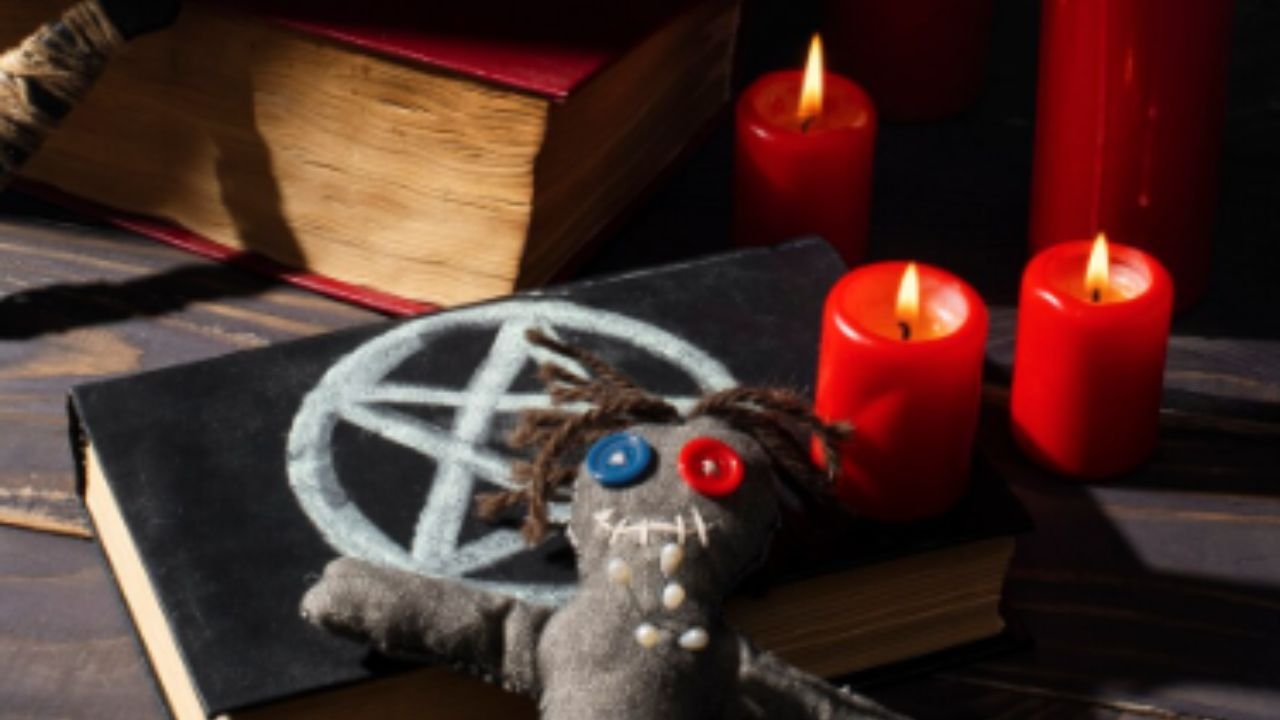
Movies love Voodoo dolls used for revenge. Real practice tells a different story. A Voodoo doll is one type of gris-gris, a term for a charm or ritual object. Traditionally, it represents a deity or gives a spirit a place to stay. Most practitioners avoid using dolls to cause harm. In fact, many rootworkers say most doll work centers on healing, love, and guidance instead. Today, most dolls sold in shops are simple souvenirs, not ritual tools.
Zombies also come from Voodoo folklore. In the old stories, a zombie is a person who appears to have died and come back. But in the tradition, that person never truly died at all. Old folklore describes a sorcerer using powerful means to control the person's will. Very few people have ever claimed to witness this firsthand. Zombies remain far more legend than documented fact.
What Is Hoodoo?
Now for Hoodoo. Unlike Voodoo, it is not a religion. It has no gods of its own, no doctrine, and no congregation. Hoodoo is a system of folk magic. It grew out of the daily lives of enslaved and free African Americans across the South.
The goal of Hoodoo is practical, not spiritual devotion. People turn to it to improve daily life. Common goals include love, money, luck, health, justice, and protection. Hoodoo borrows from many sources at once. It pulls from African folklore, Native American herbalism, and older European magic traditions. It also leans heavily on the Bible, especially the Book of Psalms.
The word "hoodoo" shows up in many forms. It can name the whole practice, as in "hoodoo." It can name a person, as in "she's a hoodoo woman." It also works as a verb, as in "he hoodooed her." Other common names for this same practice include conjure, conjuration, and rootwork.
Core Hoodoo Practices
Hoodoo has its own toolkit of techniques. Here are some of the most common ones.
Crossing and uncrossing: Crossing means placing bad luck or harm on someone. Uncrossing means removing that harm afterward. They are two sides of the same coin.
Foot track magic: This involves placing powder where a target is sure to walk. Tradition holds that harm enters the body through the feet. Only a skilled rootworker is said to undo it.
Laying tricks: This means hiding charms in specific, meaningful spots. A trick might get buried in a yard, hidden under a doorstep, or sewn into clothing. Crossroads are a favorite spot too, often used to dispose of old ritual items or invite change.
Floor washes: These use scented liquids, often Florida Water, to clean floors. Washing starts at the back of a home. It ends at the front door. The idea is to sweep out bad energy and invite good luck inside.
Spiritual baths:These combine herbs, oils, and prayer to cleanse a person. Washing in a downward motion is meant to remove negativity. Washing upward is meant to draw luck in.
Gris-gris bags: A gris-gris bag is a small pouch filled with herbs, roots, or other charged items. Each ingredient is chosen with a clear purpose, such as love, money, or protection.
Candles, Colors, and Psalms
Candle work is a major part of Hoodoo practice. A candle's color is usually matched to its purpose. Green stands for money. Red stands for love and courage. White is used for cleansing and clarity. Black is used to remove negativity. Rootworkers often dress a candle with oil before lighting it. Then they speak a prayer or Psalm while it burns down.
The Book of Psalms plays a big role in Hoodoo work. This habit traces back to old European ideas about hidden Bible codes. The belief holds that certain verses carry real spiritual power. Different Psalms are read for different needs. One might be recited for safe travel. Another might be read to ease a headache. Another still might be used for luck in a court case.
The Hoodoo Altar
Most rootworkers keep some kind of home altar. It does not need to be elaborate. A small table, box, or shelf works fine. A basic altar starts with a white cloth on top. Two white candles usually sit at the back. A saint's image often stands between them. Incense burns near the center. A bowl of blessed water is often kept close by.
Voodoo and Hoodoo, Side by Side
Here is a simple way to see the difference:
Voodoo is a religion. Hoodoo is a system of folk magic.
Voodoo centers on spirits called the Loa. Hoodoo centers on tools like roots, herbs, and charms.
Voodoo often calls for community ritual. Hoodoo can be practiced alone at home.
Voodoo's main goal is spiritual connection and healing. Hoodoo's main goal is a practical result in daily life.
Even so, these two traditions overlap constantly in New Orleans. Many Voodoo practitioners use Hoodoo techniques inside their rituals. Many rootworkers, in turn, call on Voodoo Loa and Catholic saints for their own charms. That overlap is exactly why locals often just call the whole blend "Voodoo Hoodoo."
A Living Tradition
Voodoo and Hoodoo are not museum pieces frozen in the past. Real people practice both today, in New Orleans and far beyond it. Both traditions carry real history within them. They carry the memory of people who kept their culture alive against brutal odds.
That history deserves care and accuracy, not costume-shop stereotypes. Next time you see a Voodoo doll, you'll know its real story. The same goes for gris-gris bags.
See It For Yourself
Reading about Voodoo and Hoodoo only goes so far. For a closer look at New Orleans history, join Walking the Devil’s Empire Tour. This adults-only tour brings the city’s darker history to life through real stories, local knowledge, and expert research.
The tour begins at Armstrong Park, on the edge of the French Quarter. Depending on the guide, the route may include Marie Laveau’s former home. Along the way, guests can learn about her life, influence, and place in New Orleans history.
The experience goes far beyond one famous figure. Guides cover murder, music, organized crime, witchcraft, disease, and other dark chapters of the city’s past. The stories come from research, not cheap scares or made-up legends.
Small groups keep the experience personal, with no more than 20 guests. The team includes historians and local experts who know the city well. For anyone who wants to see the real history behind New Orleans’ haunted reputation, this is where the story gets much closer to home.
FAQs
Is there a difference between Voodoo and Hoodoo?
Yes, there is a real difference. Voodoo is a religion, with spirits called the Loa. Hoodoo is a system of folk magic. It does not require gods or church.
Does New Orleans have Voodoo or Hoodoo?
New Orleans has both. Locals often call the mix "Voodoo Hoodoo." Voodoo brings the religion and its spirits. Hoodoo brings the folk magic, charms, and roots used in daily life.
What are the three types of Voodoo?
Voodoo has three main branches. West African Vodun is the original form. Haitian Vodou grew from slavery and Catholicism. Louisiana Voodoo, New Orleans' version, blends African, Catholic, and Native traditions.