
New Orleans has never followed the rules of an ordinary Southern city. The French built its bones, and the Spanish rebuilt its oldest buildings. Irish immigrants dug canals, Italians created the muffaletta, and Haitian style shaped its homes. Voodoo arrived on slave ships and never fully left. The city takes pleasure seriously, and it always has. It's the kind of place where a madam could quietly run the show for thirty years. That madam was Norma Wallace. From the 1920s through the early 1960s, she ran New Orleans' most famous brothel. Mayors, gangsters, movie stars, and police chiefs all answered her call. This is her story.
From Norma Badon to Norma Wallace
She was born Norma Badon, most likely in 1901. No one knows her exact birthday for certain. Norma shaved years off her age for her entire life. Even her obituary in The Times-Picayune got her age wrong. She grew up poor, and she remembered begging for food as a child. For a while, she sold her own body on the street. But Norma decided early that she wanted to be a madam. She never wanted to stay a sex worker.
At fifteen, she met a bootlegger named Wallace. She called him the love of her life. She never married him, yet she took his last name anyway. Wallace once shot her in the ankle during their relationship. Norma shrugged it off, mostly because he gave her a seven-carat diamond ring to apologize. From then on, she was known as Norma Wallace.
Pete Herman's Loan and Her First Brothel
Norma needed money to open her first brothel. She turned to Peter Gulotta, a boxer who fought as Pete Herman. Herman stood just 5 feet 2 inches tall. He was a tough, well-connected bantamweight champion. Herman loaned Norma enough money to get started. That loan launched one of the most famous businesses in New Orleans history. By the 1920s, Norma was earning $100,000 a year. That was an enormous sum of money at the time. It made her one of the wealthiest women in the city.
The Legendary House at 1026 Conti Street
In June 1938, Norma purchased the house at 1026 Conti Street. It sat on the western edge of the French Quarter. This address had once belonged to photographer Ernest J. Bellocq. By day, Bellocq photographed ships and machinery for a living. By night, he wandered Storyville's opium dens with his camera. He took haunting candid photos of the people he found there. Those photos are far more famous today than his daytime work.
Golf Bag Sammie Hunt helped Norma buy the property. Hunt was a Chicago gangster from the Al Capone era. He was born in Alabama and carried his machine guns in a golf bag. Hunt bought Norma mink coats along with the Conti Street house. That house became her most famous and longest-running brothel.
Life Inside the Brothel
Norma ran a strict, lavish, and discreet house. She banned two things above all else: drugs and pimps. Parrots and monkeys, though, were always welcome. The parrots lived in a cage at the bottom of the staircase. They squawked insults at anyone climbing up to the third floor. That third floor was where the strip tease shows happened.
Norma also had progressive ideas for her time. She believed there were three genders: male, female, and what she called "the otherwise." She made sure all three felt welcome inside her house. She also helped her own workers rise in the business. If a woman wanted to open her own brothel, Norma offered advice freely. She believed New Orleans had a bottomless market for vice.
To dodge the police, Norma created a code word: Vidalia. She used it to describe anything connected to her business. An inexperienced client who wanted a cheap visit was called a "vidalia on holiday." Cab drivers picked up the term too, sending her clients this way. Even her financial books used the code word instead of dollar amounts.
The Woman Who Ran New Orleans
Politicians rarely bothered Norma, mostly because many of them were her clients. She kept a little black book full of details about them. Birthmarks, unusual features, anything memorable went into that book. If a politician caused her trouble, Norma reminded him what she knew. Most of them decided it was smarter to leave her alone.
One night, the city hosted a convention full of visiting mayors. A group of them ended up at Norma's house on Conti Street. As they were leaving, Norma spotted police officers patrolling outside. She called her brother-in-law, Gasper Gulotta, known as the Little Mayor of Bourbon Street. Norma warned him that arresting these men could cause an international incident. When he corrected her, guessing she meant a national incident, she held firm. One of 'em is the mayor of Barcelona, she told him. Gulotta used his influence, and the police backed off.
The police loved Norma for a simple reason. She often made them look good. Several times, she learned that a wanted criminal planned to visit her house. In 1936, she helped set up the capture of Alvin "Creepy" Karpis. Karpis was Public Enemy Number One, as feared as John Dillinger. Norma arranged his capture almost perfectly for the police. Afterward, she told reporters it was all clever police work. In return, the police made sure her house was never raided.
Marriages, Romances, and a Restaurant Called Tchoupitoulas Plantation
Norma married five times, but she kept the name Wallace throughout. Her romances included the gangster Golf Bag Sammie Hunt and entertainer Phil Harris. She also had a relationship with a champion bantamweight boxer. Norma had a clear weakness for men she probably shouldn't have wanted.
Every evening followed the same pattern. Norma woke at noon and sipped coffee to start her day. The first clients arrived around 7pm, and she worked all night. She dressed well, carried herself with style, and never argued with customers. She simply kept the business running smoothly.
At one point, Norma tried a different kind of business. She opened a restaurant called Tchoupitoulas Plantation. It did well for a while, but Norma found it exhausting. A restaurant needs a big kitchen, good cooks, and constant work. A brothel, by comparison, only needed a house, some women, and fresh linens. Running a brothel suited her far better than running a restaurant.
Arrest, Retirement, and Final Years
In 1962, police arrested Norma for running a house of prostitution. It was her first and only conviction. She served three months in jail before her release in 1963. Norma found the experience humiliating and low-class. As soon as she got out, she quit the business for good.
In 1965, at 64 years old, Norma married her fifth husband, Wayne Bernard. In reality, Bernard was about 39 years younger than her. Her wedding certificate listed a false birth year to hide the gap. The couple moved to the small rural town of Bush, Louisiana. City life had shaped Norma, and country living never quite fit. Neighbors often questioned why such a young man had married her. Norma would simply say she was a rich old lady supporting him.
Death and Legacy
Norma died on December 14, 1974, at Ochsner Foundation Hospital. She died from a self-inflicted gunshot wound to the head. By all accounts, she had grown bored with life. Boredom was something Norma never tolerated well.
Before she died, Norma recorded her memories onto tape. On one recording, she admitted something telling. I still miss the action, she said. That single line captured her entire career.
Today, some historians view Norma's story differently than she did. A newer generation of feminist historians calls her business a form of resistance. Norma never saw it that way herself. To her, it was simply a straight business.
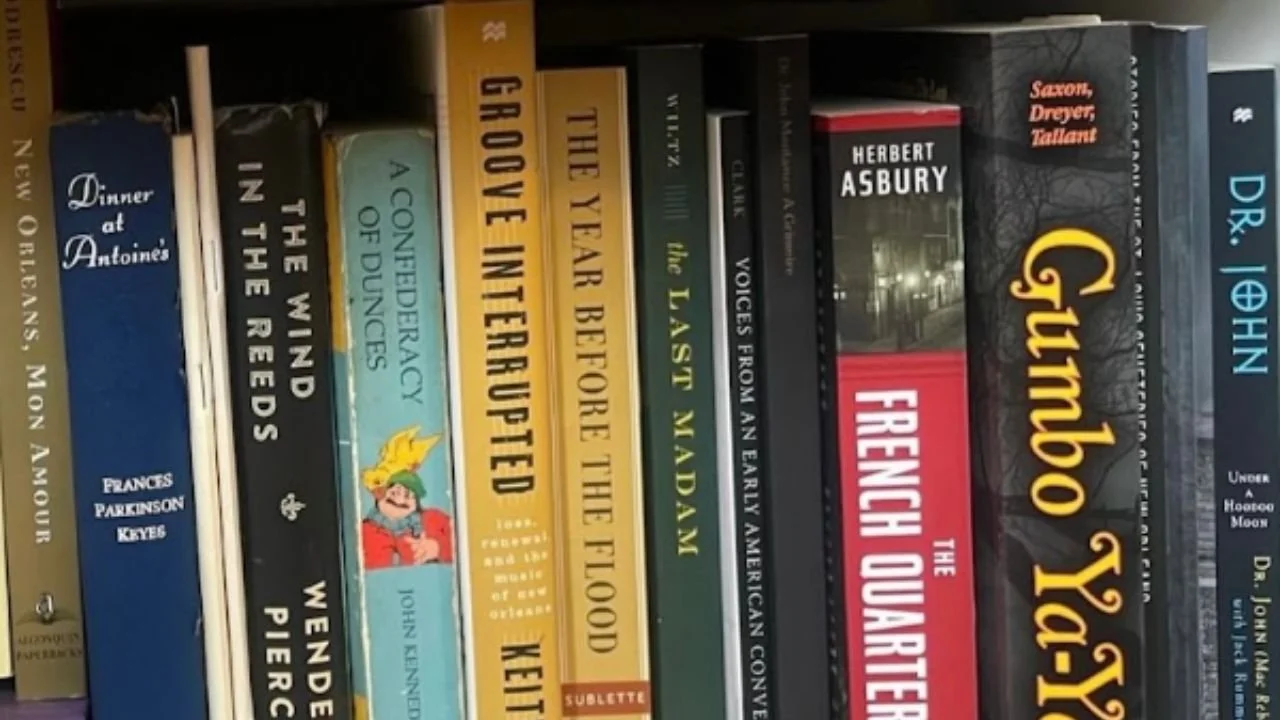
Hurricane Katrina damaged 1026 Conti Street badly in August 2005. A contractor later bought the building and restored it with care. Author Christine Wiltz told Norma's full story in her book, The Last Madam. That book has since become a play, and it remains optioned for film.
Hottest Hell Tours: Keeping Norma's New Orleans Alive
Norma Wallace ran her empire from the same streets Hottest Hell Tours walks today. Her house at 1026 Conti Street still stands on the edge of the French Quarter. Guests on Walking the Devil's Empire tour pass through this same historic ground. That tour covers true crime, the American Mafia, and figures just like Norma. Guides share stories about the people who really ran New Orleans after dark.
Norma proved that power in this city doesn't always wear a badge or a title. Sometimes it wears mink coats and keeps a little black book instead. Hottest Hell Tours exists to tell those overlooked stories properly. Every walk uncovers another layer of the city's hidden history. If Norma's story caught your attention, there's plenty more where that came from. Book a tour, walk the same streets she once ruled, and hear the rest.
FAQs
What was Norma Wallace known for?
Norma Wallace was known as the last widely recognized madam of New Orleans. She operated a legal-style brothel before prostitution laws changed. Later, she became a local personality and shared stories about the city's past.
What was Norma Wallace's real name?
Norma Wallace was born Norma Badon. After marriage, she became known as Norma Wallace. She later gained local fame as a successful businesswoman and one of New Orleans' most well-known former madams.
What was Norma Wallace's childhood like?
Norma Wallace grew up in rural Louisiana during the Great Depression. Her family had limited money, and she learned to work hard from an early age. Those early experiences shaped her determination and strong personality later in life.