
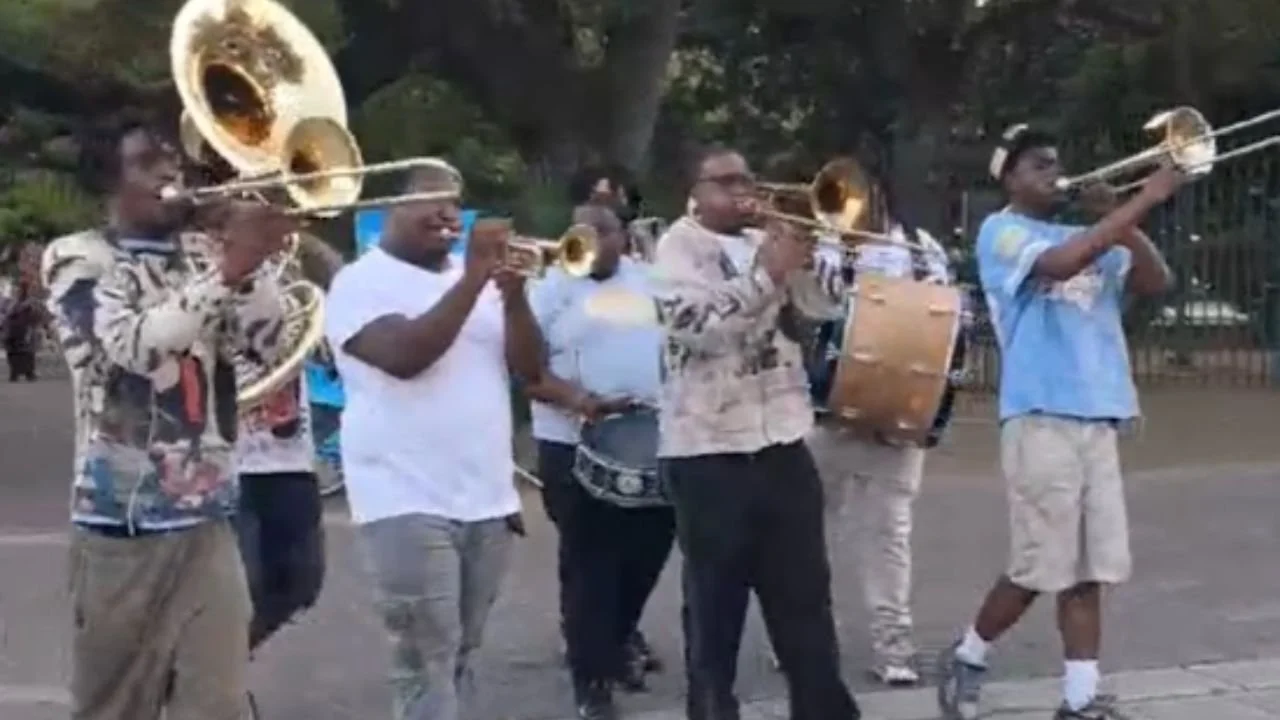
New Orleans second lines feel spontaneous. They are not. Behind every brass band and every dancing crowd sits over two centuries of organizing, grief, and joy. To understand the parade, you have to understand the people who built it.
A Celebration That Set the Tone
On June 11, 1864, Black New Orleanians gathered to mark a turning point. The Civil War still raged. But Louisiana had just adopted a constitution ending slavery. Thousands filled Congo Square that day. They came to hear speeches, sing, and celebrate freedom together.
Black community organizations helped plan the entire event. The Société d'Economie et d'Assistance Mutuelle took a leading role. Alongside it stood groups like the Artisan and Amis societies. Federal troops, local politicians, and schoolchildren joined them too.
After the speeches ended, a parade began. Marchers moved through the city in four organized divisions. They walked alongside United States soldiers through streets. This was no small gesture. Only weeks earlier, many marchers had been enslaved. Now they claimed the South's largest city as their own.
Roots That Reach Back Even Further
This celebration did not appear out of nowhere. It grew from decades of Black community organizing in New Orleans. That history stretches back to at least 1783. That year, the Perseverance Benevolent and Mutual Aid Association formed. It became the first of many such groups.
Fraternal orders, Masonic lodges, and mutual aid societies followed. Together, they built a tradition of public advocacy and celebration. That tradition would echo through later movements. Civil rights demonstrations drew on the same organizing spirit. So did cultural institutions like the Mardi Gras Indians. Social Aid and Pleasure Clubs carry that legacy forward today.
The Économie and the Meaning of Mutual Aid
One organization stood out before the Civil War. Local free Black leaders, including many educators, founded the Société d'Economie in 1836. Members called it the Économie for short. Its founding documents named virtue and morality as guiding values. Their stated mission was simple: relieve human suffering.
Most Économie members were French-speaking Afro-Creoles. Their rights were already limited under Louisiana law. Those limits grew tighter as the Civil War approached. New laws forced a rigid racial binary onto the city. At the same time, the Black share of New Orleans's population shrank sharply, falling from 40 percent to 15 percent in just two decades.
Given these mounting pressures, the Économie's work became more urgent. It kept fighting for civil rights well after the war ended.
A City Transformed by Migration
The end of the Civil War reshaped New Orleans entirely. Americans moved west, no longer restricted by slavery debates. Others headed south, chasing opportunity or reform. Rural families across the region moved toward cities.
Formerly enslaved people made up a major part of that shift. Many had spent years in forced labor camps. New Orleans's Black population had stood near 25,000 when the war began. By 1880, that number had more than doubled.
These demographic changes pushed social organizations to adapt quickly. The old models could no longer meet the moment.
Clubs Multiply Across the City
Voluntary organizations surged nationwide during this period. New Orleans was no exception. Benevolent groups, unions, fraternal orders, and political clubs multiplied fast. Masonic lodges and literary societies joined the mix too.
These groups served very different purposes. Together, they gave new arrivals a sense of belonging. They offered practical support to a growing working and middle class. By the turn of the 20th century, estimates put the number of Black organizations above 200. Roughly half of the city's Black population belonged to at least one.
Older groups from before the war kept operating too. The Économie remained especially active. It provided services while racial boundaries hardened around it. Civil and political rights stayed fiercely contested for Black citizens throughout this era.
Beyond Funerals: The Business of Care
Health and end-of-life support formed the backbone of most clubs. This mattered enormously before modern healthcare existed. Government social services barely existed either. Joining a benevolent society was often the only reliable path to medical treatment.
Sick members received visits from registered or affiliated physicians. Fellow members checked in and offered support. When a member died, the club paid for funeral services. Those services often included a solemn procession set to music.
Clubs did far more than manage illness and death, though. They hosted meetings, picnics, and social gatherings all year. These events kept communities connected between hard times.
Parading as an Act of Reclaiming Space
Parades soon became central to club life. Marching through the streets was a visible claim to public space. That claim mattered because political gains from the Civil War were being rolled back through new laws.
In 1875, Économie members voted on a striking resolution. It required formal black-and-white attire for special parades and funerals. Members also debated what music should accompany these processions. Meeting minutes, written entirely in French, recorded their answer using one English phrase: "brass band."
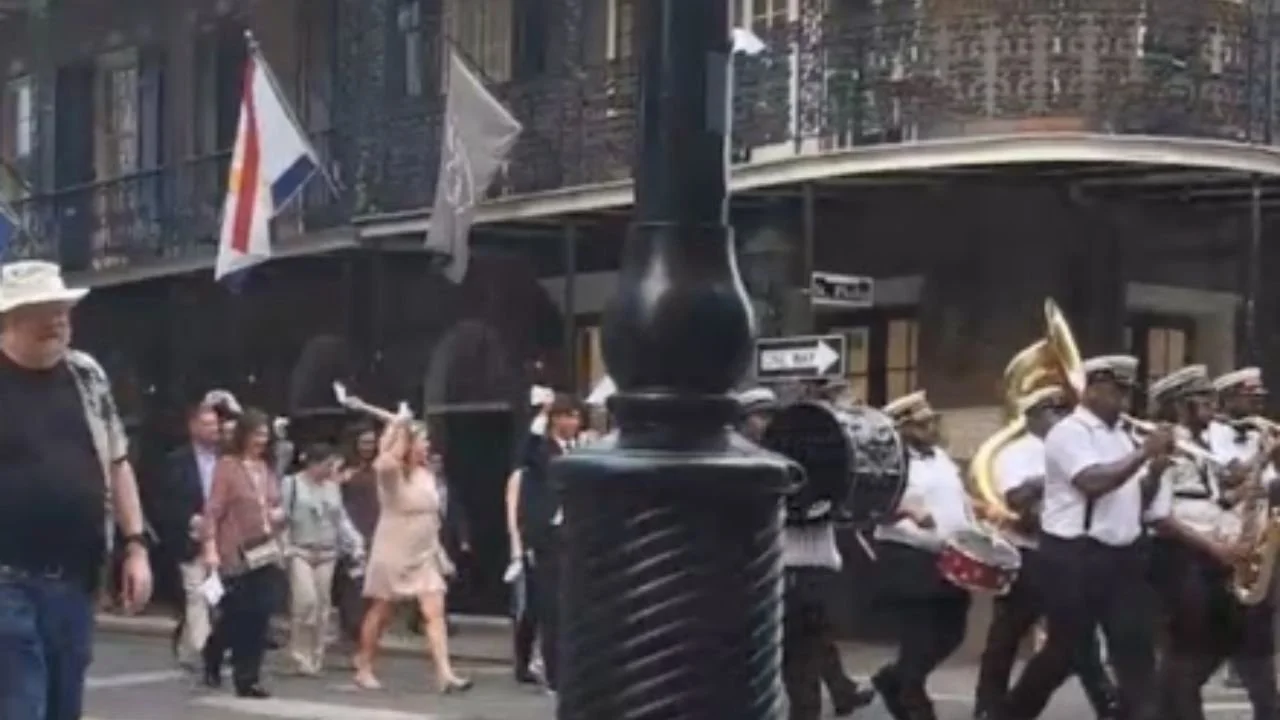
That English term stood out deliberately. French had no equivalent word for what was emerging. This sound was something new and distinctly American. In 1883, the Économie extended brass band parades to its annual anniversary celebrations. That anniversary parade tradition never really stopped. Today, we call it the second line.
From Benevolent Societies to Pleasure Clubs
The 20th century brought fresh changes to Black organizational life. Many older mutual aid societies declined or closed entirely. Membership needs shifted as healthcare became more institutionalized.
Community organizing did not disappear, though. New groups stepped into that space. The NAACP, its Youth Council, and New Orleans CORE emerged. The Urban League and Tamborine and Fan joined the fight for equality too.
By midcentury, a new model had taken hold: the Social Aid and Pleasure Club. Neighborhood ties, not professions, now defined the membership. These clubs still supported charitable causes and community events. But healthcare had largely moved to other institutions.
Mostly, these clubs did one thing above all. They paraded, keeping a 19th-century tradition alive on 20th-century streets.
Walking Through the History Behind the Rhythm
Second lines are living history lessons set to a brass band beat. Every parade route retraces ground that Black New Orleanians fought to claim. Understanding that story changes how you experience the sound and movement.
New Orleans holds this layered history across its French Quarter streets. Guided walking tours offer one of the best ways to explore it in depth.
Exploring the City's Hidden Past on Foot
Hottest Hell Tours offers guided walks that delve into the people, places, and events that shaped New Orleans. The Walking the Devil's Empire Tour explores the city's darker history, covering topics such as murder, organized crime, Voodoo, Storyville, and more. The tour also visits historic locations connected to these stories, including Congo Square and Lafitte's Blacksmith Shop.
For another perspective on the city's history, The Garden District Tour explores the Garden District through stories of true crime, Storyville, sex work, jazz, and notable New Orleanians. The tour also examines the area's connections to figures such as Anne Rice, Louis Armstrong, Jelly Roll Morton, Tom Anderson, Lulu White, Josie Arlington, and Willie Piazza.
Together, these tours offer different ways to explore the history and culture of New Orleans on foot. Walking through these historic areas adds a sense of place to the stories behind the city. It's one thing to read about the people and events that shaped New Orleans. It's another to encounter the locations connected to them firsthand.
FAQs
What is the history of the Second Line Parade in New Orleans?
Second line parades began in New Orleans in the late 1800s. They grew from African American traditions, jazz funerals, and Social Aid and Pleasure Clubs. Over time, they became joyful community events that celebrate music, culture, family, and neighborhood pride.
How to get a second line parade in New Orleans?
To have a second line parade, you usually work with a local Social Aid and Pleasure Club or a parade planning company. You also need city permits, a police escort, and a brass band. Planning early helps everything run smoothly.
Why do they call it the second line?
The "first line" is the main group, including the brass band and the people leading the parade. The "second line" is everyone who follows behind. Friends, family, and visitors dance, wave handkerchiefs, and enjoy the celebration together.