
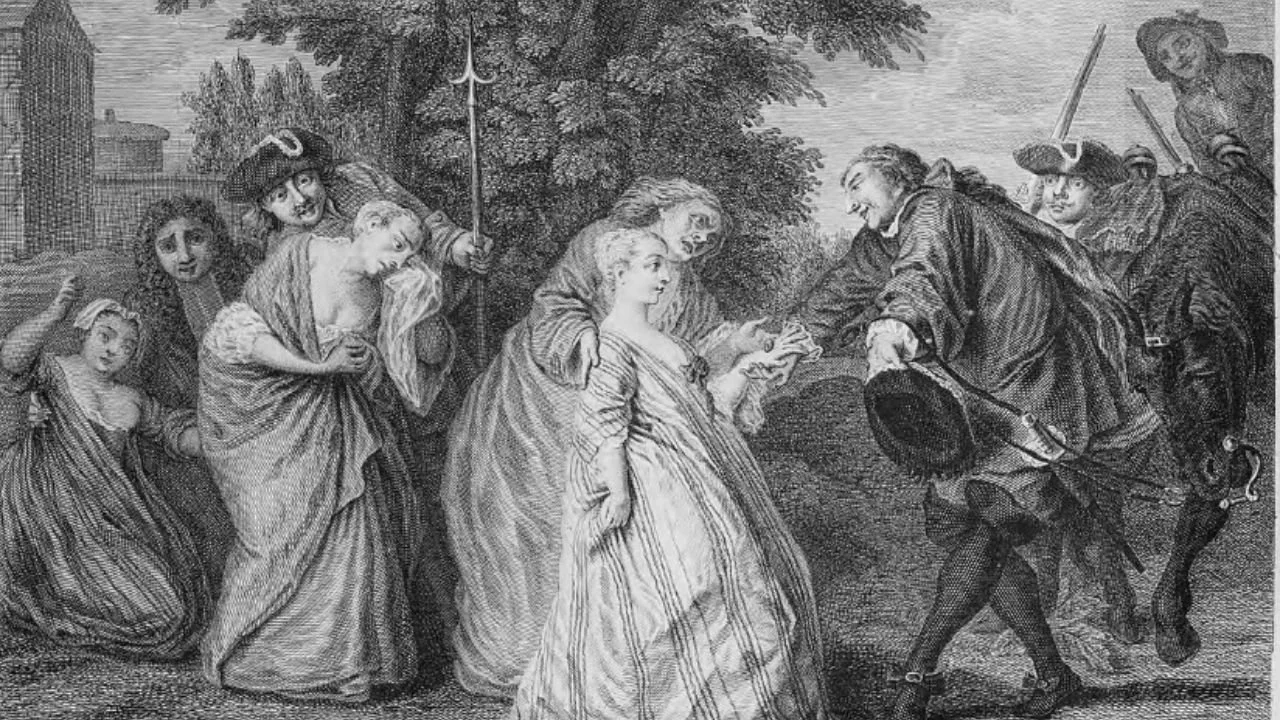
The stories of vampires in New Orleans did not appear overnight. They formed slowly through fear, memory, rumor, and belief. Each legend reflects how people explain what they cannot understand. Over time, these stories became part of the city’s emotional landscape. Some feel symbolic, while others feel unsettlingly personal. Together, they reveal how myth grows from real human experience.
These five legends continue to surface in local folklore and oral history. They move through whispers, not history books. Each one carries fear, fascination, and cultural meaning.
Why New Orleans Became America’s Vampire Capital
New Orleans began in 1718 as a fragile colonial outpost. From the start, the city carried fear, loss, and uncertainty. Early settlers faced floods, disease, and brutal living conditions. Survival shaped daily life and spiritual thinking.
Over time, waves of migration changed everything. French colonists arrived first, followed by Spanish rule. Later, African, Caribbean, German, Italian, and Irish communities joined the city’s population. Each group carried stories, rituals, and belief systems. Together, they created a shared supernatural language.
Yellow fever epidemics left deep scars across generations. Families watched loved ones die quickly and without warning. Cemeteries filled faster than communities could process grief. Because of this, death never felt distant or abstract. It stayed close to daily life and memory.
European vampire folklore arrived through French and Spanish traditions. Caribbean beliefs about spirits and the dead added new layers. African spiritual systems shaped how people understood life, death, and the soul. Over time, these traditions blended into something uniquely local.
Stories of restless spirits became part of daily conversation. Tales of the undead felt believable in a city shaped by plague and loss. Fear mixed with faith, and myth mixed with memory. As a result, folklore became part of identity.
Vampire legends did not appear from nowhere. They grew from shared trauma, migration, and belief. Over generations, these stories rooted themselves into streets, buildings, and neighborhoods. That is how the city became a natural home for vampire lore.
Anne Rice, Pop Culture, and the Vampire Identity
Anne Rice changed how the world sees New Orleans. Her books, The Vampire Chronicles, placed the city at the center of modern vampire culture. These stories did not treat vampires as distant monsters. Instead, they made them emotional, human, and deeply tied to place.
Her characters moved through real streets, real neighborhoods, and real buildings. Because of that, the city became part of the mythology. Readers began to associate New Orleans with beauty, darkness, and immortal memory. Over time, fiction reshaped how the world imagined the city.
Later, television strengthened this image. The series The Originals used New Orleans as a supernatural stage. Its stories mixed family power, ancient vampires, and historic streets. This made the city feel timeless and haunted at once.
Films, books, and tours followed this same path. Pop culture kept repeating the vampire image. As a result, the legend became global.
New Orleans no longer felt like just a setting. It became a symbol of vampire mythology itself. Fiction, history, and folklore blended into one identity. That blend still shapes how visitors experience the city today.
Legend 1: Casket Girls Arrive Mysteriously
The Casquette Girls story began in 1727 with fear and confusion. Young French women arrived in colonial Louisiana with small wooden chests. These boxes held clothes, letters, and personal items. However, locals mistook the chests for coffins. That misunderstanding quickly sparked rumors across the fragile colony.
The women were taken to the Old Ursuline Convent on Chartres Street, the oldest building in the Mississippi Valley. Ursuline nuns accompanied them for protection and guidance. Community stories soon focused on the convent’s attic windows. According to long-standing local accounts, an Archbishop sealed those attic windows. The sealed windows were reportedly never officially reopened. Because of that detail, the legend gained a physical place and lasting mystery.
Over time, fear reshaped truth into folklore. Stories turned settlers into symbols of darkness. Yet the women were sent to build families and stability. Still, anxious communities often transform history into myth. This legend shows how easily fear becomes folklore.
What this legend reflects
Fear of outsiders in unstable colonial settlements
Anxiety about cultural change and unfamiliar traditions
Suspicion toward women arriving without family ties
Power of place in shaping supernatural belief
Legend 2: Juliet Haunts a Royal Street Hotel
Stories of Juliet move quietly through local folklore. Her spirit is linked to a historic hotel near the 900 block of Royal Street. Visitors describe a young woman bound to grief and longing. According to local accounts, her presence feels gentle rather than threatening.
Guests report very specific experiences inside the building. Many describe sudden cold air near upper-floor hallways. Others mention soft footsteps outside their rooms late at night. Several visitors speak about doors opening without clear cause. A frequently mentioned location is an upper-floor guest room often linked to the legend. While the exact room number shifts across stories, the same hallway appears again and again in witness reports.
Hotel staff do not officially promote the story. However, employees quietly acknowledge the repeated guest reports. Because of this, the legend feels rooted in place instead of rumor alone.
Juliet’s story feels shaped by loss, not violence. Her presence carries sadness rather than fear. Unlike darker vampire legends, this tale feels intimate and human.
Why the legend endures
Emotional attachment to a real historic building
Romantic grief narratives that feel personal
Witness reports tied to specific rooms and hallways
Oral storytelling passed through local experience
Legend 3: The Tall Vampire of Royal Street
This legend feels darker because it carries a place and a timeline. Reports place the figure near the corner of Royal and Ursulines Street. Stories trace sightings back to the early 1900s in old French Quarter records. People still claim encounters along the same stretch of street today. This consistency gives the legend weight and a sense of continuity.
Witnesses rarely describe violence, but they describe deep emotional unease. Most accounts focus on presence, stillness, and an unnatural calm energy. Fear grows from silence, not action, and that makes it feel believable.
First-person style witness accounts:
“I saw a tall pale man standing under a dim streetlamp.”
“He did not move, but I felt watched the entire time.”
“The street felt wrong, like the air had changed suddenly.”
People often describe the same strange details across different decades.
These patterns make the story feel shared rather than imagined.
Common elements in reported sightings:
Detail: Location
Description: Royal Street near Ursulines
Detail: Era
Description: Reports dating back to early 1900s
Detail: Movement
Description: Still, slow, or silent motion
Detail: Behavior
Description: Watching instead of attacking
Detail: Emotional effect
Description: Unease, tension, and fear
This legend survives because it feels grounded in place and memory. Stories grow stronger when fear feels familiar and tied to real streets.
Legend 4: Blood-Red Moon Society Rituals
The Blood-Red Moon Society exists in local rumor and underground lore. This legend blends rumor with real subculture in New Orleans. Stories speak of secret gatherings tied to ritual symbolism. However, the roots connect to an actual vampire community that exists in the city today. New Orleans hosts the Anne Rice Vampire Ball. It’s a documented cultural event that draws self-identified vampires from across the country. Journalists, writers, and cultural researchers have written about these gatherings. It gives the legend a real-world foundation.
Ritual language is often misunderstood by outsiders. In many accounts, “blood symbolism” refers to symbolic practices such as ritual markings, red wine ceremonies, or meditative group rituals that emphasize identity, belonging, and shared belief systems. However, the New Orleans vampire scene is not a single unified community but a collection of overlapping groups with distinct practices and beliefs. While many participants describe ethical and symbolic traditions, other accounts acknowledge that some individuals engage in real blood drinking, including human or animal blood, and that instances of violence, harm, or predatory behavior have occurred. Because of these differences, practices within these communities cannot be understood through symbolism alone and require careful attention to their varied contexts and risks.
At the same time, secrecy shapes public perception. Hidden communities often feel frightening to outsiders. As stories spread, private belief systems transform into supernatural myths. Over time, imagination fills the gaps that facts do not explain.
What this legend reflects
Fear of underground spiritual communities
Anxiety around misunderstood identity groups
Curiosity about ritual symbolism and secrecy
Cultural fear of hidden belief systems
Why These Legends Still Matter
These stories survive because they feel human. They reflect fear, grief, and uncertainty. They reflect cultural tension and social memory. Each legend holds emotional truth, even without factual proof.
Vampire myths are not just horror stories. They are cultural mirrors and show what people fear most. The stories reveal what communities struggle to explain.
The legends of vampires in New Orleans live because the city remembers. Memory shapes myth, which shapes identity. Identity shapes tradition.
These stories continue because people keep telling them. And as long as they are told, they remain alive.
Where These Legends Come Alive
Hottest Hell Tours treats vampire legends with care and historical respect. Stories are never exaggerated for cheap fear or empty drama. Each narrative stays grounded in real history and lived experience. Truth always comes before spectacle in every story we share.
Our tours explore the emotional roots of New Orleans folklore. They focus on people, memory, and cultural meaning. Myth becomes meaningful when it stays human and honest. Fear becomes powerful when it feels real and grounded.
Guests do not hear fantasy versions of the city. They experience layered stories shaped by history and belief. Every legend connects to real streets and real spaces. Context always comes before shock and spectacle. History stays central in every experience we offer. Our guests leave with a deeper understanding of the living city, its memory, and its hidden histories.