
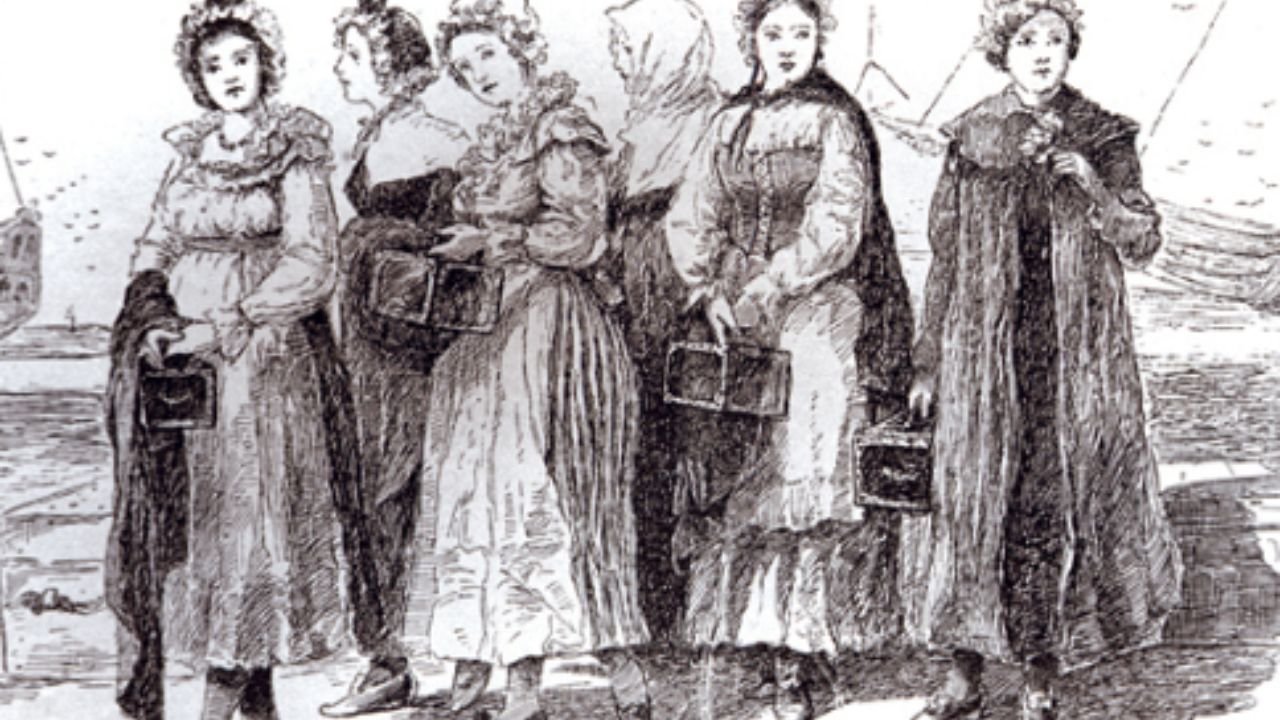
The casket girls in New Orleans were young women sent from France more than 290 years ago. Their story blends real colonial history with eerie legends that still surface among locals and visitors today.
In this city of layered culture and shadowed streets, their tale stands out not just for its age. It stands out for the strange myths that grew up around it.
Who Were the Casket Girls?
The term casket girls may sound unsettling, but its meaning is much simpler. It comes from the French phrase filles à la cassette, or “girls with little chests.” These cassettes were small wooden boxes used to carry clothing and personal belongings. Over time, the word was misheard in English as “casket,” and the name remained.
These women were sent from France in the early 1700s to support the growth of French Louisiana. At the time, the colony had far more men than women, and officials wanted to encourage marriage and long-term settlement. Bringing women across the Atlantic was seen as a practical way to build stable communities.
However, the historical record shows a very different picture from the simplified version often told.
Between 1719 and 1721, a total of five ships carried 258 women from Paris and Rochefort to the Gulf Coast. Importantly, none of these ships docked in New Orleans. Instead, they arrived at earlier colonial settlements such as Biloxi and Dauphin Island, which served as key entry points into the region at the time.
The voyages were as follows:
La Marie (August 1719) – Docked at Dauphin Island with 14 women, all from La Force, the criminal division of the Salpêtrière institution in Paris.
Les Deux Frères (August 1719) – Docked in Biloxi with 34 women, including 18 from a Rochefort poorhouse and 16 from La Force.
Maréchal de Villars (September 1719) – Carried 20 women from a Rochefort poorhouse (exact docking location unknown).
La Mutine (February 1720) – Arrived in Biloxi with 94 women, largely exiles from La Force.
La Baleine (January 1721) – Docked in Biloxi with 96 women, including 29 orphans and 67 from La Force.
These details challenge the common idea that all “casket girls” were carefully selected, virtuous brides. In reality, the group was mixed:
29 were orphans, often seen as the most suitable for marriage,
35 came from poorhouses,
194 were from La Force, a facility associated with incarceration and reform.
Most of the women were between 18 and 25 years old, though ages ranged from 12 to 38. A few had family connections; two were sisters, and another pair were twins. But most arrived knowing only those they had traveled with.
The Voyage and the Reality of Arrival
The journey across the Atlantic was long and difficult, often lasting several months. Conditions on board were cramped, unsanitary, and exhausting. Many passengers suffered from seasickness, disease, and poor nutrition, and some did not survive the journey.
Ships frequently stopped in Caribbean ports for supplies, but the overall experience remained harsh. These women were not simply travelers. They were being relocated under structured arrangements meant to shape the future of the colony.
Another common misconception is that these women arrived directly into New Orleans as it is often imagined. In reality, they first reached Gulf Coast settlements like Biloxi and Dauphin Island, which were still developing and far more rugged at the time of their arrival between 1719 and 1721.
By contrast, New Orleans in 1728 and later years had already begun evolving into a more organized city, especially after Antoine Pauger introduced the grid layout that still defines the French Quarter today. This makes it clear that many popular timelines confuse later developments with the much earlier arrival of these women.
In truth, the women entered a colonial world that was still in its early, uncertain stages. Their journeys were not just about marriage, they were forced to be part of a broader effort to populate and stabilize a challenging and often unforgiving frontier.
The Petticoat Rebellion: When the Casket Girls Refused to Settle
Stories about early colonial Louisiana often include a dramatic episode called the Petticoat Rebellion, where the so-called casket girls supposedly refused to live with their husbands until conditions improved. It’s an engaging narrative. But there is no historical evidence that such an event ever took place.
The story appears to be a later invention, part of local folklore rather than documented history. While it reflects the very real hardships these women likely faced, there are no contemporary records showing any organized protest or collective refusal to marry or settle.
Life in early settlements like Biloxi and Dauphin Island was undeniably difficult. Housing was basic, supplies were limited, and the environment was harsh. It’s understandable that many of the women may have been shocked by these conditions after arriving from France.
However, the idea that they staged a coordinated rebellion demanding better homes is not supported by historical documentation. Colonial records from the period focus more on settlement logistics and population growth than on acts of resistance like this.
That said, removing the myth doesn’t diminish the women’s experiences. These were individuals who endured long sea voyages and adapted to a challenging new world. Their resilience and contributions were real, even if the Petticoat Rebellion itself was not.
In short, the story is best understood as a myth inspired by real hardships, rather than an actual historical event.
The Real History Behind the Name
History tells us that the casket girls were real people, not myth. They helped shape early New Orleans society. The small chests they brought likely held basic clothing and a few personal items, though details vary and are not always well documented, especially since many of the women came from institutions such as poorhouses and prisons, including La Force. Their arrival was still seen as a practical response to a pressing colonial issue: the imbalance between men and women in French Louisiana and the need to establish more stable communities and families.
French settlers wanted a stable, flourishing settlement. Sending young women with some training in domestic life seemed wise. The idea that Ursuline nuns oversaw and cared for these women is part of a later myth. In reality, the women were housed in places like Biloxi and Dauphin Island after their arrival. Men from the colony traveled there to meet them, and those who married were then brought back to New Orleans, where they became part of the developing community.
Despite these facts, over time people began to confuse reality with speculation and superstition. The word casket sounds ominous even today. That’s why, later storytellers leaned into that image to build more dramatic tales.
From Suitcases to Supernatural
From the earliest days of New Orleans, rumor and storytelling were a part of life. They were as staple as cooking, music, and religion. New Orleans blended French Catholic traditions with African, Spanish, Native American, and Caribbean influence. In that mix, it was easy for legends to take root.
In the decades after the girls arrived, stories began circulating that the casket girls in New Orleans weren’t just ordinary women. Some claimed their chests were more like coffins. Others said the girls were pale and quiet in a way that seemed unnatural.
So, rather quickly, the real history of these women became tangled with rumors and spooky speculation.
The Ursuline Convent and the Attic Story
One of the most enduring parts of the legend involves the Ursuline Convent itself. The old building still stands in the French Quarter. It is one of the oldest structures in the Mississippi Valley.
According to legend, once the girls were ready to move on, whether through marriage or other arrangements, their small chests were placed in the convent’s attic for storage. Later, when the nuns reportedly returned to retrieve these belongings, they were said to have discovered that the chests were mysteriously empty.
Now here’s where the line between legend and history gets fuzzier. Some tellers of the story say that the boxes were found empty. So, something supernatural must have happened. One version even claims the nuns sealed the attic with nails blessed by the Pope himself. This detail appeared long after the girls lived there. As such, it has no historical verification.
In truth, the convent’s attic has been used for storage and official archives over time. The Ursuline sisters did not promote the vampire stories. Local historians point out that there’s no evidence that attic nails were blessed by a pope or that the girls brought anything dangerous with them.
Where the Vampire Legend Came From
New Orleans has a long fascination with the eerie and supernatural. It’s a place where ghost tours stroll past dead‑end alleys and candlelit courtyards. Stories about vampires, spirits and unexplained happenings fit well with the city’s dramatic past.
So when people saw the wooden boxes that looked like small coffins, their imagination started working. They started saying they contained something darker than dresses. Over time, that idea took on a life of its own. Writers, storytellers, and later tour guides leaned into the tale. They added details like missing contents, sealed attics, and shadowy figures.
Most of the supposed evidence for this part of the story is anecdotal. It is not backed by credible records. Accounts of bodies drained of blood, mysterious deaths, or things moving in the attic are all part of the folklore, not documented fact.
Yet the legend persists because, well, it makes a good story.
Why the Legend Endures
New Orleans loves its myths almost as much as its music but sometimes forgets the real history behind the myths. History is not always just a collection of dates and names but focuses on the experiences of everyday people and what they went through to make New Orleans a permanent colony. Yet today, it is commonly understood that here, the truth is often far stranger than fiction.
The story of the casket girls in New Orleans gets retold because it is eerie and easy to remember. It is connected to a real historic place. People like to imagine that something mystical or unexplained could slip into the ordinary. And when you walk by the Old Ursuline Convent on Chartres Street, you’ll know why the mind wanders.
Anne Rice and the Rise of New Orleans Vampire Legends
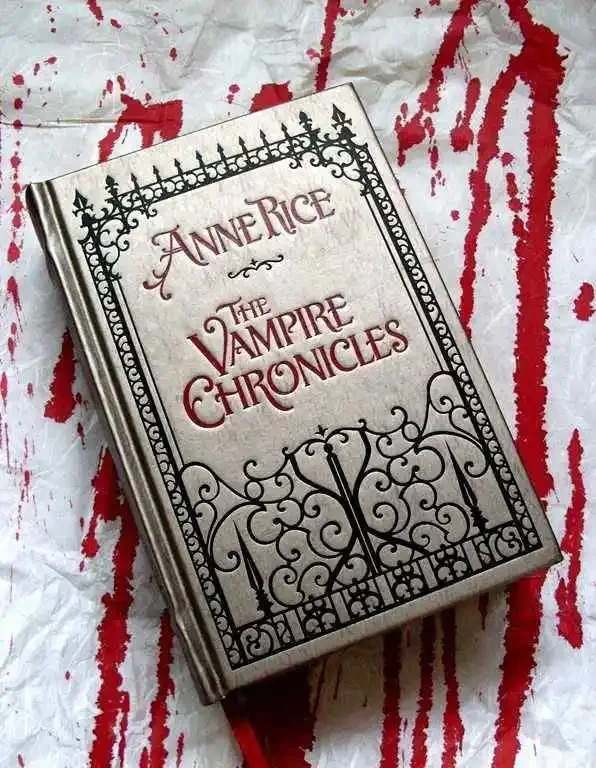
Modern vampire stories have played a major role in shaping how people view the casket girls today. Much of that shift can be traced back to the work of Anne Rice, one of New Orleans’ most iconic writers. Her novels helped transform the city into one of the most recognizable vampire settings in modern fiction.
In 1976, Anne Rice published Interview with the Vampire, introducing readers to a dark, atmospheric version of New Orleans. With its grand mansions, quiet cemeteries, and shadow-filled streets, the city became the perfect gothic backdrop. As the book gained popularity, New Orleans quickly became associated with vampire lore in the public imagination.
Her later works, including The Vampire Chronicles, expanded that world even further. These stories explored themes of immortality, identity, and history, often set in real, recognizable locations throughout the city. In many ways, New Orleans itself became a character within her writing.
The 1994 film adaptation of Interview with the Vampire brought this vision to a global audience, drawing visitors who were eager to experience the city’s haunting beauty and mysterious reputation.
As vampire fiction grew in popularity, local folklore began to shift as well. Stories about the casket girls, once rooted in colonial history, started to take on a more supernatural tone. One popular legend claimed that their wooden chests carried vampires instead of personal belongings. Another suggested that the attic of the Old Ursuline Convent was sealed to contain something dark that arrived with them.
There is no historical evidence to support these claims. Records consistently show that the women carried personal belongings in their small cassettes. Still, the blending of fiction and folklore helped these myths gain traction, especially as vampire culture became more mainstream.
Today, this connection between literature and legend is something we explore on our Garden District tour. As part of the experience, we dive into the life and influence of Anne Rice, including how her work reshaped New Orleans’ identity in popular culture. Alongside stories of scandal, true crime, and hidden history, her legacy adds another layer to understanding how myth and reality intertwine in the city.
The evolution of the casket girls’ story is a perfect example of how narratives change over time. History provides the foundation, but literature, imagination, and storytelling continue to reshape how that history is remembered.
Because of this cultural moment, the casket girls became part of a larger vampire narrative. Because of this cultural shift, the casket girls became tied to a broader vampire narrative in popular culture. Today, many visitors are still told the mythologized version of their story, often without exposure to the documented history behind who these women actually were.
This contrast highlights something important about New Orleans. History isn’t separate from storytelling. It is storytelling, grounded in real people and real events. When told accurately, these true stories are often far more compelling, educational, and meaningful than any myth layered on top of them.
What Really Happened
If we strip away the supernatural parts, the true story is fascinating in its own right. These girls were sent away to marry in a far‑off land, often as a punishment, in order to help create families in a new city. They braved a long voyage and adapted to life in a hot, unfamiliar climate. Children and grandchildren born in the colony became part of the growing society of New Orleans.
The real legacy of these women is social and cultural, not supernatural. Many long‑established families in Louisiana trace ancestry back to these early settlers. The Ursuline nuns helped educate the girls and offered guidance in a world very different from France.
Legends vs. Facts: A Quick Look
Element: Who they were
Fact: Women from France sent to marry settlers
Legend: Vampires smuggled in coffins
Element: The “caskets”
Fact: Small wooden trunks with belongings
Legend: Miniature coffins with supernatural cargo
Element: Ursuline Convent
Fact: Genuine historic convent
Legend: Sealed attic filled with haunted trunks
Element: Violence
Fact: Few records of history of violence in France
Legend: Tales of blood-drained bodies
Element: Nails blessed by pope
Fact: No historical support
Legend: Used as spooky detail by storytellers
Visiting the Old Ursuline Convent
Today, anyone can visit the Old Ursuline Convent. It is part museum and part living history site. You can see the architecture and learn about early colonial life. It’s easy to imagine what it must have been like for those girls stepping off a ship into an unknown world.
Many guided tours of the French Quarter include the convent and its legends. It’s a place where history and folklore often collide, but not always accurately. At Hottest Hell Tours, we focus on what the archival record actually shows, separating documented history from later myth. If you explore on your own or with other tours, you may notice how often the real story is overlooked in favor of more sensational versions.
Standing near the shuttered attic windows, it’s easy to see why people have wondered about hidden secrets. But the real story of young women seeking new lives and building the foundations of families is compelling in its own way.
Connecting History and Legend in New Orleans
Understanding the story of the casket girls in New Orleans fits right into a bigger picture. History is not just dates and names. It’s about people, places, and the choices they made. It’s about how real life becomes legend over time.
Hottest Hell Tours focuses on telling stories like this with accuracy and respect. Guides share documented history alongside the tales that grew up around it. You learn about the people who lived here long ago and how their lives influence the city today.
History tours take you through the French Quarter, where you can connect what you’ve read with the streets themselves. The Old Ursuline Convent is one stop among many that help illustrate how history and culture intertwine in this city.
Visitors leave with a deeper understanding, not just a spooky story. Because in New Orleans, the strange and the real often walk side by side.
Now, ask yourself: when you walk past those old walls, what do you imagine lies beyond them?