
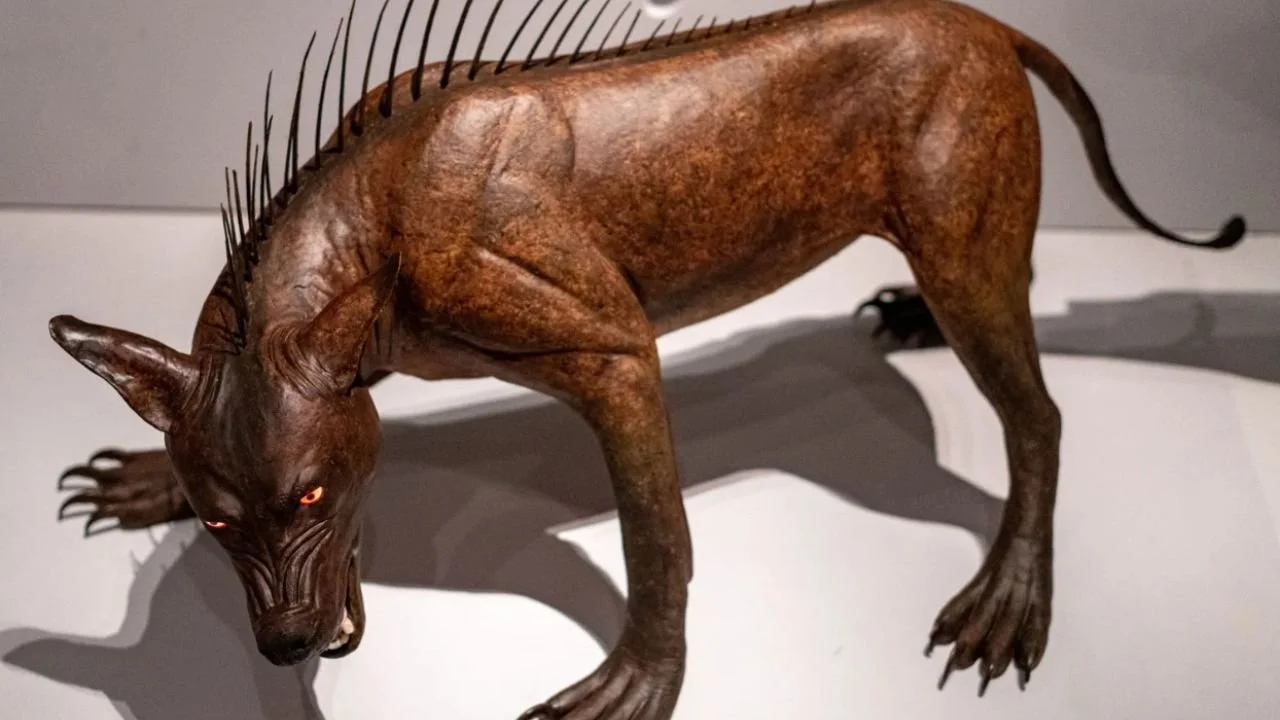
The El Chupacabra legend began in Puerto Rico during the 1990s and soon spread across the continental United States, in various forms and locally adapted, through media reports, folklore, and unexplained livestock deaths. Stories about the creature traveled quickly. News coverage and cultural curiosity pushed the tale far beyond the island where it began.
Many people first hear the story and ask a simple question. Was the Chupacabra a real animal or a modern myth? The answer remains uncertain. Evidence usually points toward misidentified wildlife. Yet the legend continues to grow because strange events often spark powerful storytelling.
Cryptid tales appear in nearly every culture. Each one reflects local fears, landscapes, and traditions. The Chupacabra fits neatly into that long tradition of mysterious creatures.
The El Vampiro de Moca Precursor (1975)
Long before the El Chupacabra legend captured headlines, Puerto Rico experienced a similar mystery.
The El Chupacabra legend has a precursor. This specific incident happened in 1975. The location? Moca, Puerto Rico. Livestock died in situations no one could explain. Below are the highlights of this incident.
What happened
In February 1975, strange reports surfaced. They mentioned that 15 cows, 3 goats, 2 geese and a pig were seen dead. All of them were found in Rocha Barrio. This is a suburb of Moca.
Method of Attack
The attack method seemed to be the same for all. There were puncture wounds on them. The animals had no blood in their bodies.
The Name
Newspapers gave a name to this happening. It's called ‘El Vampiro de Moca.” it translates to The Vampire of Moca. This name came shortly after a dead cow was found. The animal had similar puncture marks on its skull.
Panic and Speculation
These incidents swiftly spread panic. Some locals started blaming satanic cults that came from Africa. Others linked the deaths to supernatural occurrences.
Spreading Fear
The incident began in Moca. But it wasn’t the only place experiencing it. Other towns in Puerto Rico also saw similar happenings. Notable among them were Fajardo and Corozal.
Where the El Chupacabra Legend Began
The modern El Chupacabra legend took shape in Puerto Rico in 1995. Rural farmers once again reported unusual livestock deaths across several communities. Goats, chickens, and other animals appeared dead overnight in small farms and pastures.
Witnesses described marks that resembled punctures on some animals. Others believed the bodies looked unusually drained of blood. Those details quickly fueled rumors about a strange predator roaming the countryside.
One town soon became central to the growing mystery. That place was Canóvanas. Residents there reported several livestock deaths within a short period. Concern spread rapidly as the reports reached television and radio stations.
The mayor at the time, José Soto, decided to respond publicly. Patrol groups formed to search nearby forests and rural areas. Volunteers joined nighttime expeditions hoping to locate the unknown animal.
Those searches never captured a creature. However, the patrols attracted intense media attention.
Media coverage changed the narrative of this incident. Now, it has become a global mystery. Reports soon surfaced across the continental United States, as well. With every new occurrence, people’s belief in the vampire creature solidified further.
By that point, the strange predator finally had a widely recognized name. The Chupacabra had entered modern folklore.
What Did El Chupacabra Look Like?
No two reports described Chupacabra the same. Some say it’s a dog-like beast. It moves around on four legs. Others describe it as a big freen reptile. It walks on two legs. The animal looks like a kangaroo. There are other descriptions, too. One report said it looked like a mythical creature the size of a bear. Others said that it has glowing red eyes.
In an interview by National Geographic, experts at the University of Michigan’s Barry O’Connor gave another viewpoint. They said that chupacabra was probably a coyote infested by the parasitic mite, mange.
The Species Film Connection
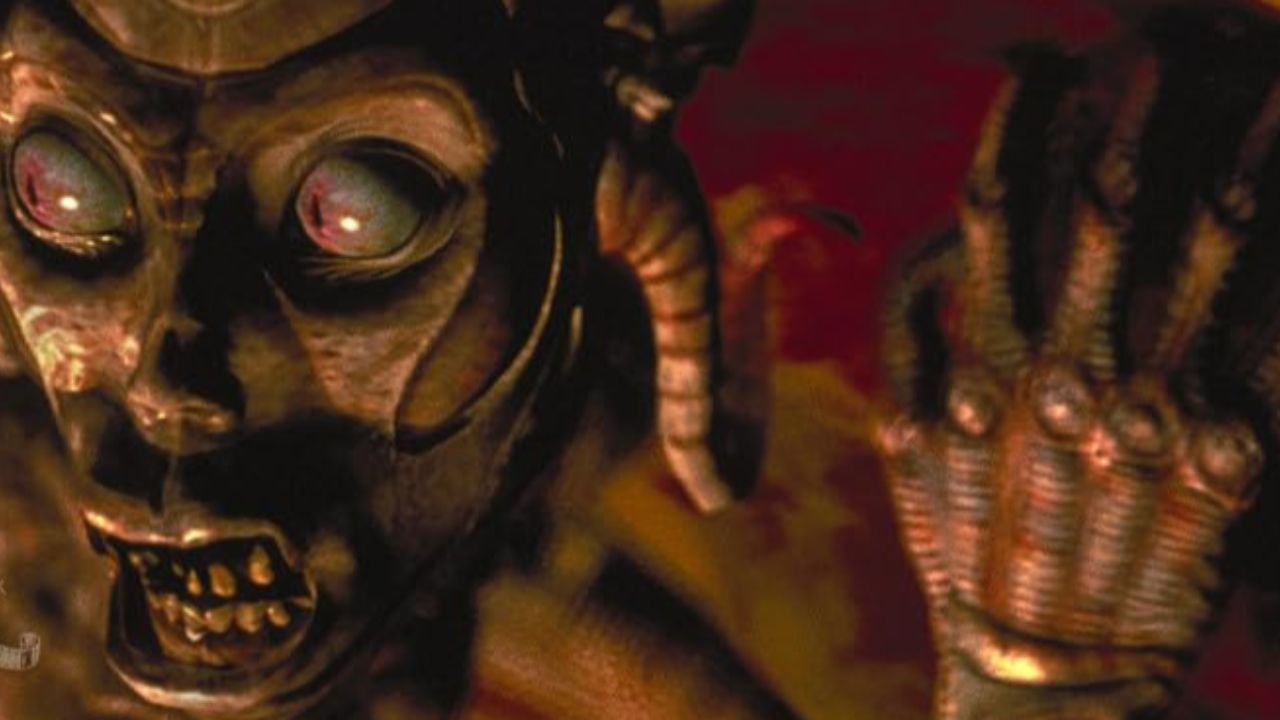
The El Chupacabra legend exploded in Puerto Rico in 1995. That same summer, a science-fiction horror film appeared in theaters across the island. The movie was Species.
At first, the timing seemed like a coincidence. However, many researchers later noticed a strange visual similarity. Some early witness descriptions of the Chupacabra looked remarkably similar to the creature from the film. This creature was Sil, an alien-human hybrid. The creature appears tall and thin. It is covered with unusual textures and ridges. Large dark eyes and spiny structures run along the back of the head.
Those details sound familiar to anyone who has studied early Chupacabra reports.
One of the most famous Puerto Rican witnesses described a creature with:
Large black eyes
A spiny ridge running along the back
A gray or greenish skin tone
A thin, upright body shape
Those features strongly resemble the alien design used in the movie.
A key witness later noticed the similarity
One of the earliest eyewitnesses was Madelyne Tolentino. Her account helped spread the story across Puerto Rico in 1995. She described a strange creature near her home in Canóvanas.
Later discussions revealed something interesting. Tolentino had recently watched Species before the sighting occurred. When researchers compared her description with the film creature, the similarities stood out.
Folklore researcher Benjamin Radford explored this idea in detail. Radford studied witness reports, media coverage, and cultural influences behind the legend.
His research suggested that memory can sometimes blend real experiences with images already stored in the mind. When people encounter something strange at night, the brain tries to fill in missing details.
Sometimes those details come from movies, television, or books.
How media can shape eyewitness stories
This effect is not unusual. Psychologists call it memory reconstruction. Human memory does not work like a video recording. Instead, the brain rebuilds events each time a person remembers them.
When fear enters the situation, imagination often fills the gaps.
Several factors made Puerto Rico in 1995 a perfect environment for a new monster story:
Recent livestock deaths created anxiety among farmers.
Television news quickly repeated dramatic witness accounts.
The film Species introduced a striking creature design.
Word of mouth spread the story across towns and villages.
Within weeks, the Chupacabra became a global phenomenon.
Why the El Chupacabra Legend Continued to Evolve
Legends often grow through a mix of real events and cultural influence. The Chupacabra story may follow that same pattern.
First came unexplained livestock deaths. Next came frightened witnesses searching for answers. Then movies, television, and newspapers helped give the creature a specific form.
Even today, the El Chupacabra legend continues to shift. In the continental United States, sightings often describe hairless coyotes instead of reptilian monsters.
Folklore rarely stays fixed in one form. Stories change as they travel across regions and cultures.
How the Creature Got Its Name
The creature’s unusual name appeared during early television discussions. Puerto Rican comedian Silverio Pérez used the term “Chupacabra” while discussing the mysterious attacks.
The word combines two Spanish terms.
Spanish word: Chupar
Meaning: To suck
Spanish word: Cabra
Meaning: Goat
Together the phrase means “goat sucker.” The name quickly captured public imagination. Newspapers and television programs began repeating it across Latin America.
Once the name spread, the legend became easier to remember and share.
The El Chupacabra Legend Spreads Across the Americas
After the first reports in Puerto Rico, sightings began appearing elsewhere. Newspapers soon described similar animal deaths in other countries.
Reports appeared in places like:
Mexico
Chile
Argentina
Nicaragua
The Dominican Republic
Stories also reached parts of the United States. Texas and New Mexico reported several suspected Chupacabra sightings during the early 2000s.
The pattern raises an interesting question. Why did the legend spread so quickly?
Modern media played a huge role. Television programs repeated the story frequently. Radio talk shows invited witnesses to share their experiences.
A strange story becomes powerful once people start talking about it everywhere.
Two Different Creatures in One Legend
Descriptions of the Chupacabra differ depending on location. Researchers usually separate the sightings into two categories.
Version: Puerto Rican type
Description: Small reptilian creature with spikes
Version: All Other Sightings
Description: Hairless dog-like animal
The Puerto Rican version appears almost alien. Witnesses describe glowing eyes and reptilian skin. The American version looks more like a sick wild dog.
Why the difference? Local wildlife likely explains part of it. People sometimes encounter animals with severe skin diseases. Without fur, those animals appear extremely unusual.
Fear can easily turn a sick coyote into a monster story.
Scientific Investigations of Reported Chupacabra Sightings
As the El Chupacabra legend spread beyond Puerto Rico, scientists began examining animals suspected to be the creature. Several carcasses found in the continental United States were sent to wildlife experts. Early rumors described them as mysterious predators. However, scientific analysis told a very different story.
Many of the animals were identified as coyotes suffering from a severe skin disease called mange. Mange is caused by tiny parasitic mites that burrow into the skin. The infection causes intense irritation, hair loss, and thickened skin. Over time the animal becomes weak, thin, and often sickly in appearance.
Animals with mange can look startling to anyone who has never seen the disease before. Their bodies lose most of their fur. Skin appears gray, rough, often scabbed, and sometimes wrinkled. From a distance, the animal may not resemble a typical coyote at all.
Two researchers played important roles in examining these suspected specimens.
Scott Henke studied several carcasses discovered in Texas.
Barry O'Connor analyzed the mites responsible for the mange infections.
Dr. Henke was a wildlife biologist at Texas A&M University-Kingsville at the time. He examined multiple animals reported as possible Chupacabras. His research found that many were simply coyotes weakened by severe mange. The disease altered their appearance dramatically. It was so dramatic that witnesses struggled to recognize them.
Meanwhile, Dr. O'Connor at the University of Michigan focused on the parasites involved. As an expert on mites, he confirmed that mange can severely damage an animal’s skin and fur. Those changes explain why infected coyotes often appear strange or even frightening.
DNA testing supported these conclusions. Laboratory analysis identified several specimens as coyotes or mixed-breed wild dogs.
The findings helped explain many sightings in places like Texas and northern Mexico. When a mangy coyote appears at night near livestock, it can easily spark rumors about a mysterious creature.
Still, the earliest reports from Puerto Rico remain harder to explain. Those sightings described a very different type of animal. For that reason, the legend continues to invite curiosity.
Science often resolves part of a mystery. At the same time, folklore tends to keep the story alive long after the investigation ends.
Why Cryptid Stories Continue to Fascinate People
Mysteries hold a strong grip on human curiosity. People enjoy exploring the unknown edges of the natural world.
A strange creature sparks endless questions.
Is it real?
Could science be missing something?
Did someone misidentify a normal animal?
Those questions keep conversations going for years. Even skeptics enjoy discussing strange sightings with friends. Curiosity does not require belief.
Folklore thrives on that balance between doubt and wonder.
When History Feels Stranger Than Fiction
Legends like the Chupacabra show how easily mystery grows from real events. Strange animal deaths sparked a story that traveled across continents.
Stories about unexplained creatures reveal something deeper about human curiosity. People want to understand the dark corners of the world.
That same curiosity drives the storytelling behind Hottest Hell Tours. Our historian-led tours explore the darker edges of New Orleans history through verified research rather than invented ghost tales.
Guides focus on documented crimes, folklore, and historical mysteries connected to real locations. Visitors hear stories grounded in archives and historical records.
Many guests arrive expecting simple ghost stories. Instead they discover that true history often feels stranger than fiction.
Legends like the Chupacabra remind people how quickly stories can grow from mystery. Walking the historic streets of New Orleans raises a similar question.
How many legends began with a real event that simply refused to fade?