
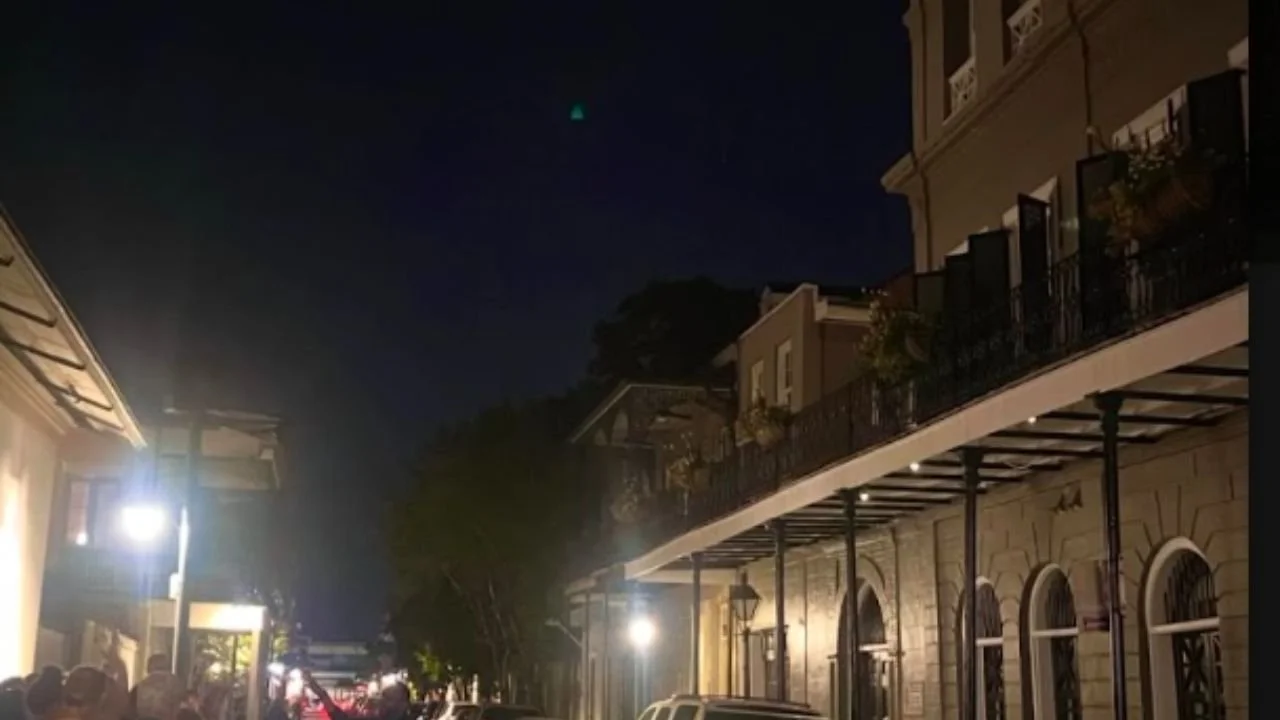
Ghost orbs show up in almost every haunted photo online. They glow, float, and seem impossible to explain. Some call them proof of spirits nearby. Others call them simple tricks of light. Let's unpack what the evidence actually supports.
What Exactly Is a Ghost Orb?
An orb is a bright, usually circular anomaly in a photo. Some appear angular or slightly stretched instead. They can show up alone or in clusters. Their color and brightness shift from picture to picture. Paranormal investigators often treat them as spirit evidence. Many believers call orbs the first sign of a ghost.
Why Ghosts Supposedly Stay Invisible to Us
Human vision only picks up the visible light spectrum. Visible light sits among many other electromagnetic wave types. Radio waves, microwaves, infrared, ultraviolet, and X-rays all surround us daily. According to one popular theory, ghosts exist just outside that visible range.
This idea ties directly into how electromagnetic waves behave. Strong electromagnetic fields supposedly bend certain wavelengths off course. Shorter, higher-frequency waves deviate more under this influence. Longer, lower-frequency waves like infrared deviate far less. That difference is used to explain infrared's role in ghost sightings.
Believers describe a ghost as first producing radio waves. Those waves can interfere with radios or televisions nearby. Investigators call this an Electronic Voice Phenomenon, or EVP. Next, the theory holds that a ghost absorbs environmental energy. That absorbed energy supposedly shifts it toward microwave frequencies. Eventually, it moves into the infrared range instead. Thermal cameras, not human eyes, tend to catch this stage.
This entire sequence borrows real physics vocabulary and stretches it considerably. No controlled experiment has ever tested these individual steps.
The Optical Explanation Behind Most Orb Photos
Most orb photos trace back to ordinary reflected light. Camera flash frequently bounces off nearby surfaces or particles. Glass, mirrors, metal, walls, and even hair can reflect it. Dust, pollen, lint, moisture, and insects do this too.
Digital cameras made this effect far more common than film ever did. Older film cameras kept their flash units farther from the lens. Compact digital cameras place the flash much closer instead. That closeness lets nearby dust catch and bounce back light easily. This is why dust orbs multiplied once digital photography took over.
One clue helps separate ordinary dust orbs from anything unusual. Faint spokes radiating out from the orb's center are a giveaway. That pattern points directly to a nearby reflective particle. Without spokes, an orb's origin becomes harder to explain immediately.
Splitting Orbs Into Two Categories
Orb theory generally splits into two very different camps. The first covers ordinary reflection-based orbs from dust or debris. The second involves what believers call a true plasma orb. These are described as naturally electrically charged balls of light. Static discharge in the surrounding environment can produce this kind of plasma.
Visually, plasma orbs are described as looking quite different up close. They tend to have a solid, glowing center instead. Unlike reflection orbs, they show no radiating spokes at all. They're also said to emit their own light source. A real orb, by this definition, needs no external flash to appear.
Supporting evidence here leans on anecdotes rather than lab results. Eyewitness reports from the Gettysburg battlefield get cited often. Moving lights there were reportedly seen without any obvious source. Some orbs have supposedly been filmed moving with apparent purpose. That behavior gets used to hint at possible intelligence behind them.
A Deeper Theory: Spirits as a State of Plasma
One striking theory goes further than simply naming plasma orbs. It proposes that spirits actually exist as plasma themselves. Plasma is often called the fourth state of matter. It differs from familiar solids, liquids, and gases. Inside a plasma, atoms lose or gain charged particles. This creates a mix of positive ions and free electrons.
This theory builds around electron behavior specifically. A lone electron, it notes, rarely stays perfectly still. When an electron absorbs extra energy, its motion shifts. That added energy is said to slow the electron down. Following momentum conservation, mass is then said to rise. This swap between energy and mass creates sudden instability. The electron then releases that extra energy again quickly. Mass drops and velocity spikes right back up sharply. This constant back-and-forth resembles a kind of random motion.
The same pattern then gets applied to human death directly. After death, mass supposedly can't convert to energy instantly. Instead, that mass concentrates around a single central point. This point then absorbs surrounding energy over time. An energy layer forms around that concentrated core afterward. That whole structure gets labeled a "spirit" under this theory. Its glowing central point becomes what we call an "orb."
This framework borrows legitimate physics terms like momentum and plasma. But it applies them to human death without direct testing. No experiment behind this idea actually measures the proposed process.
Why We Sometimes See Orbs Without a Camera
Naked-eye orb sightings get a much simpler explanation. It comes down to how our pupils respond to light. Bright conditions cause pupils to shrink and limit incoming light. Darkness causes pupils to widen and let more light through.
After several minutes in a dark room, pupils open further still. That wider opening can catch faint infrared-adjacent wavelengths nearby. Everyday sources like remote controls or phone sensors emit this light. In near-total darkness, these ordinary signals can resemble glowing orbs. This is treated as a simple biological explanation instead.
A Wider Theory: Dimensions and Where Spirits Might Come From
The scope here occasionally widens beyond orbs specifically. Some theories propose dimensions beyond the familiar three we experience daily. Length, width, and height cover our usual sense of space. Time gets added next as a fourth dimension. A fifth dimension, described only loosely as "effects," follows after that.
From here, human origins get linked to collapsed stars. Dying stars, this idea holds, can form black holes. Matter pulled into these black holes travels through a wormhole. That matter, believers claim, eventually reaches a corresponding white hole. Every particle in our bodies supposedly traces back to this process. Spirits, under this framework, might exist through similar dimensional connections.
This entire idea is openly hypothetical and hard to prove. It connects loosely back to orbs through the plasma-spirit theory above.
How Broader Hauntings Get Framed
Hauntings themselves often get sorted into four categories. These include residual, intelligent, poltergeist, and demonic hauntings. Each type carries its own short description and folklore. This framing ties back neatly into the plasma-spirit theory. Spirits, it argues, only interact physically while in a solid state. Reaching that state means absorbing extra energy from their surroundings. Exorcism, by this logic, forces spirits back into plasma form.
Water and quartz get mentioned often as supposed spiritual energy sources. Hauntings supposedly cluster near these materials for that exact reason.
Testing the Reflection Theory With Two Cameras at Once
One clever experiment tested the reflection theory directly. It used a camera built with two lenses side by side. Both lenses fired together, using identical focus and exposure settings. This setup roughly mirrors how human eyes perceive depth.
Anything very close to the camera looks different in each lens. Anything farther away looks nearly identical in both instead. That difference makes each photo pair its own built-in test.
Over two years, more than twenty allegedly haunted sites got tested. Locations included old castles, gaols, and modern retail spaces. Nearly 1,900 stereo image pairs were captured and reviewed. Orb anomalies showed up in roughly a third of those pairs. In the vast majority, the orb appeared in only one lens. That pattern matches exactly what a nearby particle would produce. Not one orb appeared consistently across both matched images. Claims that some orbs stay unexplained didn't hold up here either. Every orb captured fit the ordinary optical explanation instead.
Weighing Two Very Different Kinds of Evidence

These explanations sit far apart on the evidence scale. One rests on a repeatable, controlled, statistically documented experiment. The other builds a theoretical framework using borrowed physics language. Only one of these approaches actually tested its central claim.
Interestingly, both still arrive at non-supernatural conclusions in the end. The stereo-camera evidence attributes nearly all orbs to nearby particles. The plasma-spirit theory calls spirits "a natural phenomenon after death" instead. Even its own proponents hope to eventually debunk paranormal claims entirely. Yet only one explanation is backed by tested, repeatable evidence.
So, Are Ghost Orbs Real?
Based on the stronger evidence, most orbs are not paranormal. Controlled testing consistently traces them back to dust and moisture. Camera flash, sensor behavior, and reflective particles explain nearly every case. Plasma-spirit theories remain creative but currently untested by experiment.
That doesn't make orb photography any less fun to explore. It simply means most explanations are optical, not supernatural. Understanding the real science only makes the hunt more interesting.
Putting the Science to the Test on New Orleans Streets
New Orleans offers no shortage of atmosphere for testing this yourself. Its shadowy courtyards and old buildings practically invite a flash photo. Few places blend real history with ghost lore this seamlessly.
Walking Into the City's Darker Stories
Hottest Hell Tours runs guided walks through some of the city's most storied streets. Our Walking the Devil's Empire tour is an adults-only nighttime journey. Guides share true crime and paranormal stories along the entire route. It's a fitting place to snap your own photos and watch for orbs.
Going Deeper Into Local Legend
For those wanting more, The Dim Corner tour follows a separate route entirely. It explores darker, lesser-known chapters of the city's paranormal history. Living guides walk visitors through true crime and unexplained events alike.
Bring a camera on either walk, and you'll likely capture a few orbs. Now you'll know exactly what's probably behind them.
FAQs
What is a ghost orb?
A ghost orb is a bright, circular shape in a photo. It often appears suddenly during flash photography. Believers see orbs as spirit energy. Skeptics see them as light reflecting off nearby particles. Most orbs turn out to be dust or moisture.
Why do I see ghost orbs?
You likely see orbs because of your camera flash. Flash light reflects off dust, pollen, or moisture nearby. Digital cameras place flash close to the lens. That closeness makes reflections easier to capture. Dim, dusty rooms make orbs even more common.
What does it mean if you see orbs?
Seeing an orb usually means light bounced off something nearby. Dust, pollen, or moisture are common causes. Some believers think orbs carry spirit energy instead. Others say orbs are early signs of a haunting. Most explanations point to simple optics, not spirits.
Are Spirit Orbs good or bad?
Spirit orbs aren't usually seen as good or bad. Believers say orbs reflect whoever created them. Calm, steady orbs are often linked to friendly spirits. Fast, erratic orbs sometimes suggest restless energy instead. Most experts see orbs as neutral, natural occurrences.