
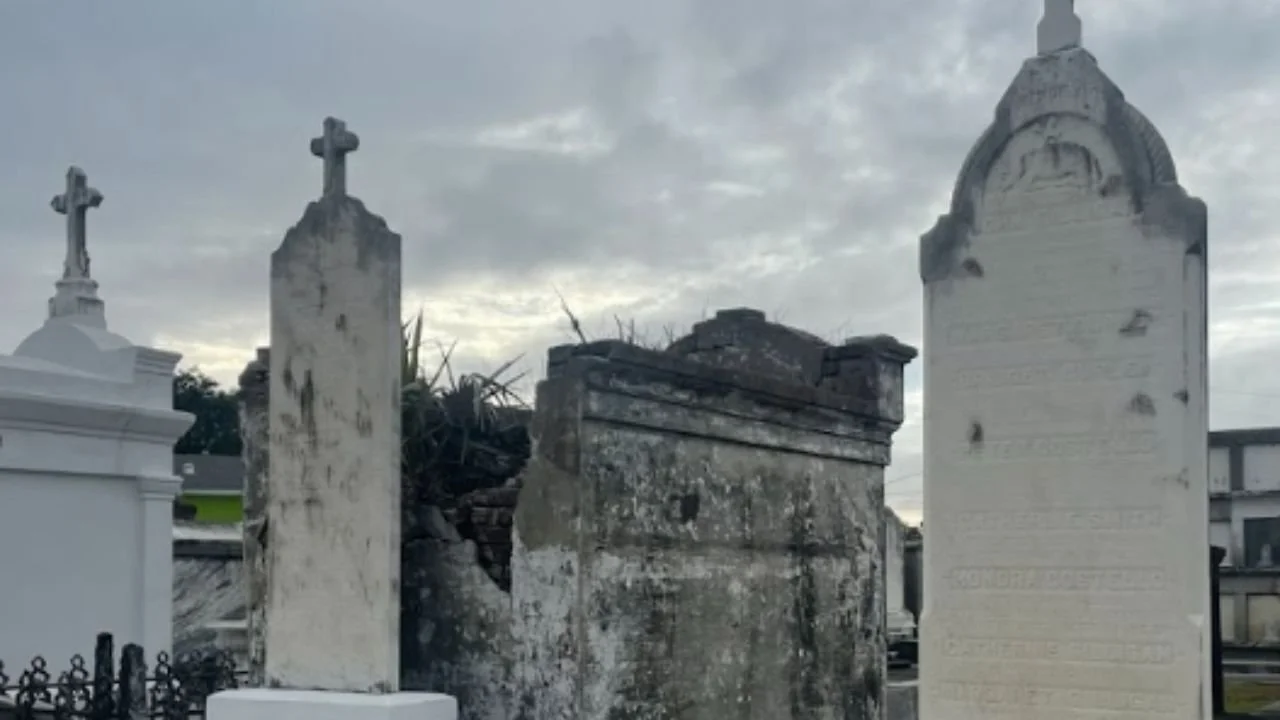
A New Orleans jazz funeral is not what most people expect from a burial. There is grief, yes. But there is also music, movement, and a crowd dancing in the street.
That contrast is the entire point.
The jazz funeral is one of the most distinctive cultural traditions in American history. It was born in New Orleans and shaped by centuries of overlapping cultures. It still happens today. Understanding where it came from tells you a lot about why New Orleans is so different from other cities in the country.
Where the New Orleans Jazz Funeral Comes From
A City Built From Many Cultures
New Orleans has always been a city of collision. French, Spanish, African, Creole, Cajun, and Anglo-American communities lived here in close proximity for centuries. Each brought their own approach to death, music, and mourning.
English was the dominant language over time, but the cultural landscape stayed deeply layered. That layering produced something that no single culture could have invented alone.
Funeral traditions here defied the somber mood expected across most of North America. Music was part of everyday life in Louisiana. It worked its way into formal and casual events alike. Naturally, it found its way into funerals too.
The African and European Roots
Two specific traditions came together to create what we now call the jazz funeral.
The first came from European and Anglo-American funeral customs. In those communities, brass bands were already part of burial processions. They played solemn music on the walk to the grave. On the return home, they shifted to happier music. The idea was to honor the dead with sorrow, then release that sorrow on the way back.
The second came from West African burial traditions. These traditions included rejoicing at death through music. Mourning and celebration existed side by side. Death was not simply an end. It was a passage, and that passage deserved both grief and joy.
In 1819, architect Benjamin Latrobe witnessed a Black funeral in New Orleans. He described the procession beginning with "loud lamentations" from mourners and ending with "noise and laughter." This combination was not chaos. It was a specific cultural logic at work.
Both traditions valued music at burial. Both understood death as something more than silence. When they met in New Orleans, they produced something new.
The Role of Benevolent and Burial Societies
The jazz funeral didn't spread by accident. It was organized.
In the 19th century, African American communities in New Orleans formed benevolent and burial societies. These organizations collected dues throughout the year. The money paid for members' healthcare and burial costs. For an extra fee, they arranged a brass band to accompany the procession.
By the end of the 19th century, Black funerals with brass bands had become standard practice in the city. As a new style of music emerged at the turn of the 20th century, these processions became the vehicle for its first public performances. That music was jazz.
Musicians like Buddy Bolden, Joe "King" Oliver, Louis Armstrong, and Jelly Roll Morton all played in these processions. The jazz funeral was not just a ritual. It was a stage. This distinct tradition changed American music forever.
How a Jazz Funeral Actually Works
The Wake
A jazz funeral begins before the procession even starts. Family and friends gather for a wake before the formal service. This is private time. People sit with grief. They remember the person together.
Once the wake ends, the procession forms.
The March to the Cemetery
The brass band leads. Behind them comes the family and close friends of the deceased. This group is called the first line or the main line. They walk together from the site of the funeral service toward the burial site.
The band plays dirges during this portion. These are slow, somber hymns matched to a walking tempo. The most iconic of these is "Just a Closer Walk with Thee," a Christian hymn that became synonymous with the New Orleans funeral tradition. The music matches the weight of the moment. Grief is not rushed or hidden. It is given full expression.
The broader community can join the procession behind the first line. This crowd is called the second line. They follow, they watch, and they march. The whole procession moves through the streets together.
Cutting the Body Loose
When the deceased has been buried and the procession has moved a respectful distance from the cemetery, something shifts. This moment is called "cutting the body loose."
The band stops playing dirges. The tempo changes. The music lifts. What follows is a celebration.
The Second Line Celebration
Once the body is laid to rest, the procession transforms into a street party. The band swings into up-tempo music. Favorites like "Didn't He Ramble" and "When the Saints Go Marching In" are traditional choices. These songs have a lighter, infectious feel that make people move.
As the procession wound back through the neighborhood, bystanders on the street would often fall in behind it. The energy was hard to resist. People joined spontaneously, dancing, singing, and celebrating the life of the person who had died.
The dancers had specific moves. The high step and the buck jump were common second-line styles. People also made noise in other ways. These include clapping, blowing whistles, hitting cowbells or beer bottles, and shaking tambourines. The whole street became a percussion instrument.
Who Could Join
Jazz funerals were never closed events. The first line belonged to the family and the funeral party. But the second line was open to anyone who wanted to walk behind and celebrate. Community members, neighbors, and even strangers were welcome to join in the celebration behind the second line.
That openness was part of the tradition's power. Grief was shared publicly. So was joy.
The Music That Made the Jazz Funeral Different
Improvisation on the Street
The brass band at a jazz funeral was not reading from a script. The songs played were well-known hymns and folk tunes that everyone recognized. There was no written arrangement to follow. Musicians were free to take those familiar melodies and transform them.
They embellished the tunes. They changed rhythms. They added notes that weren't there originally. They made up new melodic ideas on the spot. Most remarkably, they did all of this simultaneously. Every musician improvising at the same time, while still using the original song as their shared reference point. This is what musicologists call collective improvisation. It was one of the defining features of early New Orleans jazz.
Each instrument still had a role, even in the middle of all that freedom. The trumpet typically carried the melody. The trombone and clarinet wove around it. The rhythm section held everything together. It worked because everyone was listening to everyone else, not just playing their own part.
From the Street to the Stage
The music played at these funerals was catching on. As it grew popular, bands began playing similar up-tempo styles at dance halls, and other outdoor venues around the city.
When bands moved indoors, the format had to change. A full marching percussion line didn't fit inside the hall. It was replaced by a single drummer playing a trap set. The tuba, which had provided the low end outdoors, stayed on in some groups. Others added a string bass. Piano and banjo were added to provide chords and harmonic structure. This smaller configuration became the rhythm section, the engine room of every jazz band that followed.
These stripped-down marching bands became some of the first jazz bands in history. The music they played became jazz. All of this started partially in the New Orleans jazz funeral.
The Second Line: When It Broke Away
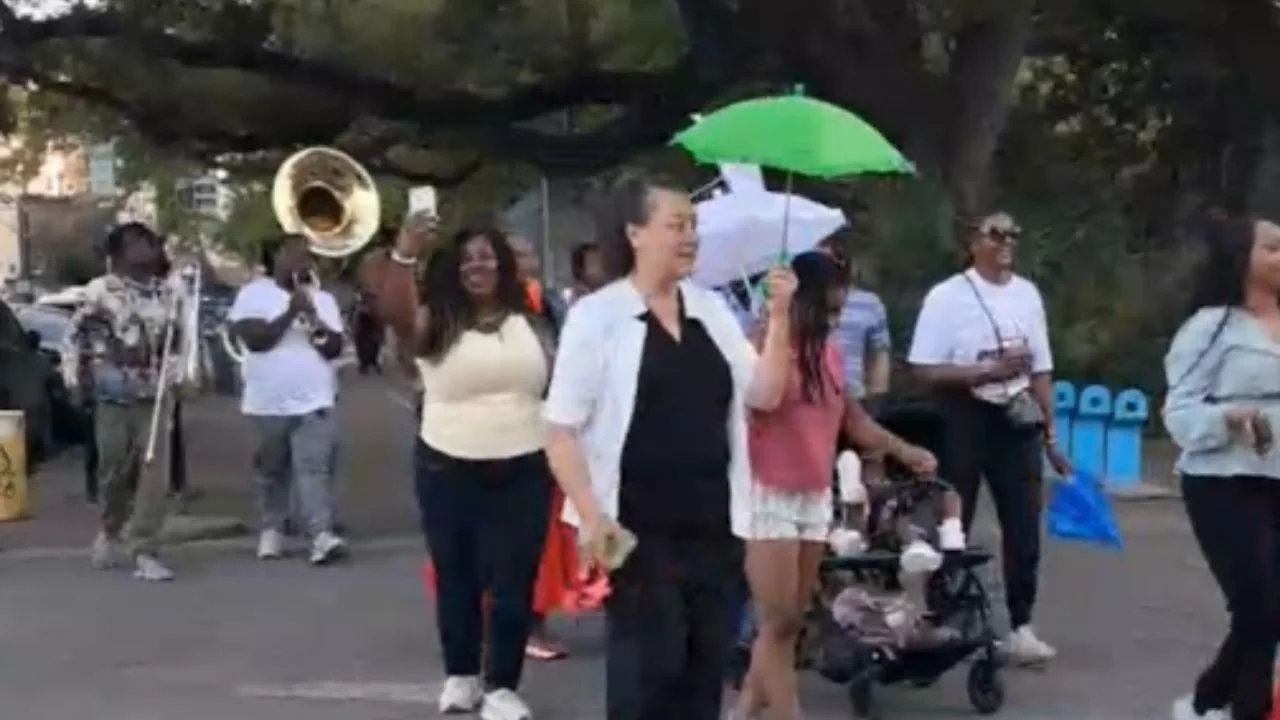
At some point in the late 19th century, the second line parade developed its own independent identity.
It no longer needed a funeral to happen. Social aid and pleasure clubs, organized across African American neighborhoods, began hosting their own second line parades. These were community events. They wound through the streets of the club members' own neighborhoods, making stops at members' homes and at neighborhood barrooms.
From September through May, at least one parade takes place every Sunday in New Orleans. Each parade is typically held on the anniversary of the hosting club's founding. Clubs raise money throughout the year through fundraisers and dues to cover costs. These include those for police permits, brass bands, and the matching outfits their members wear to parade.
At the head, club members wear suits with sashes bearing the club's name and twirl matching umbrellas above their heads. They dance their way through the streets for roughly four hours. The second liner follows behind, showing off moves and adding their own noise to the rhythm. Anthropologist Helen Regis described the second line as a public festival in which everyone comes together to create "a single flowing movement of people unified by the rhythm."
How the Tradition Has Changed Over Time
Who Gets a Jazz Funeral Today
Traditionally, jazz funerals honored prominent members of the African American community, often musicians. The first line was made up almost exclusively of that community. The music was uniformly traditional. Musicians wore black band caps, white button-down shirts, and black dress pants.
Over time, the tradition has opened up. In recent decades, jazz funerals have also been held for younger people who died tragically, changing the mood of the procession considerably. When the deceased is young, the number of dirges is reduced. The transition from grief to celebration happens more quickly and sometimes with more raw emotion.
Dress codes have relaxed too. Musicians now sometimes perform in everyday clothes rather than formal uniform. Organizations like the Black Men of Labor Social Aid & Pleasure Club have pushed back against these changes. They organize traditional funerals for families who want the orthodox experience. Their annual parade requires musicians to dress in uniform and perform traditional music.
The debate between tradition and adaptation is ongoing and healthy. It reflects a living culture, not a museum piece.
The Cost Factor
Jazz funerals have also become less common simply because of cost. Hiring a brass band, coordinating a procession, and obtaining permits is expensive. As communities have shifted toward smaller, more affordable services, the full jazz funeral has become less routine and more reserved for special occasions.
The Covid-19 pandemic dealt an additional blow. During that period, Louisiana was hit hard by the virus. Funerals became restricted events. Gatherings were limited. Emergency protocols made the full jazz funeral impossible for an extended stretch of time.
But the tradition has survived every disruption it has faced for over a century. It has survived.
Jazz Funerals Today
Jazz funerals still happen in New Orleans. Most are for respected musicians or community leaders. But anyone can request one if the family chooses. The tradition has also found its way into staged parades at events like the New Orleans Jazz & Heritage Festival. You can also see it in the lobbies of the Convention Center, where brass bands march for mixed audiences.
Every Sunday, somewhere in the city, a social aid and pleasure club is still marching its own second line through a residential neighborhood. No tourists required. Just the rhythm and the street.
What the Jazz Funeral Tells Us About New Orleans
The jazz funeral captures something that New Orleans does better than any other American city. It refuses to separate grief from joy, the sacred from the celebratory, or the historical from the living.
Other cities have parades. Other cities have brass bands. But no other city invented a way to bury its dead that turned into a musical revolution. The jazz funeral didn't just shape how New Orleans mourns. It shaped how the whole world hears music.
That is what makes the history of this tradition worth understanding. Not as a curiosity or a tourist attraction, but as the genuine expression of a community that built something lasting out of grief and music and collective memory.
A City Where the History Is Still in the Streets
New Orleans has always kept its history close to the surface. The jazz funeral is a living example of that. But it's far from the only one.
The French Quarter holds three centuries of documented stories that most visitors never encounter. True crime. Institutional history. The real biographies of people who shaped this city, told without the embellishment or invention that fills most ghost tours. Hottest Hell Tours is built on exactly that standard. Its founder holds a Master's degree in history. So does a second historian on staff. The company has additional graduate-educated guides, published authors, and SAG-AFTRA members. The bar for accuracy is not symbolic. It is structural.
If you are the kind of person who reads about jazz funerals not because they sound spooky, but because you genuinely want to understand what this city is made of, you are the kind of person who belongs on one of these tours. Groups stay small. Stories stay true, and the French Quarter, like the jazz funeral itself, keeps delivering history that is stranger and richer than anything invented.
Frequently Asked Questions
Do they still have jazz funerals in New Orleans?
Yes. Jazz funerals still take place in New Orleans today, though they are less common than they were in the early 20th century. Most modern jazz funerals are held for respected musicians or longtime community figures, though any family can request one. The tradition was significantly disrupted by the Covid-19 pandemic, when gathering restrictions made processions impossible. But the practice has continued, and second line parades, which evolved from the jazz funeral tradition, still take place almost every Sunday in New Orleans from September through May.
What is the best jazz song for a funeral?
"Just a Closer Walk with Thee" is the most historically associated hymn with the New Orleans jazz funeral. It is played during the somber portion of the procession, before the body is laid to rest. After the burial, bands shift to up-tempo songs to begin the celebration. "Didn't He Ramble" and "When the Saints Go Marching In" are among the most traditional choices for that second phase. Both have a rhythmic energy that naturally invites dancing and movement, which is the entire intention.
What is the history of jazz funerals in New Orleans?
The jazz funeral emerged from the convergence of West African burial traditions and European brass band funeral practices in 19th-century New Orleans. Architect Benjamin Latrobe documented a Black funeral in the city as early as 1819, noting mourning that began with lamentation and ended in noise and celebration. Benevolent and burial societies in the African American community formalized the tradition by hiring brass bands to accompany processions. By the early 20th century, these processions had become the birthplace of jazz itself. Musicians including Buddy Bolden, Joe "King" Oliver, Louis Armstrong, and Jelly Roll Morton all performed in funeral processions as the new style developed.
What is the second line in a jazz funeral?
In a jazz funeral, the second line refers to the crowd of community members who march behind the official funeral party. The first line, or main line, consists of the brass band, funeral directors, and the family of the deceased. The second line is everyone else: neighbors, friends, bystanders who fall in behind to join the celebration once the body has been buried. The second line is open to anyone. Over time, the second line developed into its own independent tradition, with social aid and pleasure clubs hosting weekly second line parades throughout New Orleans from September through May each year.