
Maryland is not what most people picture when they think of monster country. It has crab cakes, colonial history, and the Chesapeake Bay. But what it also has is one of the densest concentrations of cryptid folklore on the East Coast. These are not simple jump-scare legends. They are layered stories tied to real geography, and in some cases, real documented harm. Some of Maryland's creatures have been seen by witnesses. Others were invented to terrorize people. All of them say something about who built this state and what they feared.
What Cryptids Live in Maryland?
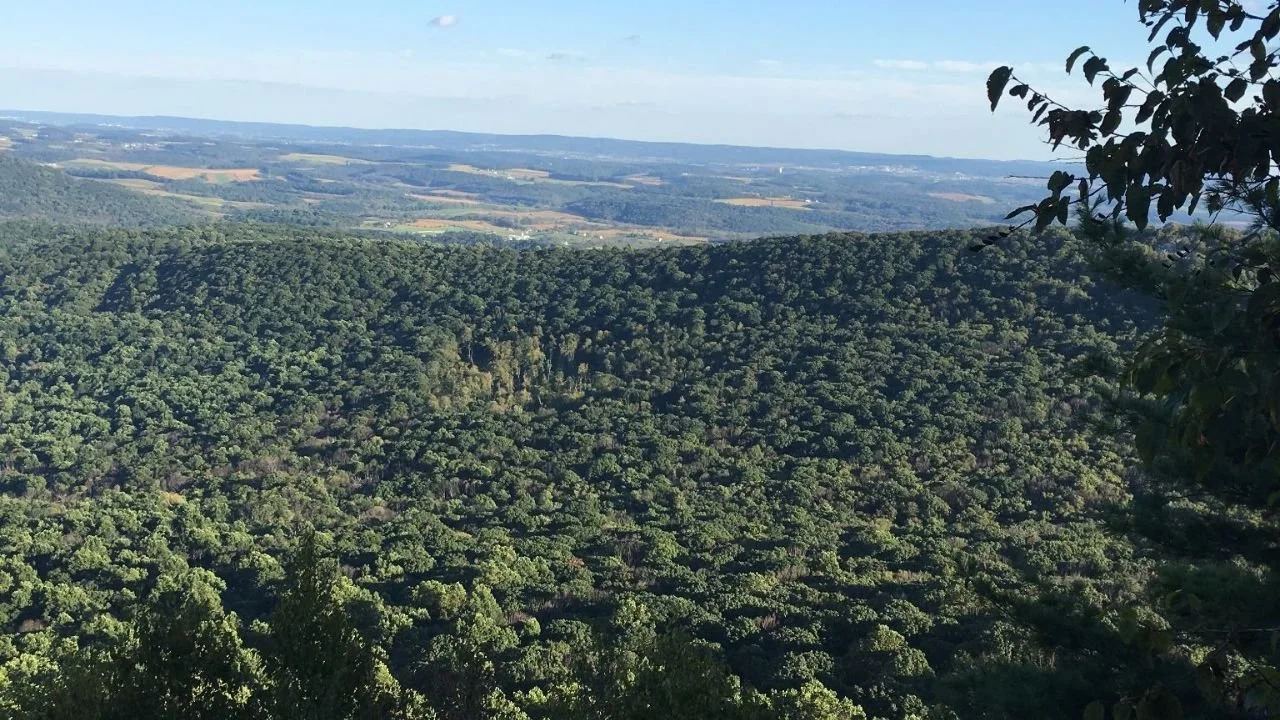
Maryland spans three distinct geographic zones. The Appalachian ridges dominate the west. The Piedmont plateau runs through the middle. The Chesapeake Bay and its tidal marshes spread across the east.
Each zone produced its own monsters. The famous Maryland cryptids have origins that are almost always tied to the specific landscape where they appeared. These are not imported legends. They grew from the specific terrain, the specific fears, and the specific communities of the places they haunt.
Chessie: The Bay's Own Sea Monster
Chessie is Maryland cryptids creatures territory at its most iconic. She belongs to the Chesapeake Bay. She has been described consistently since at least the 1930s. A pilot conducting a flyover in 1936 was among the first modern witnesses to report a large, serpentine creature arching through the Bay waters. The descriptions have stayed quite the same across generations. Most place Chessie between Kent Island and the mouth of the Potomac River. Witnesses describe a dark, undulating body stretching between 20 and 40 feet in length.
Sightings peaked in the late twentieth century. In 1978, a family near Love Point described the creature rising from the water. In 1982, a video taken off Kent Island received regional news coverage. The US Fish and Wildlife Service eventually adopted Chessie as an environmental symbol. Her image was used to promote Bay conservation efforts.
Scientists have proposed several explanations. The Atlantic sturgeon, a federally endangered species, can grow to dramatic lengths. Shortnose sturgeon also inhabit the Bay. A large rolling sturgeon seen from a distance, especially in low light, can produce a convincing impression of something far stranger. Marine mammals, including dolphins, wayward whales, and the occasional manatee, have also been proposed. But none of these explanations have settled the matter for everyone.
The Snallygaster: Frederick County's Most Famous Monster
The Snallygaster is half-bird, half-reptile. The creature is described with clawed wings, a metallic beak sharp as steel hooks and tentacles sprouting from its mouth. Sometimes, it has a single rotating eye in its forehead. It haunts the South Mountain region of western Maryland. Snallygaster’s legend reaches back to German immigrant communities of the 1730s.
The German settlers brought a concept called the "Schnelle Geist.” It means a quick ghost or quick spirit. That phrase, corrupted through time and retelling, became Snallygaster. The creature's natural habitat, according to legend, was always near stills and distilleries. There is a lot of that history in western Maryland. The full truth of the Snallygaster's origins is covered in a separate section below. Spoiler alert: It is considerably darker than the ice cream flavors and beer festivals it inspires today.
Goatman: Prince George's County's Backroad Terror
The Goatman is half-man, half-goat, and he walks upright. He is associated primarily with the area around Bowie and the Governor Bridge Road in Prince George's County. Accounts of a strange, horned figure appeared in the 1950s. It intensified significantly in the late 1960s. By 1971, multiple police reports documented drivers calling in panicked sightings of a horned man near rural backroads.
The most common modern version of the legend connects the Goatman to a failed experiment at the nearby Beltsville Agricultural Research Center. A scientist, the story goes, accidentally merged himself with a goat during a lab mishap. This origin has never been verified. No documentation supports it.
What is documented is decades of consistent sightings from genuinely frightened witnesses. Most of them describe a large, bipedal figure with animalistic features near the same stretch of road. The most plausible wildlife explanations include deer with skin conditions such as mange or piebaldism. These diseases can make familiar animals look deeply wrong.
The Dwayyo: Frederick County's Wolf That Walks Upright
The Dwayyo, also spelled Dewayo, is Frederick County's wolf-man. First reported in November 1944 near West Middleton, the creature is described as a large, dark humanoid. It has wolf-like features and moves on two legs. Its most cited modern encounter comes from November 1965.
John Becker of Frederick County reported a creature near his home that growled with the sound of a wolf before. Then, it retreated into the surrounding forest. Reports through the 1970s described an upright, wolf-bodied figure stalking the edges of farmland around the Catoctin Mountains.
The legend gained traction at a specific historical moment. Wolves had already been eradicated from Maryland by the 1940s. Coyotes had not yet arrived in significant numbers. The Dwayyo appeared to fill a space left by a predator that had been removed. Wildlife biologists have noted that foxes and coyotes can rear up dramatically on their hind legs. They raise their hackles so that their fur makes them appear much larger and more unusual than they are. Whether that accounts for all Dwayyo reports is another question.
The Wendigo: Maryland's Indigenous Antlered Giant
The Wendigo comes from Indigenous oral tradition that predates European settlement of Maryland by centuries. It is described as a large, bipedal creature with enormous antlers and long claws.
Wendigo stories in Maryland align chronologically with the period when elk still roamed the state. It is before their disappearance in the late 1800s. Elk stand on their hind legs to reach high branches. They push upward against tree trunks in a posture that, in low light, produces an outline that human pattern recognition quickly interprets as something bipedal and threatening.
The Wendigo represents one of the oldest documented traditions in the state. It is not a manufactured legend and not an imported one. It belongs to the land in a way that later creature stories do not.
Moll Dyer: St. Mary's County's Witch in the Ice
Moll Dyer is a different category of legend from the creatures above. She was, according to St. Mary's County tradition, a real woman. She lived outside Leonardtown in the late seventeenth century. The community blamed her for a wave of influenza during the brutal winter of 1697 and 1698. A mob burned her home south of present-day Leonardtown. Days later, locals found her frozen to death against a large rock. Her hand was pressed against the stone.
The legend says that her handprint remained on that rock as a mark of her curse. Touching the stone supposedly brings dizziness, illness, or misfortune. Historian Phillip Love located the rock near what is now called Moll Dyer Road in 1972. It stands today at Tudor Hall in Leonardtown. Visitors here regularly leave small offerings. This is one of the few Maryland legends with a documented historical foundation in colonial records.
Black Aggie: The Statue That Left but Never Really Left
Black Aggie was a shrouded, seated statue that stood on the Agnus family plot in Druid Ridge Cemetery in Pikesville. It arrived in the 1920s and almost immediately became the center of Baltimore dare culture. Stories spread that its eyes glowed red at the stroke of midnight. Further claims said sitting in its lap caused blindness, miscarriage, or death. Teenagers made nighttime pilgrimages to the cemetery to test those claims.
The Agnus family donated the statue to the Smithsonian Institution in 1967. The physical object left Maryland, but its stories did not. Children continued to summon Black Aggie in mirrors decades after the statue's removal. In doing this, they carried a legend whose power had long since detached itself from the object that started it.
The Pig Woman of Cecil County
The Pig Woman haunts the US Route 1 corridor in Cecil County, particularly near North East, Elkton, and Rising Sun. The legend describes a woman with a severely disfigured, pig-like face. She prowls rural roads after dark and targets drivers near an old bridge. Most versions trace her origin to a farmhouse fire in the 1800s near North East. The accident left a woman horribly disfigured and drove her into the woods. From that point, the legend describes escalating violence toward travelers. Cars stall. Scraping sounds appear on the vehicle exterior. Drivers who stay inside survive. Drivers who run do not.
The Sykesville Monster: Maryland's Lesser Known but Equally Mysterious Cryptid
Sykesville and Carroll County
Sykesville is a small town in Carroll County, northwest of Baltimore. It is situated along the South Branch of the Patapsco River. A substantial patchwork of woodland surrounds the town. Sykesville itself is quiet and historically oriented. What most visitors do not know is that Sykesville spent decades as the location of one of Maryland's most unsettling cryptid stories. It was one that drew far less national attention than the Goatman or Chessie but accumulated its own body of eyewitness accounts.
The Sykesville Monster first entered local conversation in the early 1970s. Residents described a large, bipedal humanoid creature lurking in the forests surrounding the town. Descriptions were specific and consistent. The creature stood between six and eight feet tall. Its body was covered in dark, shaggy hair. Its build was heavy and ape-like. Several witnesses added a detail that set this cryptid apart from every other Maryland creature. A faint ticking or clicking sound, almost mechanical, that accompanied its presence. That detail led some researchers to speculate the creature might not be biological at all.
The most detailed recorded sighting comes from Lon Strickler. He documented an encounter in 1981 while fishing along the Patapsco River. Strickler spotted a large, hairy figure on the opposite bank. As he watched, a stray dog approached the creature. A violent confrontation broke out. Strickler observed the beast fight off the dog, producing its signature clicking sound throughout. The dog eventually fled. Strickler contacted local police and was told the area had already been taped off when he returned. Multiple police cruisers and several unmarked vehicles were on scene. When he later attempted to follow up, police declined to acknowledge his report. Local news stations also declined to cover the story.
Are Maryland Cryptids Mythical Creatures or Incorrectly Identified Wildlife?
The Maryland Department of Natural Resources' Wildlife and Heritage Service has taken this question seriously. They created a dedicated cryptids display at the Maryland State Fair. The display, developed by the Wildlife and Heritage Service, placed each famous Maryland cryptid alongside its most plausible wildlife counterpart.
The exercise was instructive. When you put Chessie next to a photograph of an Atlantic sturgeon at scale, the resemblance is striking. Shortnose sturgeon, which still inhabit the Chesapeake, have a prehistoric silhouette. Seen from a boat at dusk, moving through murky Bay water with its back partly breaking the surface, a large sturgeon produces exactly the kind of impression that becomes a sea serpent in the retelling.
The Goatman comparison is more complicated. The DNR pointed to piebald deer. It carries a genetic condition that produces irregular white patches on a normally brown body. Combined with mange or other skin conditions that cause patchy fur loss, a piebald deer looks truly wrong. It looks like something assembled from mismatched parts. Seeing one in poor light on a rural road at speed produces a shock that the human brain struggles to categorize. The Goatman legend has accumulated enough police reports and witness accounts to suggest that something keeps being seen in Prince George's County. What it is has never been confirmed.
The Wendigo comparison rests on the documented behavior of elk and deer. Both species stand on their hind legs to access high food sources. Both rear up during territorial disputes. An elk on its hind legs in the Maryland highlands before their extinction in the late 1800s would have been a formidable and alarming sight. It would have been especially so for settlers who had no reference frame for it.
The Dwayyo case interests wildlife researchers because of its specific 1940s timeline. Coyotes had not yet established a significant presence in Maryland. Wolves were gone. Foxes were present but rarely seen in the postures that generate bipedal-predator reports. There was, briefly, a gap in the predator ecology of the state that seems to have generated a monster.
The Chupacabra, whose legend originated in Puerto Rico in the 1990s before spreading across the United States, reached Maryland with several reported sightings. A 2011 Maryland case was eventually traced to a fox with advanced mange. Severe mange produces a hairless, hollow-eyed, skeletal animal. It looks nothing like its healthy counterpart. Fearful and weakened animals with mange behave erratically. The combination is quite shocking.
What this suggests is not that all Maryland cryptids are misidentified wildlife. It suggests that the real animals of Maryland are strange enough, under the right conditions, to generate persistent supernatural traditions. A Maryland cryptids map would show that every major cryptid clusters around a specific habitat type. Chessie follows the Bay. The Snallygaster and Dwayyo cluster in Frederick County's mountain terrain. The Goatman clings to a specific rural road corridor in Prince George's County. Cryptids do not appear randomly. They appear where the wilderness presses hardest against human settlement.
A Word on the Snallygaster: What Makes It More Terrifying Than Other Cryptids?
The Snallygaster inspires an ice cream flavor at South Mountain Creamery in Middletown. It also headlines a major annual beer and music festival in Washington, D.C. Sarah Cooper operates the American Snallygaster Museum and brings it to cryptid conferences. She describes the creature's charm with great affection. It has a kitschy punk energy that lends itself to merchandise and festivals and late-night discussion.
Now take Susan Fair. She is a retired librarian who has spent years excavating the actual historical newspaper record of the Snallygaster. She found something that changes every piece of that charming story.
The Snallygaster, Fair's research indicates, was not born from German immigrant folklore about the "Schnelle Geist." It was almost certainly invented by the staff of a small western Maryland newspaper to terrorize Black residents in the early 1900s.
The first published account of the Snallygaster appeared in The Middletown Valley Register in 1909. The headline read: "The Colored People Are in Great Danger." A subheadline specified that the monster attacked only Black men. The article warned that a terrible beast was headed toward the area. It was predicted, in the paper's own words, that it would cause considerable fear among the area's Black population.
Fair's case was strengthened by a significant absence. She found that Madeleine Dahlgren's 1882 book South Mountain Magic, the definitive collection of western Maryland folklore published just decades before the Snallygaster stories appeared, contains no mention of the creature whatsoever. If the Snallygaster had genuine roots in German immigrant community tradition, it would have appeared in that record. It did not.
After the 1909 coverage, reports of the Snallygaster went quiet for roughly two decades. The legend was revived in 1932 with another Valley Register article. The racial targeting became even more explicit. That article described the creature as harmless to white people but dangerous to Black men. It then made the threat political. It stated that the Snallygaster was an omen specifically for Black voters who had abandoned the Republican Party to vote for Roosevelt in the presidential election.
A reader named R. Austin Stine wrote a letter to the editor in response. He said that anything designed to instill fear in any man, regardless of race, deserved to be condemned.
A rival paper, The Hagerstown Morning Herald, eventually killed the beast off with a headline announcing that the Bovalopus, a name the creature had also acquired, had drowned in a vat of moonshine at a mountain still. The paper illustrated the story with a photograph of actual Prohibition agents and a crudely edited flying dragon.
The Snallygaster is now celebrated as quirky regional folklore. Fair's conclusion is worth reading slowly. "The real monster in America is racism," she said. That is not a folksy footnote. It is the accurate historical summary of what this creature actually was and what it was made to do.
At Hottest Hell Tours, we believe that cryptid stories and creature legends deserve the same honest treatment as any other piece of dark history. A legend stripped of its real origins is just entertainment. A legend understood in full is something harder and more important.
Frequently Asked Questions
What is the Maryland Snallygaster?
The Snallygaster is a dragon-like cryptid from western Maryland described with clawed wings, a metallic beak, tentacles, and sometimes a single eye. Research by retired librarian Susan Fair revealed its first documented appearance in 1909 was a racist newspaper fabrication. The Middletown Valley Register invented it specifically to threaten Black residents of the area.
What are Maryland's state cryptids besides Chessie, Goatman, and Dewayo?
Maryland's lesser-known cryptids include the Sykesville Monster, a bipedal, hair-covered creature from Carroll County. Its reported sightings occurred in the 1970s onward. The Wendigo has Indigenous roots in the western highlands. Cecil County has the Pig Woman legend. Pikesville has Black Aggie, a dare-culture cemetery figure. St. Mary's County preserves the historical Moll Dyer witch tradition.
What are the five most famous Maryland cryptids?
The five most recognized Maryland cryptids are Chessie; the Goatman of Prince George's County; the Snallygaster of Frederick County; the Dwayyo; and the Sykesville Monster. All of them come from different parts of Maryland, such as Chesapeake Bay, Frederick County, and Carroll County.