
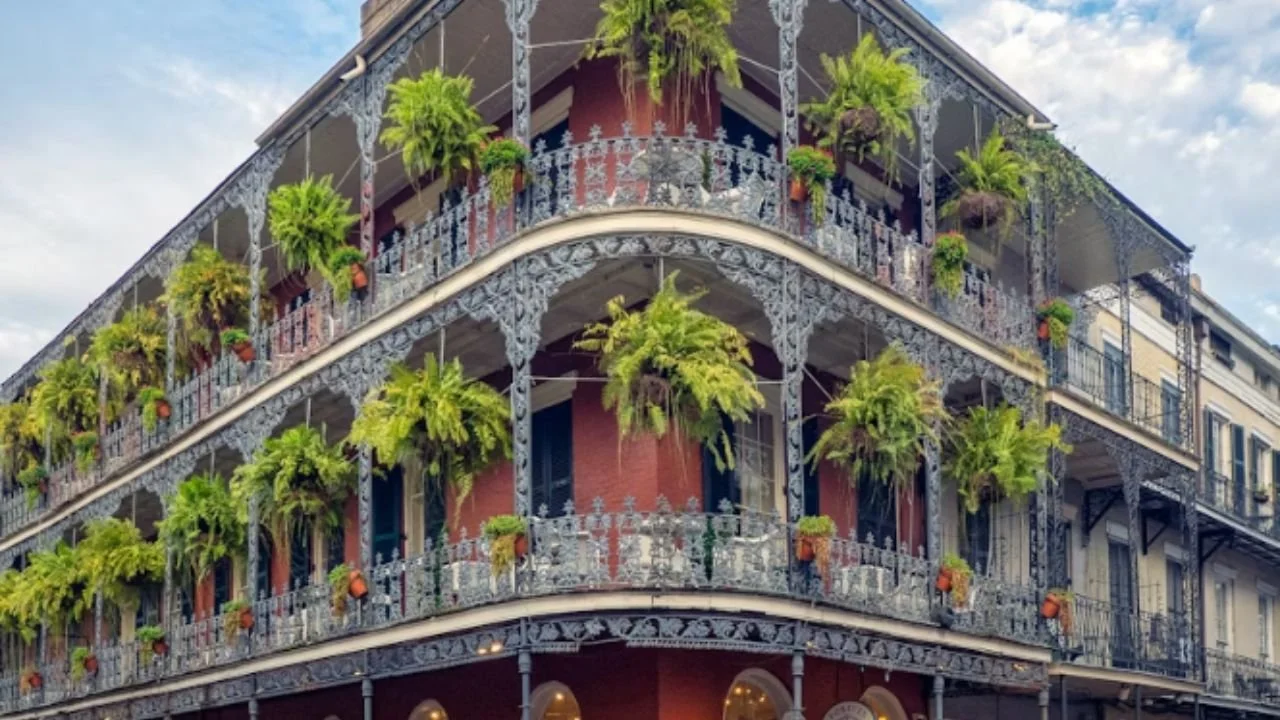
French colonial design still shapes what people see in New Orleans French Quarter architecture today. Most people walk past it without noticing the story inside the walls.
The streets look simple at first. Narrow buildings. Iron balconies. Soft colors. But the more you look, the more layers appear. Every wall holds history.
This is not just a style. It is a record of survival. It reflects empire, weather, fire, and time.
New Orleans French Quarter Architecture: Early French Roots
The French Quarter architecture first took shape in the early 1700s. French settlers tried to build a permanent city in a difficult place.
The land was wet and unstable. The heat was intense. Storms were common.
Early homes copied French European styles. They used wood and steep roofs. That design failed quickly.
How French Colonial Style Adapted
French colonial architecture in New Orleans changed significantly after the city came under Spanish rule in 1763. Much of what people now associate with the French Quarter was actually shaped by Spanish rebuilding efforts. These happened following major fires in 1788 and 1794. As a result, only a few true French Colonial buildings remain today. These are the Ursuline Convent, Madame John’s Legacy, and Lafitte’s Blacksmith Shop.
The original French Colonial structures were simpler and more closely tied to early Caribbean building traditions. During the Spanish period, builders introduced many of the features now identified with the French Quarter. Examples of this include brick construction, interior courtyards, wrought-iron balconies, and improved fire-resistant designs.
Flooding also played a role. The city sits low. Water has always been a threat. So, many buildings were raised. Steps leading up to entrances became common. It was a simple way to stay above rising water.
None of these changes were optional. They were responses to real danger. Fire and flood forced builders to think differently.
Over time, each disaster added another layer. That is why the French Quarter does not follow one clean style. It is a mix of what survived and what had to be rebuilt.
Even today, that pattern continues. Restoration work tries to keep original materials when possible. When that is not possible, newer materials are added carefully. The goal is to protect what remains without losing the story built into it.
Materials, Balconies, and Hidden Courtyards
Balconies are one of the most famous parts of the French Quarter architecture. Most people assume they came from the French. That is not quite true.
These features became common during the Spanish period. They were added after rebuilding began in the late 1700s. The goal was simple. Manage heat. Create shade. Use space better in narrow streets.
Balconies helped people step outside without leaving home. They also caught breezes that rarely reached the ground. Over time, they became a defining visual detail of the Quarter.
There is also a detail many visitors miss. Not all “balconies” are the same.
Balconies are self-supporting. They attach directly to the building.
Galleries are supported by posts or columns from the ground.
That difference matters in New Orleans. It shows how buildings were designed based on structure, not just style. Galleries became common in response to climate. They provided shade at street level and above it.
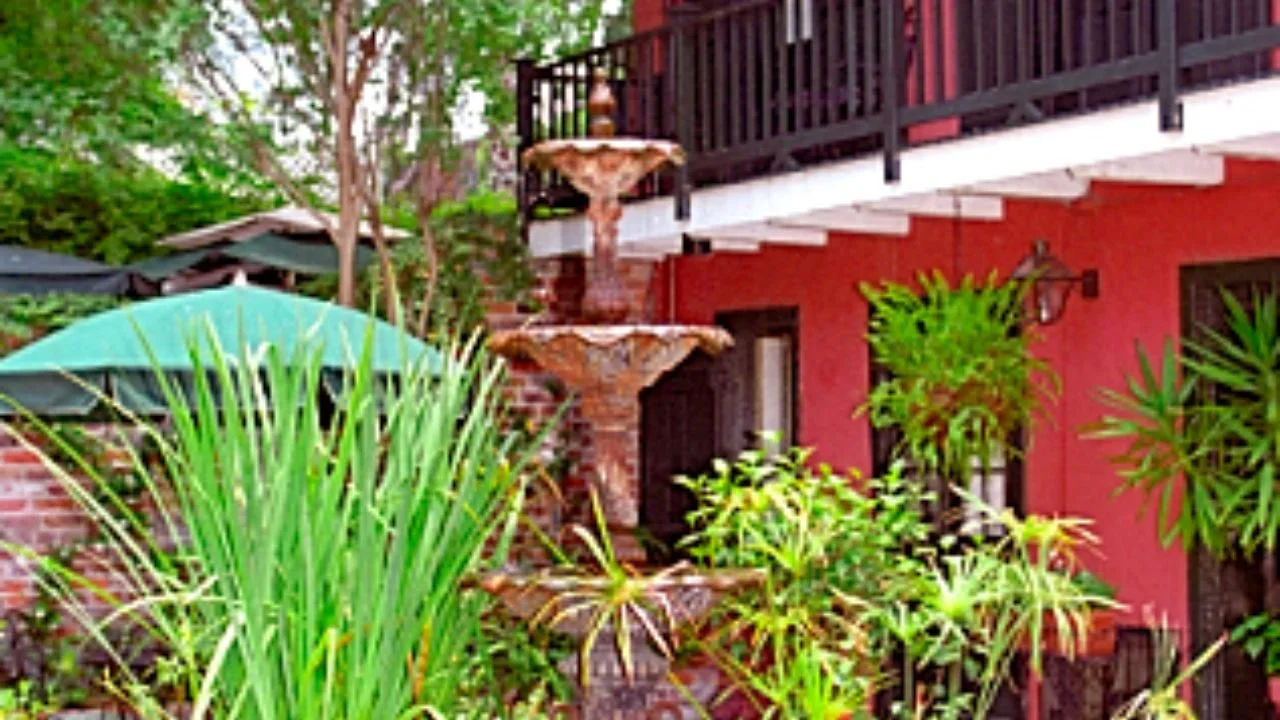
Courtyards tell a similar story. They are often hidden from view. From the street, buildings feel tight and closed. Step inside, and everything opens up.
These interior spaces were shaped by Spanish design as well. They brought in light and air while keeping privacy. In a dense city, that balance was important.
Other common features include:
Brick and stucco walls built for strength
Arched doorways influenced by Spanish design
Narrow fronts with deeper interior layouts
The contrast is what makes it all work. The outside feels compact. The inside feels open and calm.
What Still Remains Today
The French Quarter is often seen as preserved history. That is only partly true. It is better described as edited history.
Still, many original elements remain:
Early street layout from colonial planning
Surviving building foundations
Ironwork traditions
Courtyard designs
French, Spanish, and Creole blends
What stands out most is not just design. It was intention. These buildings were shaped by pressure. Every choice had a reason.
Even today, that feeling remains in the streets.
A Short Timeline of the French Quarter Architecture (1718–Present)
1718: The French Found the City
New Orleans was founded in 1718 by the French. Early buildings were simple and made mostly of wood.
These structures followed European ideas. But they did not hold up well. The climate was too harsh. Heat, rain, and flooding caused problems almost right away.
This is where the French Quarter architecture begins. It starts with trial and error.
1763: Control Shifts to Spain
After the Seven Years’ War, Louisiana was transferred to Spain. This shift changed how the city was built.
Spanish officials pushed for stronger construction. Brick and plaster became more common. Buildings started to look more solid and more durable.
This period added a new layer to New Orleans French Quarter architecture.
1788 and 1794: The Great Fires
Two major fires reshaped the French Quarter. The first happened in 1788, and the second in 1794.
Large parts of the city were destroyed. Wooden buildings burned quickly.
After these fires, strict building rules were introduced. Brick construction became standard. Roofs and walls were designed to resist fire.
Much of what stands today comes from rebuilding during this time.
1803: The Louisiana Purchase
In 1803, the United States took control through the Louisiana Purchase.
American influence began to mix with existing French and Spanish styles. New materials and ideas entered the city. Still, the older layout and building patterns remained in place.
1800s: The Creole Era Expands
During the 19th century, Creole culture shaped the city’s identity. This influence showed up in architecture.
Buildings combined French, Spanish, Caribbean, and local elements. Courtyards, balconies, and thick walls became more refined.
This is the period that gives the French Quarter much of its recognizable look today.
1930s: The Vieux Carré Commission
By the early 20th century, parts of the French Quarter faced the risk of demolition. Modern development threatened older buildings.
In the 1930s, the Vieux Carré Commission was created to protect the area.
This was a turning point. Preservation became a priority. Rules were put in place to maintain historic character.
Without this step, much of the French Quarter architecture might not exist today.
1965: National Historic Landmark Status
In 1965, the French Quarter was named a National Historic Landmark.
This recognition brought national attention and stronger protection. It helped ensure that the area would be preserved for future generations.
It also confirmed the importance of the French Quarter architecture on a national level.
Today: A Living, Changing Landscape
The French Quarter is not frozen in time. It is still active and changing. People live here. Businesses operate daily. Buildings are repaired and restored.
Yet the past remains visible in every block. Each layer still exists alongside the next.
That is what makes New Orleans French Quarter architecture feel alive. It is not just history. It is ongoing.
Walking Through the Quarter Today
Walking through the French Quarter feels like moving through time.
The street level is loud and busy. Shops, music, and crowds fill the space. Above it, balconies sit quietly. The contrast is strong.
It is easy to forget how old these streets are. But small details give it away. A worn brick. A narrow doorway. A shaded courtyard hidden behind a wall.
New Orleans French Quarter architecture is not just seen. It is experienced slowly. Nothing here feels accidental.
Even the spacing of buildings tells a story. Everything was built close together for a reason.
Key Landmarks Still Standing in New Orleans French Quarter Architecture
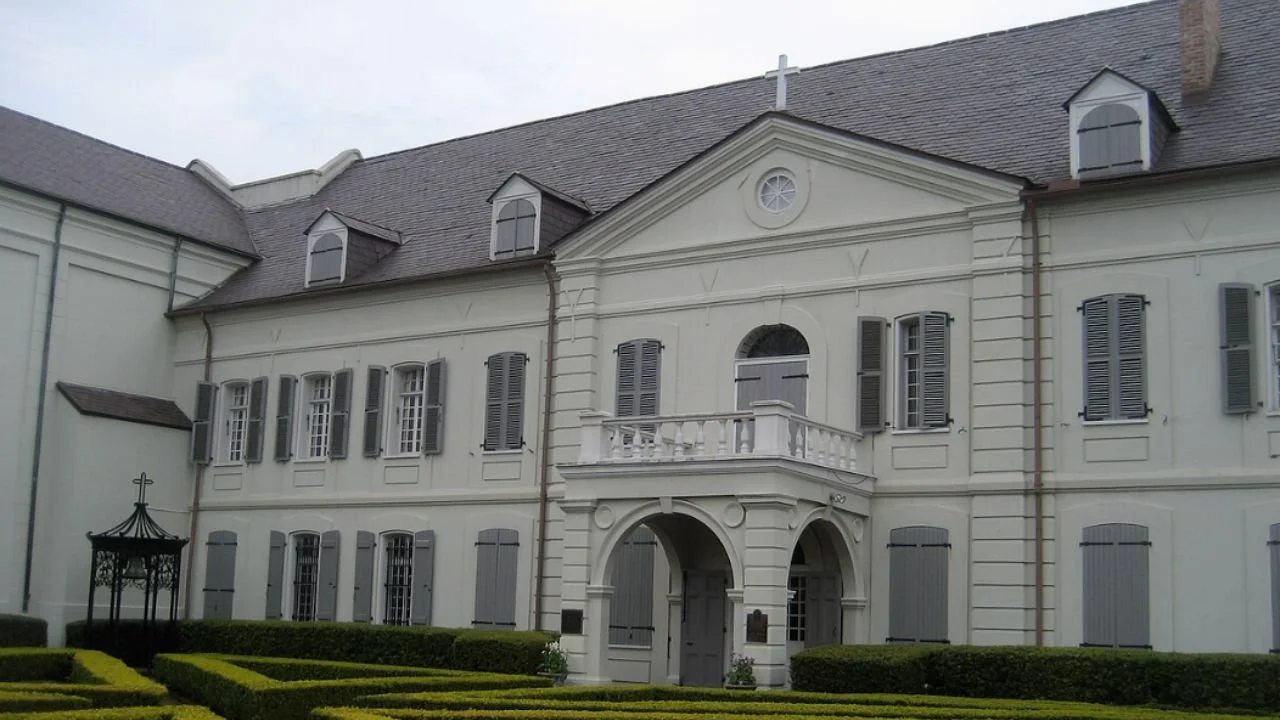


A fantastic way to understand the city’s architecture is to closely see the current structures. These landmarks hold so much history in their design. They also show how French colonial design evolved over time.
Old Ursuline Convent
The Old Ursuline Convent is one of the oldest surviving buildings in the Mississippi Valley. It was completed in the mid-1700s. This was during the French colonial rule.
Its design is simple compared to later buildings. That simplicity is part of its strength. Thick brick walls were used to handle heat and humidity. The structure also reflects early French colonial priorities. It focused more on durability than decoration.
Over time, it became one of the most important religious and civic buildings in the city. Today, it stands as a strong example of early New Orleans French Quarter architecture.
Madame John's Legacy
Madame John’s Legacy is another rare surviving French colonial residence. It was rebuilt after the great fire of 1788. The fire destroyed many wooden structures in the city.
The building reflects French colonial residential design. But it also has Spanish-era rebuilding influence. It has a raised brick basement and a wide hipped roof. This helps with heat and rain. These features were practical, not decorative.
What makes it especially important is how clearly it shows the shift in building methods after fire reshaped the city. It is one of the few places where early residential life can still be understood through architecture alone.
Lafitte's Blacksmith Shop
Lafitte’s Blacksmith Shop is often considered one of the oldest surviving structures in the French Quarter. It dates back to the early 1700s. However, exact records are not fully clear.
Architecturally, it is very simple. It uses brick construction and small openings. This helped with durability in a harsh climate. The building has a worn, uneven look. It reflects centuries of use and repair.
Its structure represents early commercial-style French colonial building methods. It also shows how buildings were reused over time for different purposes.
The Cabildo
The Cabildo sits next to St. Louis Cathedral. It is one of the most historically important civic buildings in New Orleans. It was built during Spanish rule in the late 1700s.
Architecturally, it reflects Spanish colonial design. It features arched openings, stucco walls, and a balanced facade. This was meant to represent authority and order.
The Cabildo also marks a major shift in the French Quarter architecture. It shows how Spanish influence began blending with earlier French foundations. That mix eventually shaped much of the city’s architectural identity.
Each of these landmarks shows a different layer of the French Quarter architecture.
Together, they form a timeline in physical form. Walking between them feels like moving through different versions of the same city.
New Orleans has a reputation for its haunted history or storytelling traditions. These buildings appear there, too. They are a part of many local legends and tour narratives. But even without those stories, their architecture alone carries enough history to stand on its own.
Why This Architecture Still Matters
This architecture is not frozen in the past. It is still active. People live here. Businesses run every day. The streets never really go quiet.
At the same time, history does not fade. It stays visible if you know where to look.
The French Quarter architecture still reflects a few core truths:
It shows how people adapted to heat, water, and storms
It carries the marks of French and Spanish colonial rule
It blends cultures that shaped the city over time
It holds the impact of fires and rebuilding
But there is another layer that often gets missed. These buildings are not just structures. They are settings for real human stories.
Some of those stories are uncomfortable. They touch on power, control, and colonial systems. Others connect to belief, ritual, and the unseen. In a city known for its ties to Voodoo and spiritual traditions, place and story are often linked.
That is where the experience shifts. The architecture is no longer just something to look at. It becomes something to interpret.
Walk past a quiet courtyard at night and it feels different than it does in the afternoon. Stand near an old wall that has survived fire. It carries a kind of weight. Not because anything is proven to be there, but because history has settled into space.
This is exactly where Hottest Hell Tours brings a different perspective. Our approach does not rely on exaggeration or staged moments. Instead, it focuses on real history and real locations that are already there.
When those stories are told in the places where they happened, the connection feels stronger. The buildings are no longer just part of the setting. They help shape how the story is understood.
It is not about proving the supernatural. It is about understanding why certain places feel the way they do. It makes you understand how history, belief, and environment come together.
In that sense, every structure carries more than a timeline. It holds memory and context. Oftentimes, it carries the feeling that the past is not as distant as it seems.
FAQs
Is the French Quarter actually French?
Not fully. The area was founded by the French in 1718, but most buildings seen today were rebuilt during Spanish rule after fires in 1788 and 1794. So while the name is French, the architecture is mostly Spanish colonial with some French influence. It is a mix shaped by history, not one single style. It was named the French Quarter in the mid twentieth century in an effort to bring awareness and increase tourism. It was known simply as the Vieux Carre.
What style is most common in the French Quarter?
The most common style is Spanish colonial with Creole influence. After major fires, buildings were rebuilt using brick, stucco, and tile roofs. Over time, French, Spanish, Caribbean, and local ideas blended together. That mix created what people now recognize as New Orleans French Quarter architecture. It is not one style, but a combination.
What is the oldest building in the French Quarter?
The Old Ursuline Convent is often considered the oldest surviving building in the French Quarter. It was completed in 1752 during French rule. The structure uses brick and simple design for strength and durability. It still stands today and gives a clear look at early colonial building methods in New Orleans.
Why does the French Quarter have iron balconies?
Iron balconies became common during Spanish rule after the late 1700s fires. They were added for airflow, shade, and extra space in narrow streets. Many people think they are French, but they are mostly Spanish in origin. Over time, they became one of the most recognizable features of the French Quarter.