
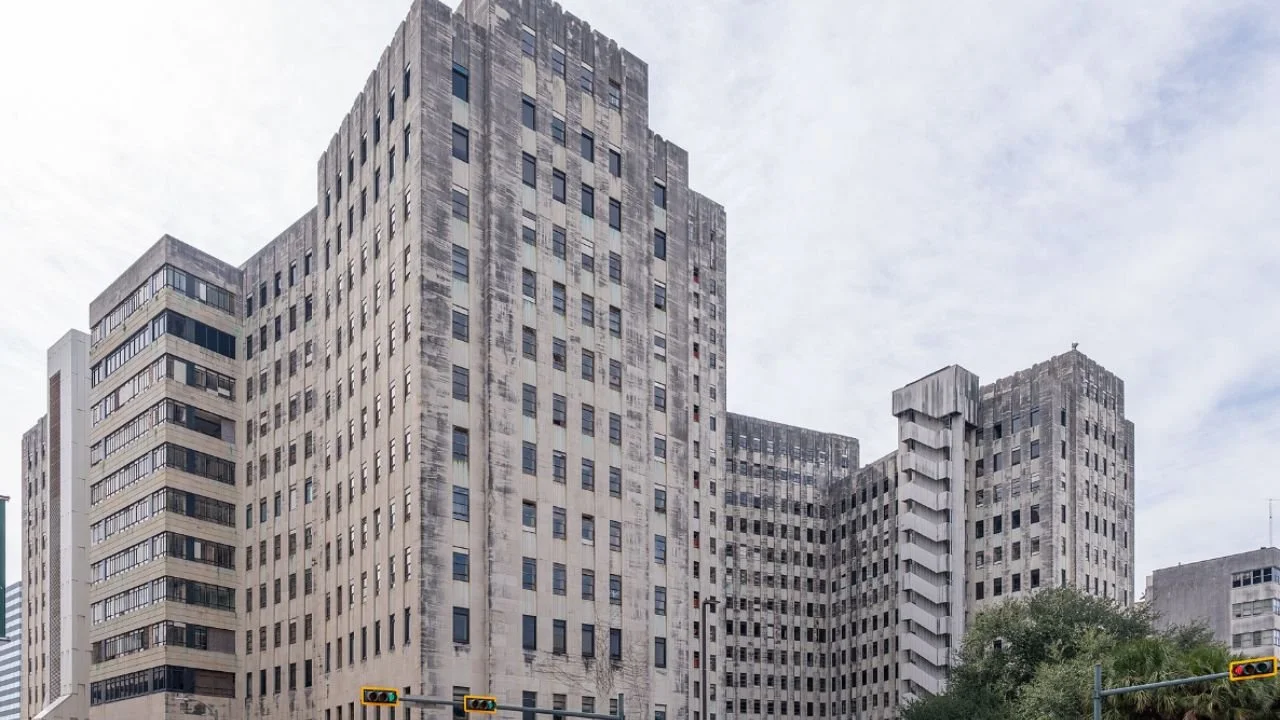
Charity Hospital in New Orleans is not just an abandoned building. It is a place shaped by stories of care, crisis, and difficult moments that still feel close today.
Today, the structure looks quiet and still. Tall walls, sealed windows, and empty spaces give it a distant feel. Yet once you learn what happened inside, that distance disappears.
This is not a ghost story. It is about real people, real decisions, and real lived experiences.
A Quick Look at the History
The story of Charity Hospital starts with a single decision that shaped the city for centuries.
In 1736, a French shipbuilder named Jean Louis left part of his estate to fund a hospital for the poor. His will made it clear. The money should help those who could not afford care.
That idea became L’Hôpital des Pauvres de la Charité. It means “Hospital for the Poor of Charity.”
From the beginning, the purpose was simple. Care for people who had nowhere else to go.
Over time, the hospital grew and changed with the city.
1736: First hospital established using Jean Louis’ donation
18th–19th centuries: Expanded through multiple buildings and relocations
1939: Current Art Deco building opened on Tulane Avenue
Peak years: Around 2,680 beds, making it one of the largest public hospitals in the country
Charity Hospital is considered the second oldest continuously operated public hospital in the United States. Only Bellevue Hospital is slightly older. It was founded just weeks earlier in 1736.
That long timeline matters.
This was a building that evolved over nearly three centuries. It adapted to new medical knowledge and changing needs.
For many families, this is the only place that would take them in, treat them, and try to help.
Reality 1: It Was a Lifeline for Thousands
Before anything else, this place was about care.
Charity Hospital treated people who had nowhere else to turn. It handled emergencies, long-term illness, and everyday health needs. Doctors trained here. Nurses worked long shifts here. Families waited in its halls.
Think about that for a moment.
If you lived in New Orleans without money or insurance, this was your option. That creates a strong connection between the building and the community.
You can still imagine what it felt like.
Busy hallways filled with patients
Doctors moving quickly between rooms
Families sitting and waiting for news
That kind of daily life leaves a mark. Not in a dramatic way, but in a human one.
That is why the building does not feel empty. It feels remembered.
Reality 2: Hurricane Katrina Changed Everything
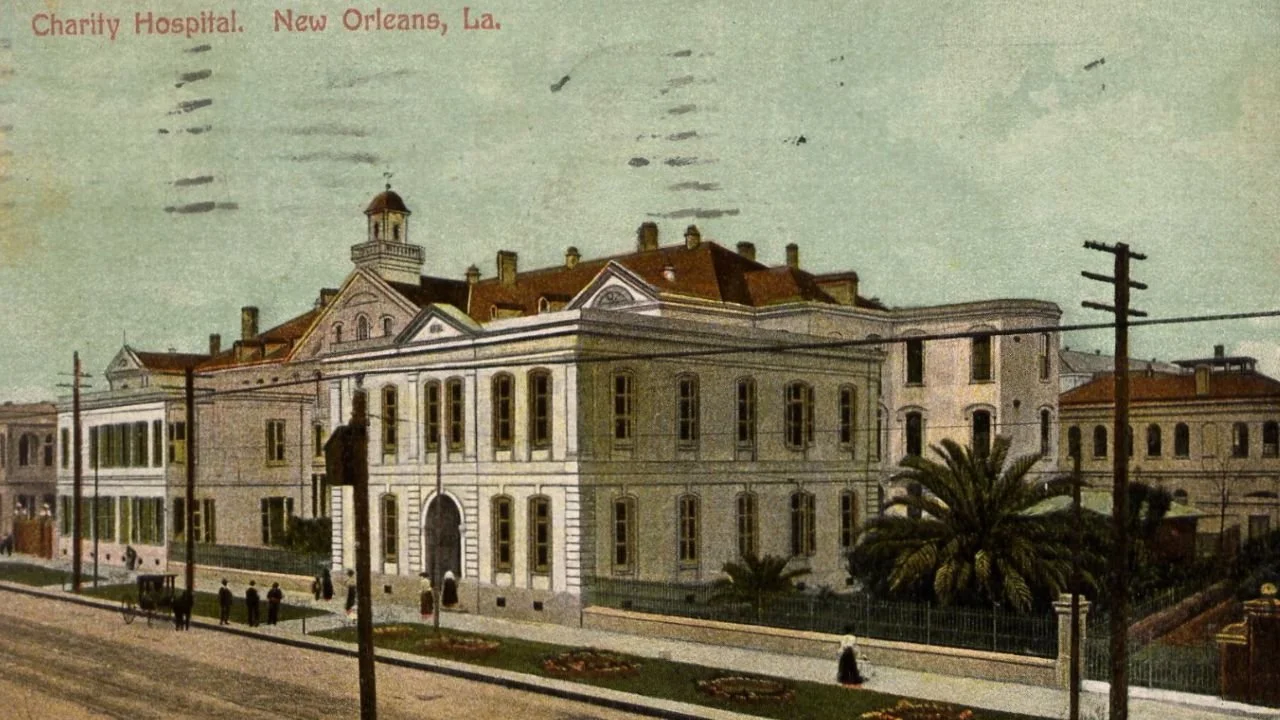
Credit: https://upload.wikimedia.org/wikipedia/commons/a/ac/CardOldCharityHospital.jpg
Then came August 29, 2005.
When Hurricane Katrina hit New Orleans, everything shifted at once. Floodwaters spread across the city. Power failed quickly. Communication systems stopped working.
Inside Charity Hospital, staff did not leave.
Doctors and nurses stayed with their patients. They continued working under conditions that kept getting worse.
No electricity for most operations
Limited access to clean water
Temperatures inside rising above 100°F
Toilets backing up as systems failed
The building was never designed for that kind of pressure. Still, people inside had no choice but to adapt.
Think about what that felt like.
Patients were already vulnerable. Staff had to make decisions without full equipment. Every hour brought new problems.
Evacuation became the only option, but it was not simple.
Patients had to be moved without standard medical support
Transportation was delayed and difficult to coordinate
Some evacuations required armed escorts for safety
Nearby hospitals faced similar conditions. At Tulane Medical Center, patients were airlifted from the roof. This was because ground transport was not possible.
That gives a clearer picture of the situation across the city.
The damage to Charity Hospital was severe. Estimates placed it at around $340 million.
But the bigger change came after the storm.
About three weeks later, Governor Kathleen Blanco announced that the hospital would not reopen. This surprised many people who expected it to return.
The response was immediate.
Hospital workers spoke out against the closure
Patients and community members protested the decision
A movement formed to try and reopen the facility
For many, this was not just about a building. It was about losing a system that had supported the city for generations.
That moment reshaped how people see the building today.
It is no longer just a place where care happened. It became a symbol of what systems can handle, and where they break.
Reality 3: Closure Left a Visible Gap
After Hurricane Katrina, Charity Hospital never reopened.
That decision removed a system the city depended on every day.
For decades, Charity Hospital had acted as a safety net. When it closed, that safety net disappeared almost overnight.
The impact showed up quickly across the city.
The city lost its only Level 1 trauma center. It handled the most critical injuries.
Psychiatric emergency services collapsed. This left a major gap in mental health care.
Non-state hospitals suddenly had to absorb thousands of additional patients.
Emergency rooms became crowded as demand increased.
Think about how sudden that shift was.
One day, a central system existed. The next, it was gone. Other hospitals had to adjust fast often with insufficient resources.
There were attempts to respond to the gap.
One example was the Spirit of Charity Clinic. It was set up at the Ernest N. Morial Convention Center. It was meant to provide basic care for those who had relied on Charity Hospital.
But a temporary clinic could not replace a full hospital.
It offered limited services compared to the original system
It could not handle large-scale emergencies
It served as a short-term solution, not a long-term fix
Here is a simple way to understand the shift:
Area: Trauma care
Before Closure: Centralized Level 1 center
After Closure: Fragmented across multiple hospitals
Area: Mental health
Before Closure: Dedicated emergency services
After Closure: Limited and harder to access
Area: Patient load
Before Closure: Managed through Charity system
After Closure: Spread across overwhelmed facilities
Area: Public care access
Before Closure: Reliable safety net
After Closure: Uncertain and uneven
The building still stands today. Its structure has not changed much. However, its purpose is gone.
It is not only about what happened inside those walls. It is also about everything that stopped happening when the doors never reopened.
Visiting from the Outside
Charity Hospital is still there. It has not disappeared. However, it is no longer open to the public.
Here is what you should know before going.
Quick Details
Detail: Address
Information: 1532 Tulane Ave, New Orleans, LA
Detail: Access
Information: Exterior only, building is closed
Detail: Area
Information: Central City, near downtown medical district
Best time to visit
Early morning or late afternoon
The building is large and hard to miss. It stands with its Art Deco design still intact. But it’s important to go with the right expectation.
You will not be able to enter
There are no exhibits or tours inside
The experience is about context, not access
Reality 4: It Represents System Limits
Charity Hospital shows how systems can reach their limit, and what happens next.
Before Katrina, the hospital handled a huge number of patients every day. It worked under pressure, but it functioned. During the storm, that pressure became extreme. Afterward, the system did not come back.
That alone raises questions. But the story goes deeper.
The Debate That Followed
After the storm, decisions about the hospital did not happen quietly.
There were claims and concerns about what came next.
Some argued that Louisiana State University had already planned a new medical complex before Katrina.
Critics said the storm created an opportunity to move forward with those plans.
Physicians and healthcare workers pushed back against closing Charity Hospital.
Protests and public discussions followed in the months after.
For many people, this was about whether the closure was necessary or a choice. That tension adds another layer to the story.
A Bigger Question Beyond One City
The situation also connects to a larger issue in the United States.
How are public hospitals funded, and who do they serve?
Charity Hospital mainly treated uninsured and low-income patients. That role is essential. But it is often harder to sustain financially.
So the questions become broader.
What happens to communities that rely on public hospitals?
How do cities prepare for large-scale emergencies?
Can existing systems handle both daily demand and rare disasters?
These are not simple questions. They do not have easy answers.
The Closure That Didn’t Have to Happen
Up to now, it may feel like a natural sequence. A hospital faced a disaster and closed. That sounds straightforward. But many people argue it was not that simple.
The closure of Charity Hospital became one of the most debated decisions after Hurricane Katrina.
What Some Reports and Critics Claimed
Investigations and academic studies raised difficult questions about what really happened.
Reports, including coverage by The Nation noted that the hospital suffered limited flooding. It was cleaned and restored within weeks. Some officials stated that it was functional. This raises questions about why reopening was not pursued.
A study from University of New Orleans examined the decision-making process behind the closure. It found that reopening efforts were halted by state and LSU leadership. This ultimately shifted the city’s healthcare system away from its safety-net role for low-income patients.
Critics argued that reopening Charity Hospital was not seriously pursued
These points do not all agree on every detail. However, they point in the same direction. The closure may not have been inevitable.
The LSU Expansion Debate
A major part of the controversy centers on Louisiana State University.
There had already been discussions about building a new, modern medical complex in New Orleans before Katrina. After the storm, those plans moved forward.
Some critics believe the disaster created an opportunity.
A new facility was proposed at a cost of about $1.2 billion.
Reopening the existing hospital may have conflicted with that plan.
Resources and attention shifted toward new construction instead.
This does not prove intent. But it does explain why the debate became so intense.
Statements That Raised Questions
Public officials also added to the discussion.
John Kennedy stated that, weeks after the storm, the building still had working systems.
If the building still functioned in some capacity, why was reopening not fully explored?
A Community Response
For many people, this became a personal issue:
Doctors and nurses spoke out publicly
Community members organized protests
Advocacy groups pushed for reopening
The concern was clear. Losing Charity Hospital meant losing a system that served those with the fewest options.
Seeing It Through the Right Lens
Try this the next time you pass a place like this. Pause for a moment. Ask a simple question.
“What happened here that I cannot see?”
The question shifts the focus from surface to depth. It turns a quiet building into something much more meaningful.
Hottest Hell takes such a thoughtful approach in their tours. We connect places to real events.
Instead of relying on shock, the focus stays on truth.
Stories are based on research, not rumor
Context is explained clearly
Each stop connects to a larger picture
Tours like Walking the Devil’s Empire and The Dim Corner explore areas around the French Quarter while focusing on real history. The Gates of Guinee Voodoo Tour looks at spiritual traditions with accuracy and respect.
You might expect a typical ghost tour. What you get instead feels more grounded. This lasts much longer than any quick scare.
FAQs
Why did Charity Hospital close?
Charity Hospital closed after Hurricane Katrina caused major damage in August 2005. Flooding affected the building and systems failed across the city. Officials later decided not to reopen it. Instead, they chose to build a new medical complex. This decision is still debated today.
Is Charity Hospital still abandoned?
The building is not in use as a hospital today. It stood empty for many years after Katrina. Even today, it stands abandoned and empty.
Who founded Charity Hospital in New Orleans?
Charity Hospital was founded in 1736 through the will of Jean Louis. He left money to care for the poor in the city. The hospital was first called L'Hôpital des Pauvres de la Charité. It became one of the oldest public hospitals in the United States.
What happened to patients during Hurricane Katrina?
Patients stayed inside the hospital for days after the storm. Staff continued care without power and with limited water. Conditions became very hard as temperatures rose. Evacuations happened slowly and under pressure. Many patients were moved using emergency transport and airlifts.
Will Charity Hospital reopen?
Charity Hospital will not reopen as a hospital. The state chose to replace it with a new facility. Its role in public healthcare has ended.