
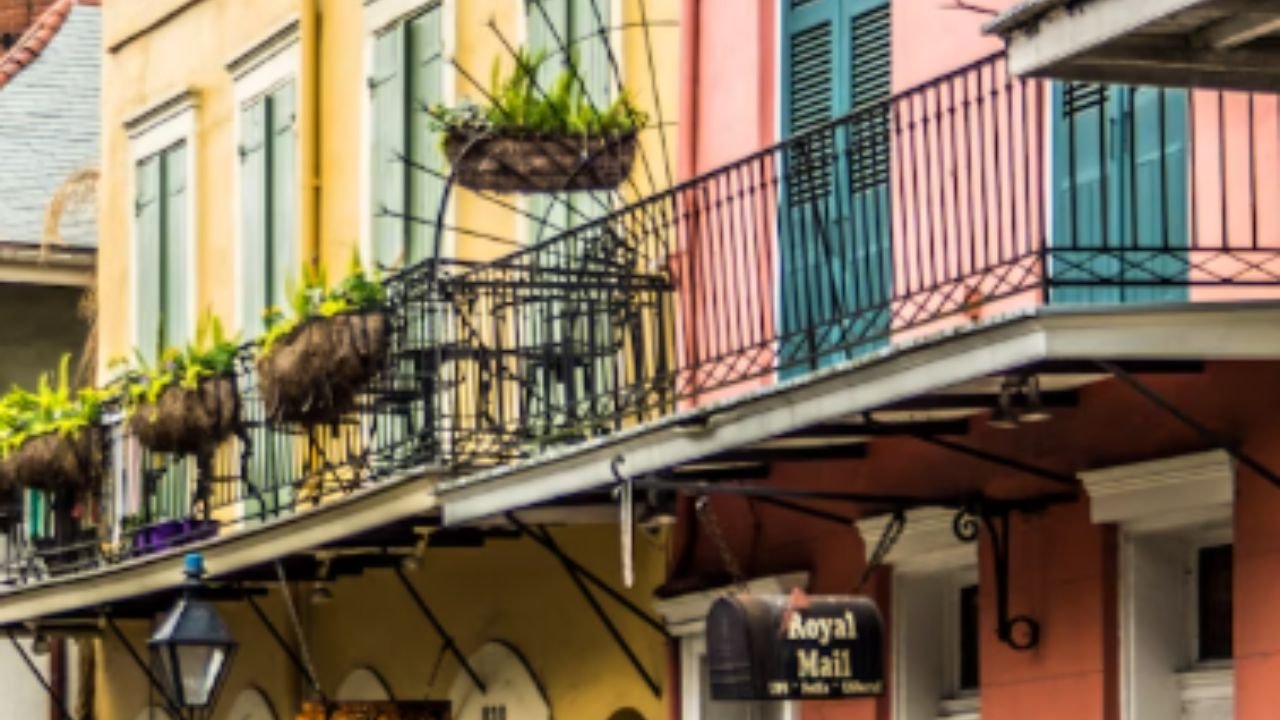
Credit = Wikipedia
America has many haunted towns. Few carry New Orleans' density of documented history. Over the course of a century, the city passed from French control to Spanish rule. Then it came back to France before becoming part of the United States through the Louisiana Purchase.
Fires burned the French Quarter twice. Epidemics returned for decades. War occupied its streets. Fires burned the French Quarter twice. Epidemics returned for decades. War occupied its streets. Most original French buildings were lost, and the district was rebuilt in the Spanish style seen today. Few American cities hold this much verified history within their streets. That density, not invented scary stories, is what sets New Orleans apart.
Here are the real places and stories that shaped them all. Each one has a documented past. Several also carry a haunted legend.
Le Petit Theatre
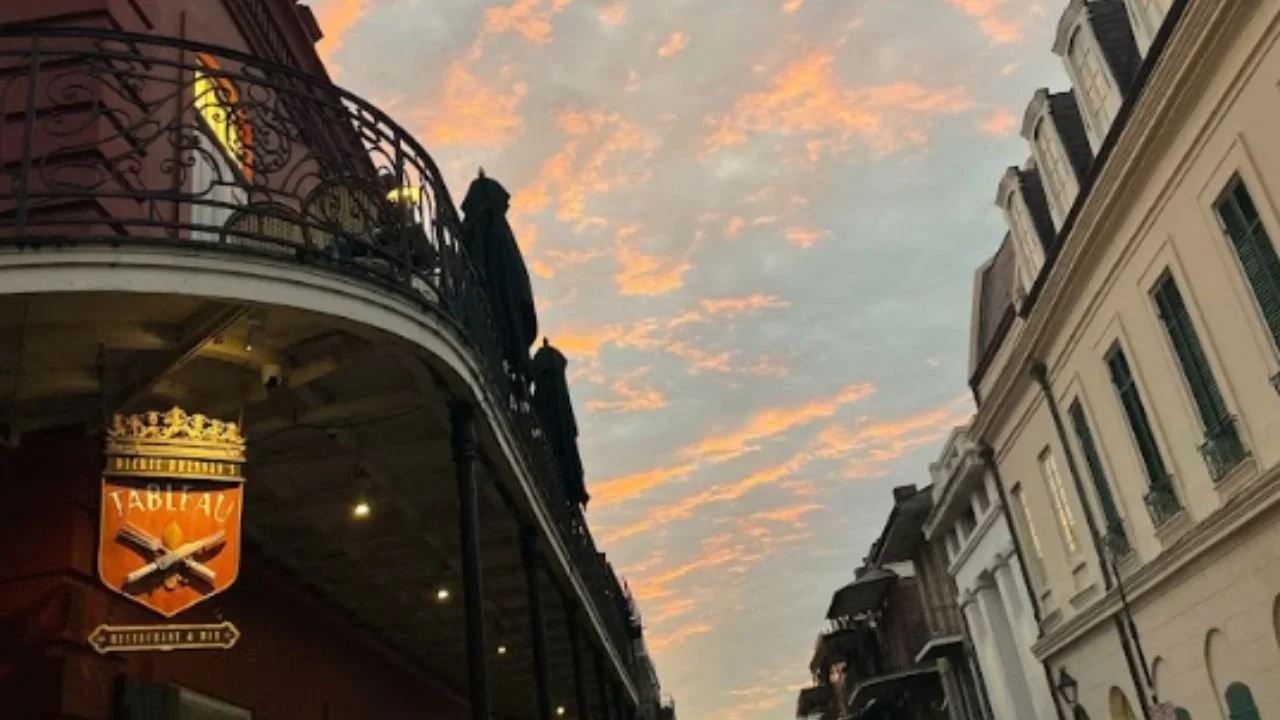
A group of friends started Le Petit Theatre in 1916. They called themselves the Drawing Room Players. They first performed in a member's living room, and by 1922, the company had its own building. It still stands at 616 St. Peter Street. The building remains one of the oldest community theaters in the country. It still stages shows today.
Staff have long described a ghostly company at Le Petit. The most common story involves an actress named Caroline. She is said to have fallen from the catwalk above the stage. Different tellers give different versions of her death. This inconsistency is the mark of folklore, not record. No documented case file confirms her existence. A 2025 newspaper piece on the theater confirmed one thing for certain. The stories persist among longtime staff. Whether anything truly walks the catwalk remains, fittingly, unverified.
Pere Antoine's Alley
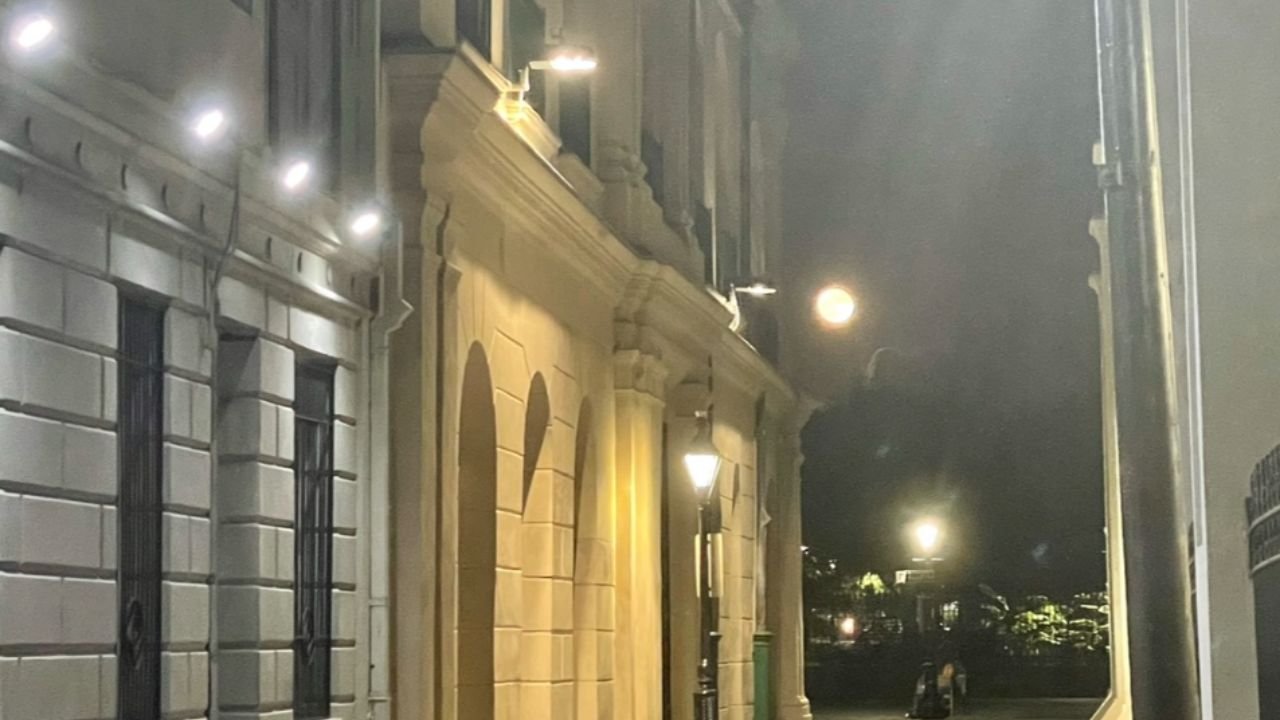
The alley beside St. Louis Cathedral honors a real man. Father Antonio de Sedella arrived in New Orleans in 1774. New Orleanians called him Pere Antoine. He served as the cathedral's rector for decades and was known for tending to the poor. He also ministered to prisoners and to enslaved people. He died on January 19, 1829. The city buried him inside the cathedral three days later. The alley beside the church was once called Cloister's Alley. It was renamed in his honor around 1924.
Local legend holds that his spirit still walks there. Witnesses describe a humming figure in the early morning. Some say he hums old hymns under his breath, but no record can confirm any of this. The legend persists because the man behind it was real, and genuinely beloved.
Site of the Old French Opera House
New Orleans once had a true grand opera house. It opened in December 1859 on Bourbon Street, at Toulouse. Architect James Gallier Jr. designed the building. For sixty years it anchored Creole social life. Carnival krewes held their grandest balls inside it. The opera closed during the Union occupation of the Civil War and reopened afterward, running for decades more.
By 1913 the company had fallen on hard times. Philanthropist William Ratcliffe Irby bought the building and gave it to Tulane University. On the night of December 3, 1919, fire broke out across the street and spread fast through the opera house's wooden interior. By morning, only brick walls remained standing. The lot sat empty for decades. Today the Four Points by Sheraton Hotel occupies the corner.
A ghost story grew up around the ruined site about Marguerite, a heartbroken opera singer. She is said to glide down the old front steps. The tale comes from a 1946 published collection of New Orleans ghost stories. It is not a newspaper or court record. That makes it printed folklore, not documented history.
Faulkner House Books
In 1925, an unknown writer rented rooms at 624 Pirate's Alley. His name was William Faulkner. He shared the building with artist William Spratling. Faulkner wrote his first novel there, called Soldiers' Pay. He left New Orleans for Paris the following year and later won the Nobel Prize in Literature. In 1988, attorney Joseph DeSalvo Jr. and his wife Rosemary James opened a bookstore there. They named it Faulkner House Books. It still sells rare editions and Southern literature today.
Visitors and staff sometimes describe the scent of pipe tobacco. Some say they have glimpsed a figure at the old writing desk, but no record documents either experience. It remains a story people tell, fondly, about a writer they admire. Whether that affection explains the legend, or simply flatters it, is unclear.
St. Louis Cathedral
A church has stood on this site since 1718, one year after the city's founding. The Great Fire of 1788 destroyed an earlier version. The building was rebuilt and raised to cathedral rank in 1793. A nineteenth-century renovation went badly wrong, where the central tower collapsed during construction in 1850. The cathedral was largely rebuilt that same year and survives today as the building most visitors recognize. It remains one of the oldest cathedrals in continuous use in the country. Pope Paul VI named it a minor basilica in 1964.
Two ghosts are commonly linked to the cathedral. One is Pere Antoine, said to appear near the altar during Midnight Mass. The other is Pere Dagobert, an earlier priest. He is said to hum the Kyrie on rainy mornings. Neither claim carries documentation. Both stories endure because the men they describe were genuinely devoted to this city.
An Old Absinthe House
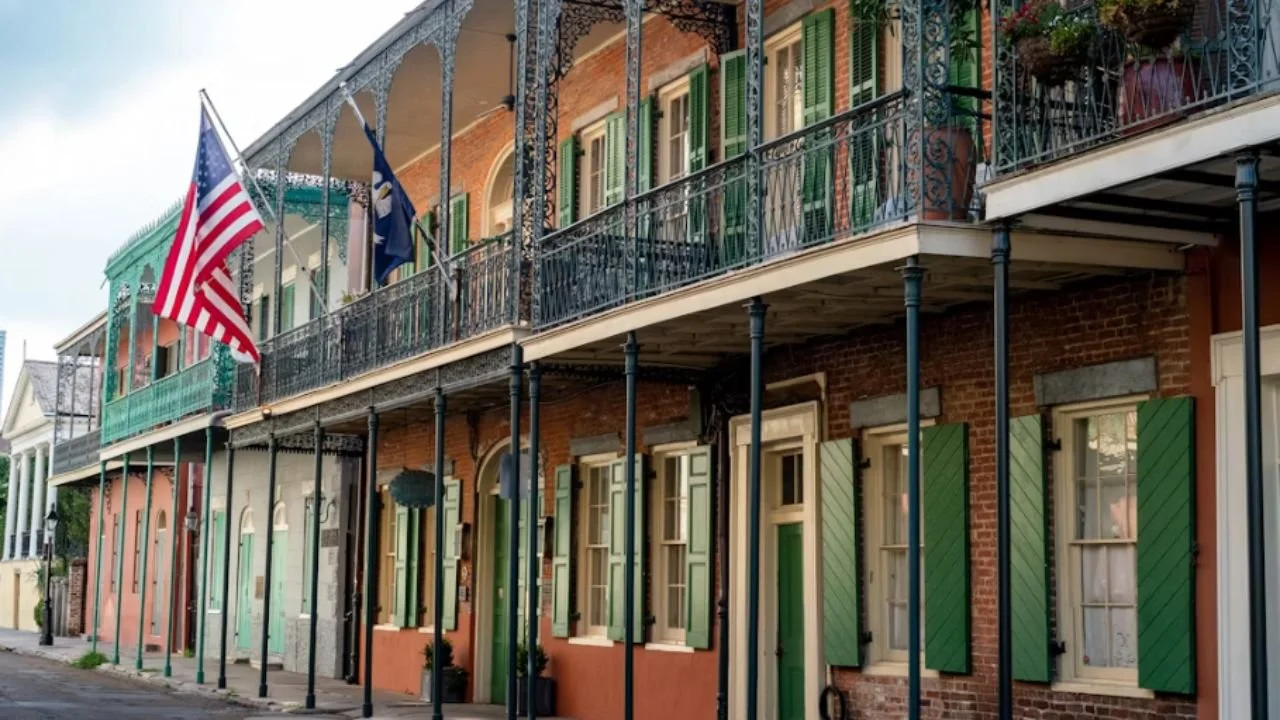
This stucco building at Bourbon and Bienville dates to about 1806. Spanish merchants Pedro Font and Francisco Juncadelia built it as an importing house. It became a bar over the following decades. By 1874, bartender Cayetano Ferrer had made it famous for the absinthe frappe. The building survives as one of the oldest in the French Quarter.
Its most famous legend involves General Andrew Jackson and the privateer Jean Lafitte. They are said to have met in a secret upstairs room. The story says they planned the defense of New Orleans before the Battle of 1815. Owner Owen Brennan installed a plaque repeating the claim in 1950. A rival bar, Maspero's, claimed the very same meeting happened on its property instead. The two businesses actually sued each other over the story. A judge dismissed the case in 1951 and ruled that legend is simply hearsay passed down through time. No historian has ever produced a document proving that the meeting took place anywhere at all. The tale endures because it is a wonderful story. It is simply not a documented one.
The Bourbon Orleans Hotel
This building began as the Orleans Ballroom in 1817. Entrepreneur John Davis built it beside his Theatre d'Orleans. The ballroom hosted masquerade balls for the city's elite, but a fire destroyed the old state capitol in 1828. The legislature met in the ballroom afterward, for a time. Historians today caution that popular retellings of these balls have often been exaggerated. The more significant chapter of this building's history came later. In 1881, the Sisters of the Holy Family bought the building. Henriette DeLille had founded that order in 1842. It was the first African American Catholic religious order in the United States. The sisters ran a convent, a school, and an orphanage there for 83 years. They sold the property in 1964 and the Bourbon Orleans Hotel opened two years after that.
Today the hotel is known for its ghost stories. Guests report children laughing in empty hallways. Others describe a solitary woman dancing alone in the old ballroom. A Confederate soldier is said to walk the upper floors. None of these accounts come with documentation. They are guest reports collected over decades, not historical records.
The Yellow Fever Epidemics
New Orleans fought yellow fever for more than a century. The disease arrived by ship from the Caribbean. Mosquitoes carried it, though no one understood that yet. Outbreaks struck the city most summers between 1817 and 1905. The summer of 1853 was the worst on record. Roughly 29,000 residents caught the fever that year. Most historians place the death toll near 8,000 to 9,000 people. The first confirmed case appeared at Charity Hospital on May 28. Newspapers downplayed the danger for weeks, fearing panic over honesty. By August, the city had lost control entirely. On a single day that August, 230 people died. New Orleanians called it the Black Day.
Recent immigrants suffered the worst losses. Irish newcomers, malnourished and lacking any natural resistance, died in especially high numbers. A group of thirty young businessmen organized relief through something called the Howard Association. The Louisiana Legislature gave the group legal standing. Volunteers nursed the sick and buried the dead, often with no medical training at all. The epidemic finally broke when autumn frost killed the mosquitoes. By then, mass graves dotted the city's cemeteries. The crisis pushed New Orleans toward real public health reform. Better sanitation and a quarantine system followed. Yellow fever did not fully disappear from Louisiana until 1905.
The Upstairs Lounge Fire
A fire tore through a gay bar on June 24, 1973. The bar was called the UpStairs Lounge and sat on the second floor, at the corner of Chartres and Iberville Streets. It had just hosted a service for the Metropolitan Community Church. That church was the nation's first LGBTQ-affirming Christian denomination. Someone poured a flammable liquid on the only staircase and set it alight. The wooden stairwell, the bar's single exit, went up in minutes. Thirty-two people died inside. At least fifteen more were injured, several after jumping from windows. It remains the deadliest fire in New Orleans history.
The city's response was its own kind of tragedy. Public officials stayed silent for days. Several churches refused to hold funerals for the dead. Some families would not claim their own relatives' bodies. Four unidentified victims were eventually buried in unmarked graves. No one was ever charged with the crime, but a man named Roger Dale Nunez was the chief suspect. He had been ejected from the bar that night, and died by suicide the following year. The case has stayed officially unsolved. The fire was the deadliest known attack on LGBTQ+ Americans for over forty years. That changed only with the 2016 Pulse nightclub shooting in Orlando. In 2013, the Archdiocese of New Orleans formally apologized for its silence at the time.
What All This Tragedy Built
New Orleans did not invent its reputation. It earned it through repetition. The city burned twice in the eighteenth century, in 1788 and again in 1794. Yellow fever returned for the better part of a century. A grand opera house burned to the ground in one long night. A gay bar burned with thirty-two people trapped inside. War occupied the streets during the 1860s. Hurricanes have flooded the city more than once. Each of these events is documented. None of them needed embellishment to feel unsettling.
That repetition is the real source of the city's atmosphere. Few American cities have buried this many people, this many times. Few have done it in such a small footprint. Grief accumulates in a place like that and so does memory.
Understanding that loss is different from chasing a ghost. One asks what happened, and why, and to whom. The other only asks for a scare. New Orleans deserves the first kind of attention.
We Walk You Through History. We Don't Stage It.
Reading about these places is one thing. Walking past them after dark is another. Hottest Hell Tours leads guests through this exact stretch of the French Quarter. Past the alleys and past the cathedral steps. Past the bar where legend and fact still argue.
The tour is owned and led by a credentialed historian. A team of fellow researchers and published authors backs her up. Every story gets checked against the record before it reaches a guest. When something cannot be verified, the guide says so, clearly, on the spot. Tragedies like the Upstairs Lounge fire are not treated as entertainment. Neither are the Yellow Fever epidemics. They are treated as history, told with the weight they deserve.
A fake ghost story can be invented by anyone with a flashlight. Real history takes research, sourcing, and a willingness to say, we don't know. Hottest Hell Tours chooses the harder, truer path every time. There are no jump scares here, no actors in costume, no manufactured screams. The history alone is unsettling enough.
Book a walk through New Orleans after dark. Decide for yourself what still lingers, and what simply deserves to be remembered.
FAQs
What is the #1 most haunted place in America?
There is no official ranking for the most haunted place in America. However, many people consider the French Quarter in New Orleans one of the country's most haunted areas. Its centuries of documented history, fires, epidemics, wars, and countless local legends have created a reputation that attracts visitors interested in both history and hauntings.
What are the top 10 haunted places in America?
Lists vary, but popular haunted destinations often include New Orleans, Salem, Gettysburg, St. Augustine, Savannah, and Charleston. Historic hotels, battlefields, prisons, and old neighborhoods frequently appear on these lists. Many of these places are known for both documented history and reported paranormal experiences, making them popular with travelers and history enthusiasts alike.
What is America's biggest ghost town?
One of America's largest and most famous ghost towns is Bodie, California. Once a busy mining town, it was home to thousands of residents during the gold rush era. Today, many of its buildings remain standing in a state of preserved decay. Visitors can walk through the historic streets and see what remains of the once-thriving community.