
Credit = Wikipedia
Cryptids have long been a part of American folklore. But only a few are well-remembered. Mothman is definitely one of them. Its legend has inspired books and films. There’s even a festival dedicated to the cryptid. It takes place annually in Point Pleasant in West Virginia.
But modern retellings of this legend make it difficult to separate history from folklore. The latter carries many things that are invented by people as they pass stories along the way. Over time, it dilutes documented facts. Contrarily, the historical record sticks to what really happened and nothing else. It gives a clearer picture of what happened.
The First Reported Mothman Sighting
The first widely reported sighting occurred on November 15, 1966. Two young couples were exploring near the TNT area outside Point Pleasant, West Virginia. As they prepared to leave, they noticed a figure in the road. The figure moved into a nearby building.
The group drove away in fear. Moments later, they saw the creature again on a nearby hill. This time, it did not run. According to their account, the winged figure followed their vehicle. The witnesses reported that it kept pace with their car. They also reported hearing mouse-like squeaking sounds.
The pursuit ended when they reached the lights of Point Pleasant. The creature then disappeared into the night.
How Witnesses Described the Creature
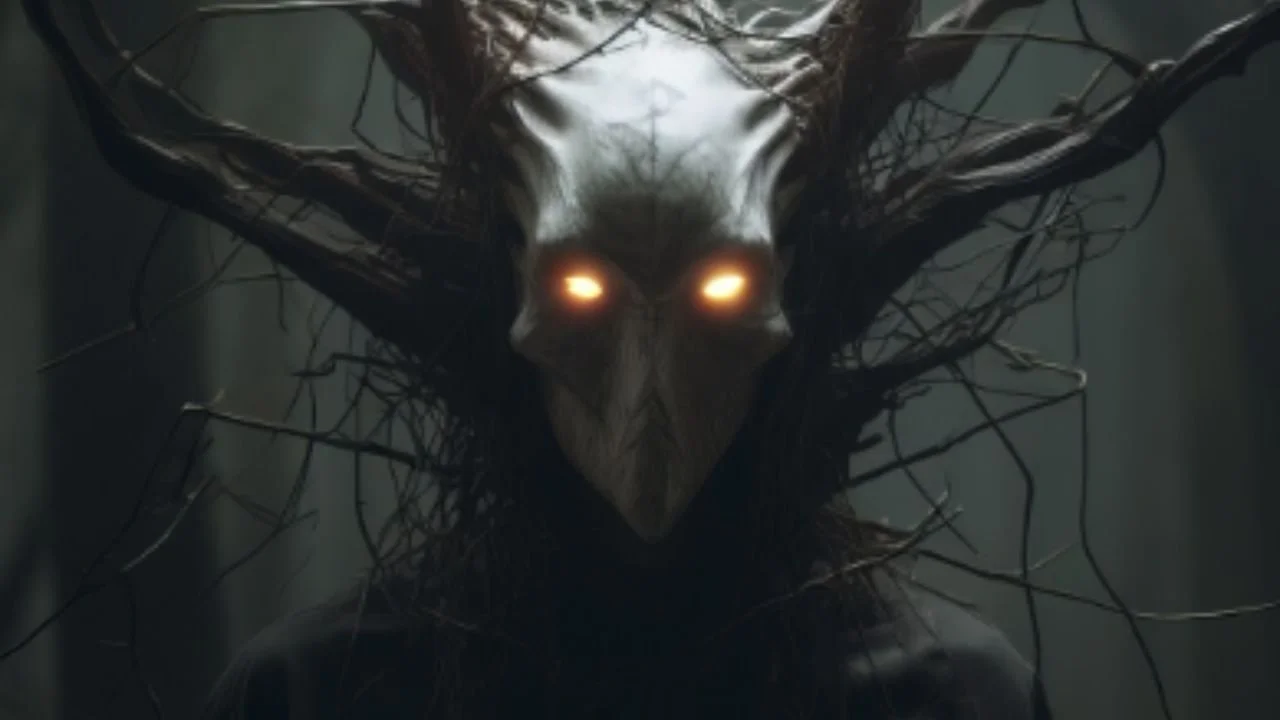
The witnesses quickly reported the incident to police. They described a large winged figure. According to their statements, it stood between six and seven feet tall. They estimated a wingspan of roughly ten feet. The creature appeared light gray and had large hands. The couples also noted that its head seemed set deep into its chest.
Its most memorable feature was its glowing red eyes. These details became central to later descriptions of the Mothman.
More Sightings Followed
Reports continued almost immediately. On November 16, another group encountered the creature. Marcella Bennett, her daughter, and Raymond Wamsley reported seeing it.
The sighting occurred near the TNT area. As they approached their vehicle, the creature appeared. The group fled into a nearby house. According to their account, the figure approached the building. Witnesses said it looked through the windows. They also reported that it tried the door. Eventually, the creature disappeared.
Additional reports followed. Two firefighters reported seeing a large bird with red eyes. Several teenagers also reported an encounter. By November 22, at least ten additional reports had surfaced. Over the following thirteen months, more than one hundred witnesses came forward.
What Was the TNT Area?
The earliest sightings shared one important detail. Many occurred near the TNT area outside Point Pleasant. Thus, this location became closely associated with the Mothman story.
As reports increased, the area became a focal point for investigators, reporters, and curious visitors. The TNT area still remains tied to the legend today because of those earliest accounts.
The Search for an Explanation
Not everyone believed a supernatural creature was involved. So, many people searched for ordinary explanations. Some connected the sightings to other paranormal claims, while others linked them to UFO reports and mysterious visitors.
Scientists proposed more conventional answers. One widely discussed explanation involved a sandhill crane, a bird that can reach an impressive size. Supporters believed misidentification could explain some reports.
Despite these theories, the mystery remained unresolved, and the sightings continued to attract attention.
Strange Experiences Beyond the Sightings
Some witnesses reported unusual experiences after their encounters. Roger and Linda Scarberry described strange noises in their home and reported beeping sounds at night. They also described noises resembling a tape recorder played at high speed. According to later accounts, the disturbances became so troubling that they moved.
Marcella Bennett reported a different effect. After her encounter, she struggled to drive at night. Other reports mentioned UFO sightings, electrical problems, and unusual events. These reports became part of the broader Mothman narrative.
The Silver Bridge and the Omen Theory
The most important event in the Mothman story occurred on December 15, 1967. That day, the Silver Bridge collapsed, claiming forty-six lives. After the collapse, many people reconsidered the earlier sightings. Some began to view the Mothman as an omen. This interpretation became one of the defining features of the legend.
The historical record shows an important detail. The creature was not originally known as an omen. That connection grew stronger after the bridge disaster.
Over time, the idea became central to public memory.
Why Historians and Folklorists Study Mothman
The Mothman remains important for reasons beyond the sightings. Researchers often study what the legend reveals about society. The creature appeared during a difficult period in American history.
The first sightings occurred during the 1960s, when the United States was deeply involved in the Vietnam War. Only a few years earlier, the Cuban Missile Crisis had brought the world close to nuclear conflict. Fear of nuclear war remained part of everyday life.
Many Americans lived with the possibility of sudden catastrophe. Fallout shelters and civil defense preparations reinforced those fears. At the same time, trust in institutions was changing. Questions about government authority became more common.
Interest in unexplained events was also growing. UFO sightings became a hot topic around this time. Many people talked about seeing them and whatever they said, gained widespread attention. Stories about mysterious creatures held a different kind of charm. They became increasingly popular. Television shows and movies harnessed the interest of people in this type of occurrence. They thus extensively explored supernatural themes. This led to more people becoming interested in the unknown.
Many scholars believe these conditions shaped how people interpreted the Mothman sightings. The creature appeared during a period filled with uncertainty. As a result, the story became linked to broader fears of disaster and of forces beyond human control.
The Silver Bridge collapse strengthened those connections. Many people later viewed the Mothman as an omen of tragedy. Historians note that this interpretation became more important after the disaster itself. Over time, the creature became linked to ideas of warning, catastrophe, and uncertainty.
Researchers also place the Mothman within a much older tradition. American folklore contains many stories about winged beings. Examples discussed by scholars include the Thunderbird, the Jersey Devil, the Snallygaster, and the Belled Buzzard. These creatures often appeared during periods of social change, fear, or instability.
For folklorists, this pattern is significant. The legends are not simply monster stories. They show how people respond to uncertainty. They help communities explain events that feel frightening, confusing, or beyond explanation.
That is why the Mothman remains relevant today. The legend offers insight into the fears of the Cold War era. It also demonstrates how folklore evolves over time. What began as a series of reported sightings eventually became a cultural symbol that reflected the anxieties of an entire generation.
From Local Legend to Cultural Icon
The Mothman did not disappear after the 1960s. The legend continued to evolve. Books introduced the story to new audiences and film adaptations expanded its reach. Television programs explored the mystery. Point Pleasant embraced the legend as part of its identity.
In 2003, the town hosted its first Mothman Festival. The event celebrated a story that had become part of local culture. Today, the Mothman remains one of America's most recognizable cryptids.
Looking Beyond the Legend
Stories like the Mothman endure because people seek meaning in unusual events. The historical record provides valuable facts, but folklore reveals something different. It shows how communities interpret fear, uncertainty, and change.
The most fascinating legends are often the ones grounded in real history. When examined carefully, they reveal far more than a simple monster story. They reveal how people understand the unknown.
That distinction matters. Legends become stronger when they are placed in their proper historical context. Separating documented events from later interpretations allows the story to remain both compelling and honest.
This approach guides everything we do at Hottest Hell Tours. We believe the truth is often stranger than fiction. Rather than relying on invented scares, we focus on documented history, folklore, and the people who experienced these events. Whether discussing a cryptid in West Virginia or a haunted story in New Orleans, the goal is always to tell the story accurately, respect history, and allow the mystery to speak for itself.
The result is a deeper understanding of why legends survive long after the witnesses are gone.
FAQs
Are there still sightings of the Mothman?
Reports of Mothman sightings have continued over the years, although they are much less common than during 1966 and 1967. The original wave of sightings in Point Pleasant remains the most famous period in the legend's history. Today, occasional reports still appear, but none have attracted the same attention as the early encounters.
What is the most famous Mothman sighting?
The most famous Mothman sighting occurred on November 15, 1966, near Point Pleasant, West Virginia. Two young couples reported seeing a large winged creature with glowing red eyes near the TNT area. They claimed it followed their car as they drove away. Their account sparked the series of sightings that created the Mothman legend.
How many sightings of Mothman have there been?
More than one hundred people reportedly came forward with Mothman sightings during the thirteen months following the first reports in November 1966. Witnesses described similar features, including large wings and glowing red eyes. While the exact number varies between sources, the original Point Pleasant wave involved a significant number of reported encounters.
Is Mothman real or a myth?
There is no proven explanation for the Mothman sightings. Some people believe witnesses encountered an unknown creature. Others suggest misidentification of a large bird or another natural explanation. Historians and folklorists often focus less on whether Mothman was real and more on what the legend reveals about fear, belief, and culture.