
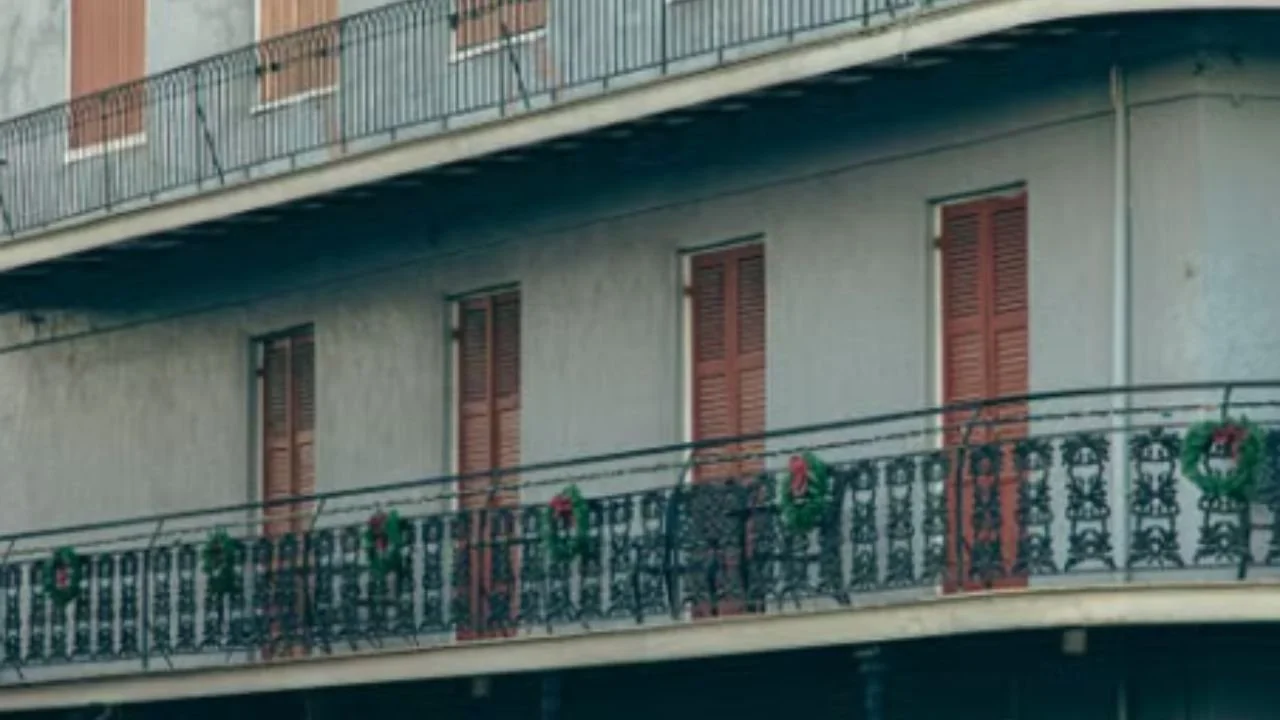
New Orleans is a different city after dark. Nowhere is that truer than the French Quarter. The crowds shift. The temperature drops slightly. The gas-style street lamps cast long shadows on two-hundred-year-old plaster walls. The sound of brass instruments drifts through narrow alleyways. The French Quarter at night is not simply a nightlife destination. It is one of the most historically layered neighborhoods in North America. The darkness that descends on the French Quarter at night makes its history feel present in a way daylight simply does not.
This guide covers what to expect, where to go, how to stay safe, and how to choose an experience that goes deeper than a bar crawl.
The Neighborhood Itself: A Brief Context
The French Quarter, known formally as the Vieux Carré, meaning "Old Square" in French, was founded in 1718. It is the oldest neighborhood in New Orleans. It spans roughly 13 blocks from Canal Street to Esplanade Avenue. It stretches 9 blocks from Decatur Street to Rampart Street. Despite centuries of development pressure around it, it remains largely intact. That survival is not accidental.
In 1936, the Louisiana state legislature amended its constitution to protect the neighborhood. That amendment created the Vieux Carré Commission. This city agency still governs exterior changes to every building in the district today. No owner can change so much as a paint color or a balcony railing without a permit. That legal framework is the reason visitors today walk through streets that look largely as they did generations ago.
In 1965, the French Quarter was designated a United States National Historic Landmark District. That designation added federal recognition to the local protection already in place. This combination is part of what makes the French Quarter genuinely irreplaceable.
What You'll See: The Architecture After Dark
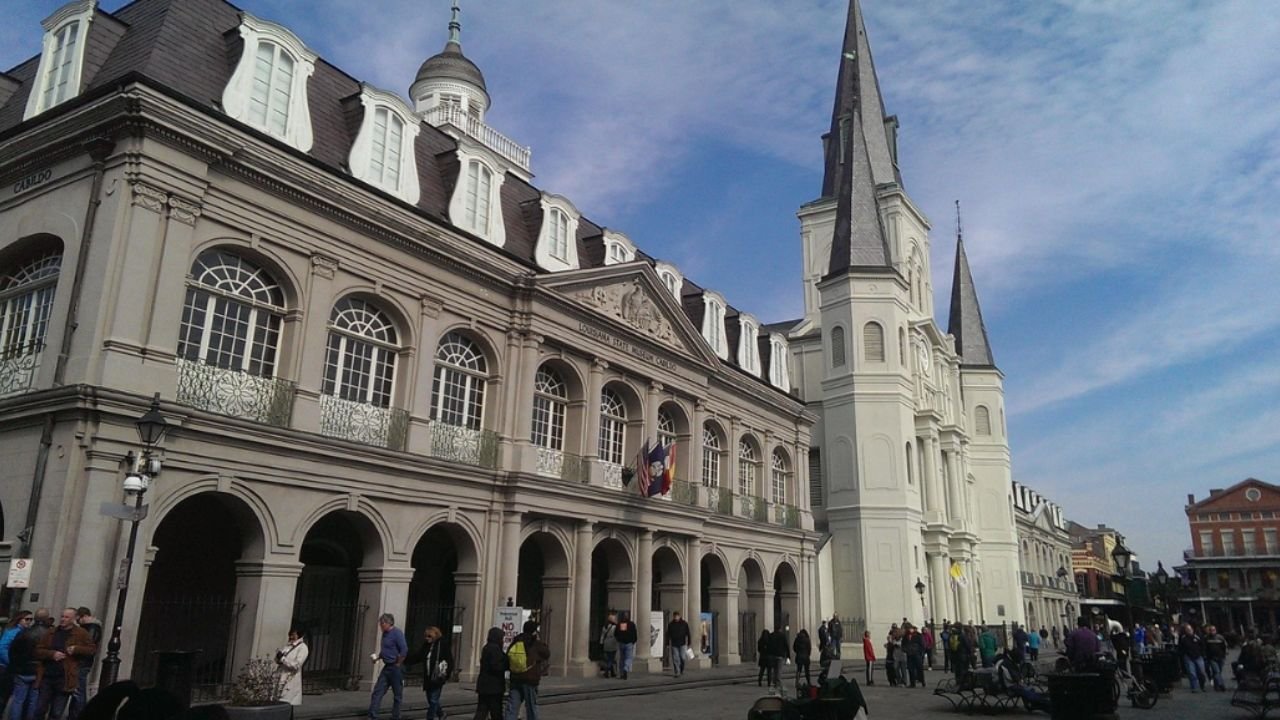
The architecture of the French Quarter is frequently described as French. That description is partly misleading. Most of what visitors see today reflects Spanish Colonial influence. Two fires destroyed most of the original French Colonial buildings. The first struck in 1788. The second followed in 1794. The Spanish colonial government oversaw reconstruction both times. Their builders used thick masonry walls, interior courtyards, and wide overhanging galleries. The result is what visitors see today.
The ironwork on the balconies is one of the Quarter's most recognizable features. The earliest examples are wrought iron, worked by hand. Cast iron, poured into molds, became dominant after the mid-nineteenth century. At night, the street lamps hit those railings at an angle. During this time, both materials produce shadows that fall across the sidewalk in patterns that change as you move. It is an architectural effect that only works after dark.
St. Louis Cathedral anchors the upper end of Jackson Square. It is illuminated at night. Its white facade stands out against the dark sky clearly. A church has occupied that site since 1718. The current building dates primarily to the mid-nineteenth century. At night, with its three steeples lit, is a highly photographed building in the South.
The courtyards behind many French Quarter buildings are not visible from the street. They were designed that way intentionally. Fountains, banana trees, and iron gates hide behind plain street-facing walls. Occasionally a gate stands open. This glimpse inward is one of the Quarter's small pleasures. It happens more often at night when restaurant courtyards are in full service.
What You'll Hear: Sound as History
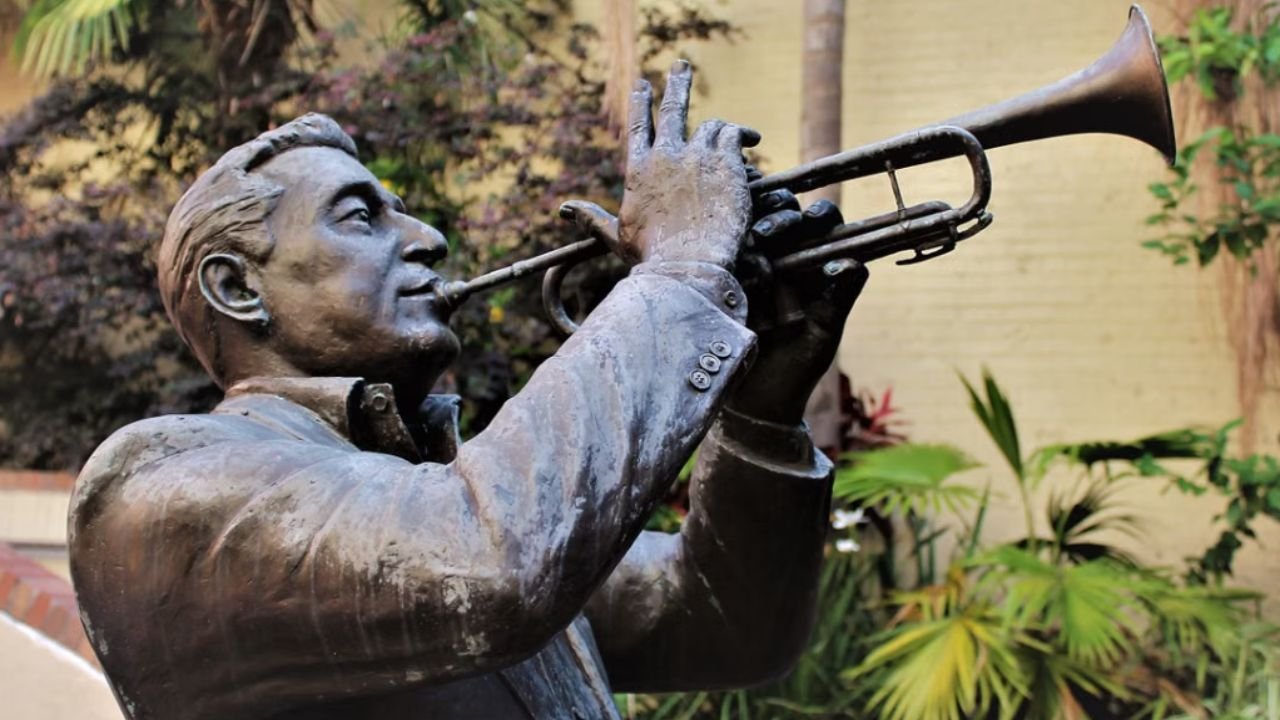
The French Quarter at night is an acoustic experience. New Orleans has one of the most documented popular music histories in the United States. Jazz developed here at the turn of the twentieth century. The city's tradition of street performance, second lines, and brass band music stretches back further than that.
Bourbon Street is the main entertainment corridor. Its bars and clubs operate late into the night. The music here spans decades and genres. It is loud, intentionally so, and primarily geared toward the entertainment of visitors. That is not a criticism, but a description.
There’s also something for visitors seeking more traditional jazz in a smaller setting. For them, the best place to be are the blocks of Frenchmen Street in the Faubourg Marigny neighborhood. Local musicians perform nightly in the clubs there. Many people who live in New Orleans distinguish between the two experiences. Both are real parts of the city's musical identity.
Street performers are common throughout the Quarter after dark. Musicians, artists, and performers work the sidewalks near Jackson Square and along Royal Street. All of them are part of the living character of the neighborhood.
What You Can Do After Sunset
The French Quarter at night offers a range of experiences across different styles of engagement.
Dining is one of the Quarter's strengths. The neighborhood has some of the oldest continually operating restaurants in the country. Antoine's Restaurant, founded in 1840, still operates on St. Louis Street. Several other historic restaurants within the Quarter have documented histories stretching back generations. Reservations are generally encouraged for the more established institutions.
The bars along Bourbon Street are open very late. Louisiana law allows open containers on public sidewalks. This means the party extends into the street itself. That is a distinctive feature of the city that surprises many first-time visitors. It also means Bourbon Street operates at a volume and energy level that is not for everyone.
Walking is one of the best ways to experience the Quarter at night. The neighborhood is compact. Most of its significant streets are walkable from one another within minutes. A self-guided walk along Royal Street, lined with historic buildings, offers a different pace. Jackson Square at night, when the daytime performers have thinned and the cathedral is lit, is worth the time on its own.
Nighttime walking tours are a major part of the Quarter's tourism economy. They range widely in quality, content, and approach.
Is the French Quarter Safe at Night?
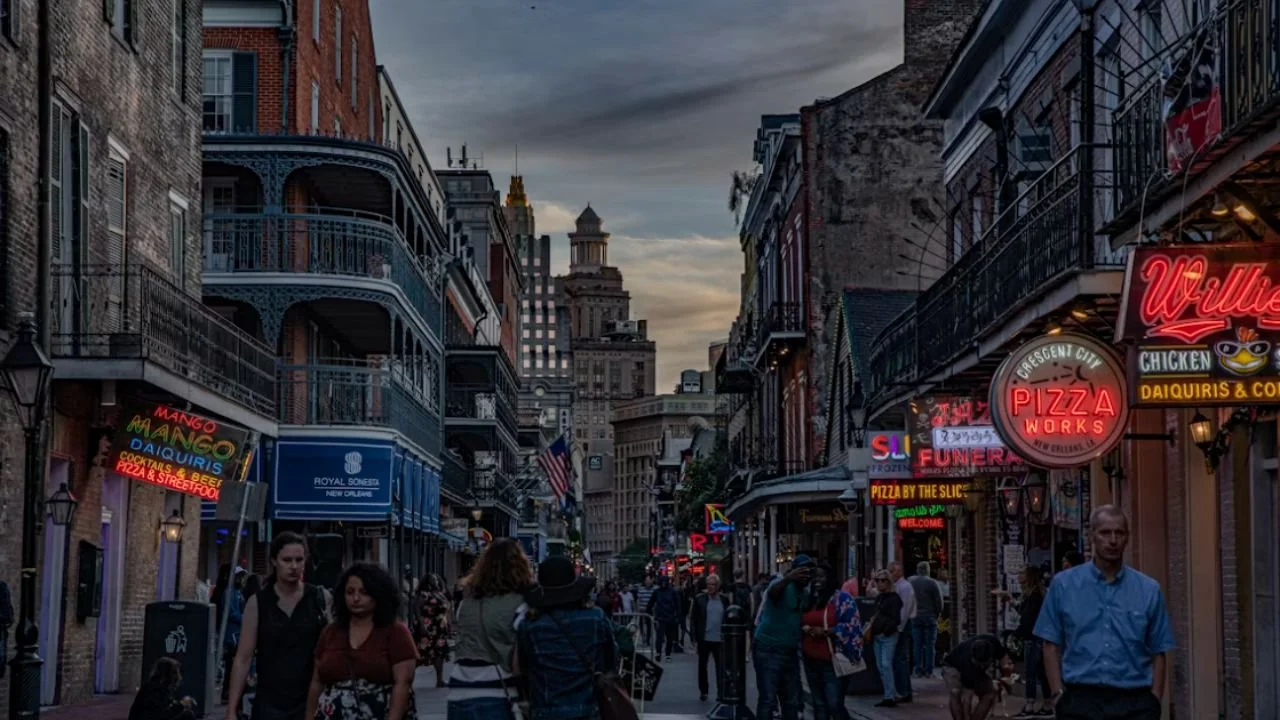
The French Quarter has a dedicated New Orleans Police Department district called the Vieux Carré District. It is specifically assigned to the neighborhood. NOPD officers patrol on foot along Bourbon Street and in the surrounding blocks. The neighborhood's density of people, bars, and businesses means it rarely empties out entirely. This is true even late at night. Populated, well-lit streets are generally the safest streets.
It is important to keep a few things in mind, though. Stay on the main, well-lit thoroughfares, especially late at night. Keep your phone and valuables close in crowded areas. The French Quarter's sidewalks are famously uneven. So, flat, comfortable shoes are strongly recommended by every experienced guide in the city.
The side streets between the Quarter's major corridors become quieter as the night progresses. Less foot traffic on those blocks means more caution is warranted. It is recommended to travel with at least one other person after midnight. This is not unique to New Orleans. It applies to any dense urban historic district after dark.
Why History Hits Differently After Dark
There is something specific about encountering old architecture at night that changes how information lands. At night, the field narrows. A lit facade emerges from darkness. A shadowed alley becomes significant simply because the eye is drawn to its edges. The brain engages differently.
Historians who lead nighttime tours have noted this effect for years. Context lands more firmly when a listener is already alert. The nighttime environment keeps visitors slightly on edge in a productive way. Details that might slide past in daylight. A building's age becomes more legible when the modern world around it has gone quiet.
This is not mysticism. It is psychology. The French Quarter's documented history, which includes fires, epidemics, wars, and more, is dense enough to fill hours of conversation. This content benefits from the conditions that nighttime provides.
Choosing the Right Nighttime Walking Tour
The French Quarter has a large and competitive tour market. It ranges from deeply researched, professionally delivered history experiences to loosely organized entertainment products built around jump scares.
A few questions help distinguish between them.
Does the tour disclose where its stories come from?
Does it distinguish clearly between documented history and legend?
Is the guide presenting verifiable information, or are they simply performing a routine?
Does the experience have a coherent point of view, or is it a collection of unrelated anecdotes selected only for shock value?
The best nighttime tours treat the French Quarter as what it actually is. It is a National Historic Landmark District with a documented grief-filled and unsettling history without any embellishment. Those tours do not need manufactured scares. They do not need actors jumping from doorways. The record itself is disturbing enough, if you know how to read it.
Walking the Devil's Empire: History After Dark, Done Right
Walking the Devil's Empire is the flagship evening tour offered by Hottest Hell Tours. It is a historian-led, adults-only walking experience through the French Quarter.
The tour meets at the front entrance of Armstrong Park, on the edge of the French Quarter. Evening departures are at 5PM, 7PM, and 8PM. Guests are asked to arrive thirty minutes before their selected departure time. The tour runs seven days a week and lasts approximately one hour and forty-five minutes. Groups are capped at no more than twenty people. It is the size at which a serious conversation remains a conversation, and not a lecture to a crowd.
The tour is owned and led by a credentialed historian. A team of researchers and published authors builds the content behind it. Every story is checked against documented sources before it reaches a guest. When something cannot be verified, the guide says so on the spot. There are no jump scares, no actors, and no manufactured screams. The tour's name draws from a real historical source. In 1728, a writer observing New Orleans wrote: "The devil here possesses a large empire." That observation, made nearly three hundred years ago, has not aged out of relevance. The French Quarter at night makes that description feel, if anything, understated.
Walking the Devil's Empire is for visitors who want to understand the French Quarter the way it actually is, which is a historic district with a documented past that is stranger than any invented ghost story could ever be.
Book your walk today. The French Quarter is waiting, as it has for a long time.
FAQs
Can you walk around the French Quarter at night?
Yes, you can. The French Quarter is walkable after dark. Stick to well-lit, busy streets like Bourbon and Royal. The neighborhood has a dedicated NOPD patrol district. Wear flat, comfortable shoes because the sidewalks are old and uneven.
What to do in the French Quarter at night?
Plenty happens after sunset. Dine at a historic restaurant. Listen to live music on Bourbon Street. Walk Royal Street for a quieter pace. Visit Jackson Square when the cathedral is lit. You can also take a serious history walking tour after dark.
What streets to avoid in the French Quarter?
Avoid quieter side streets late at night, especially alone. The less foot traffic a street has, the more caution it deserves. Stick to the main corridors. Travel with at least one other person after midnight on any unfamiliar block.