
New Orleans does not hold a monopoly on American monster legends. The country is full of them. Every region has its own creature, and its own story that refuses to die. Historians who study dark folklore quickly learn this truth. The monster at the bottom of a lake is never really about a monster. It is about the people who built the legend and what they feared. Champ, the lake creature of Lake Champlain in the northeastern United States, is one of the country's most enduring examples of that tradition.
This is the full story, separated from the fiction wherever the record makes that possible.
What Is Lake Champlain
Lake Champlain stretches along the border of Vermont and New York. It covers approximately 490 square miles of water. It is the largest lake in the Adirondack region. The lake runs deep in places and is surrounded by dense forest and mountain terrain. It drains north toward the St. Lawrence River. Its size and depth made it strategically important for centuries. It also gave the creature legend room to breathe. A lake this large is plausibly mysterious. Its deepest sections are genuinely difficult to survey. That geography alone explains part of why the legend survived.
The Indigenous Foundation: The Story Before European Arrival
The Champ legend did not begin with newspapers or showmen. It began with the Indigenous peoples who had lived along Lake Champlain long before European contact. Both the Abenaki and the Iroquois nations carried traditions of a large creature inhabiting the lake. Their descriptions pointed to something like a giant horned serpent or massive snake. The Abenaki had a specific name for it; the Gitaskog. Early in the eighteenth century, Abenaki people warned French explorers directly. They cautioned the newcomers not to disturb the lake's waters. The serpent, they said, was in there.
This is an important context. The creature predates European imagination. The legend existed within Indigenous oral tradition as part of a living relationship with the lake and its ecosystem. How the Abenaki and Iroquois understood Gitaskog within their broader cosmology is their tradition to tell. What the historical record confirms is that the story was already old when the French arrived.
The Bulwagga Origin Story
One specific legend explains how the creature first came to be. This story is associated with Bulwagga Bay, on the New York side of the lake near Port Henry. Local oral tradition has circulated this tale for generations. In 2021, the William G. Pomeroy Foundation installed a formal historic marker at 60 Bulwagga Drive in Port Henry to commemorate it. The marker reads, in part: "Scorned suitor transformed into lake monster when he plunged into this Bay after drowning his love, Bulwagga."
The story behind that inscription is this: A Native American princess named Bulwagga lived near the lake. Two suitors declared their love for her. She made her choice. The rejected man was consumed by rage. He followed Bulwagga to the water's edge and struck her. She fell into the lake and drowned. Overwhelmed by what he had done, the suitor then jumped into the bay himself. He carried heavy stones to pull himself down into the depths. The legend holds that the fates transformed him into a lake monster. He was condemned to search the water forever for the woman he destroyed.
This origin story belongs to the oral tradition of the region. It explains the lake's danger through human wrongdoing. The monster is not an alien threat from outside. It is the consequence of jealousy, violence, and grief. That is a meaningful distinction.
Samuel de Champlain: The Famous Misattribution
The lake is named for Samuel de Champlain, the French explorer who documented the region in the early seventeenth century. He is frequently and incorrectly credited as the first European to sight Champ. Careful reading of his own written accounts does not support that claim. His sighting of a large aquatic creature occurred near the St. Lawrence River, not on Lake Champlain itself.
Champlain wrote of a creature the local people called Chaousarou. He said the largest specimens, according to the tribes, were eight to ten feet long. He personally saw one about five feet in length. He described its head as the size of two fists, with a snout two and a half feet long. It had a double row of sharp teeth. Its body resembled a pike in shape. Its scales were silvery gray and strong enough that a dagger could not pierce them.
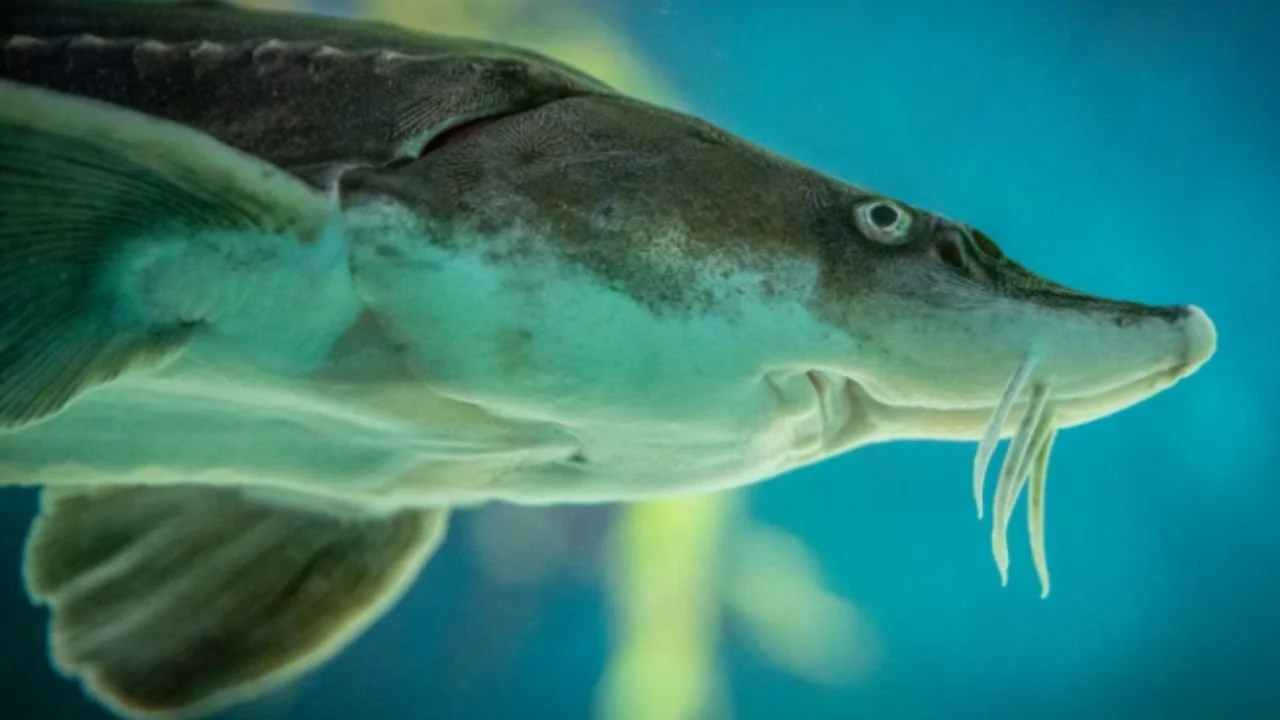
Historians who have studied this description believe Champlain was almost certainly looking at a garfish. The garfish family includes the lake sturgeon, which does in fact still live in Lake Champlain today. The description Champlain gave fits garfish anatomy closely, though at a larger size than is typical today. His sighting is historically interesting. It is not evidence of Champ. He was describing a real fish in a different body of water.
The 1819 Newspaper Account: The First Major Written Record
The first widely cited written account of a creature in Lake Champlain appears in the Plattsburgh Republican newspaper. The issue was dated Saturday, July 24, 1819. The account described events from the previous Thursday morning. Captain Crum was aboard a scow on Bulwagga Bay. He reported seeing a large black creature in the water. He said it was approximately 187 feet long. He described its head as resembling a sea horse. He claimed it reared more than fifteen feet out of the water. He described three teeth, eyes the color of a peeled onion, a white star on its forehead, and a red band around its neck.
That is a remarkable set of details. It is also worth noting that the creature, by his account, was roughly 200 yards away. The precision of the description sits in some tension with that distance. Historians read this account as part of the newspaper tradition of the time. Sensational stories sold papers. That does not mean Crum saw nothing. It means the account should be read critically, as any historical document deserves to be.
1873: The Year Champ Dominated the News
If 1819 launched the modern Champ legend, 1873 was the year it exploded. Three major accounts emerged within weeks of each other.
First, the New York Times ran a story about a railroad crew working near the lake. Several members reported seeing the head of an enormous serpent break the surface. They described bright silvery scales glinting in the sun. The creature and the men parted ways quickly.
Then, in July, Clinton County Sheriff Nathan H. Mooney filed his own account. He described what he called an enormous snake or water serpent. His estimate of its length was 25 to 35 feet. A county sheriff filing a formal report added a layer of credibility that a casual witness could not provide. He was, by profession, a man trained to observe and record.
August brought the most dramatic account of the year. The steamship W.B. Eddy reportedly collided with something large in the lake. Witnesses on board said the ship nearly capsized from the impact. A ship running into an object large enough to endanger its stability is an event with physical consequences. Whether the object was Champ, a floating log, or something else in the water has never been determined.
P.T. Barnum Enters the Picture
Not everyone who expressed interest in Champ in 1873 was a credible witness. Showman P.T. Barnum announced a reward of $50,000 that year. He wanted the hide of the great Champlain serpent for his World's Fair show. Barnum was a master of manufactured spectacle and public excitement. His offer said less about the creature than about the commercial opportunity the legend had already created by that point. The fact that he never collected the hide says something too.
Sightings Accumulate Through the Twentieth Century
The record of Champ sightings continued to grow across the twentieth century. A group sighting occurred in 1945, when passengers aboard the S.S. Ticonderoga reported seeing the creature. By 1992, the total number of reported sightings had reached 180. Approximately 600 individual people claimed to have witnessed something in the lake. Photographs began to appear, though none were conclusive. The same debates that surrounded Loch Ness photographs in Scotland attached to these images immediately.
By the early twenty-first century, annual sightings in warm months routinely reached double digits. Interest from outside the region grew substantially. Coverage appeared on programs including NBC's Unsolved Mysteries, Fox Network's Sightings, and the Today Show. A Japanese television crew investigated the story. In 2003, the Discovery Channel produced a dedicated special on Champ, responding to three new sightings that had already been reported by June of that year. The creature has appeared in Discover magazine and in peer-reviewed scholarly journals. That range of coverage, from television entertainment to academic study, reflects just how seriously some researchers take the possibility.
What Science Says: The Garfish Explanation and the 2003 Recording
Scientists have not settled the question, but the leading explanations deserve attention.
The most frequently cited scientific theory is that Champ sightings involve garfish, likely lake sturgeon, observed under unusual conditions. Sturgeon can grow to impressive lengths. They are known to roll at the surface. Seen at a distance, in low light or through choppy water, a large rolling sturgeon could produce an impression of something far more dramatic. Lake sturgeon do currently live in Lake Champlain. That fact keeps this explanation credible.
However, not all researchers find the garfish explanation fully satisfying. In 2003, the Fauna Communications Research Institute collected acoustic recordings from beneath the surface of Lake Champlain. The sounds they captured were consistent with the echolocation calls of dolphins or beluga whales. Neither of those species lives in Lake Champlain. Neither should be there. What the source of those sounds actually was remains unexplained. The recording did not prove a monster exists. It did confirm that something in the acoustic environment of the lake produced sounds science could not immediately account for.
That is an important distinction. Unexplained is not the same as supernatural. But unexplained is also not nothing.
Champ Gets Legal Protection
One of the stranger facts about Champ is that the creature is legally protected, despite no one having proven it exists. The legal protection came in stages during the 1980s.
In 1981, Port Henry in New York declared its waters a safe haven for Champ. In 1982, the Vermont state legislature passed a House Resolution formally protecting the creature. In 1983, both the New York State Assembly and the New York State Senate passed resolutions extending that protection on their side of the lake.
These are real laws passed by real legislative bodies about an animal that may not exist. That is, from a historian's perspective, genuinely remarkable. It reflects how deeply embedded Champ had become in the regional identity of the communities around Lake Champlain. Protecting the creature was a way of protecting the legend, and the economic and cultural life that had grown up around it.
Champ in the Culture of the Region
Today, Champ is woven into everyday life around Lake Champlain in ways that go well beyond monster hunting. Port Henry, New York, is commonly called the Home of Champ. A Champ statue stands near the water there. A formal historic marker on the shore of Clinton County marks the legend's place in regional memory. Vermont's minor league baseball team plays as the Lake Monsters, with Champ as their mascot. Images of the creature appear on signs, t-shirts, children's books, and the storefronts of local businesses throughout the area. Port Henry holds an annual Champ Day every August. The creature draws visitors to a part of the country that has built a portion of its economy around the legend.
This is what a mature legend looks like. The question of whether Champ is real has become, in some ways, secondary to what Champ means. The communities around Lake Champlain have made the creature their own. The story is theirs, and the economic benefits of that story are theirs too.
What Champ Actually Reveals
A creature legend this durable is never simply about the creature. It is about the relationship between people and a body of water they do not fully understand. Lake Champlain is large, cold, and deep. For centuries, its depths were genuinely unknowable. Things happened on and in that lake that witnesses could not explain. The Gitaskog legend gave those experiences a shape. When French settlers arrived and heard the warnings, they layered their own fears onto an existing narrative. When newspapers found the story in the nineteenth century, they made it wider and louder. When scientists arrived with acoustic equipment in the twenty-first century, they found something in the water they could not explain with the tools they had.
Each layer of the story reflects the people who added it. The Indigenous tradition reflects a living relationship with the lake. The nineteenth century accounts reflect both genuine witness experiences and the culture of sensational journalism. The legal protections reflect civic pride and economic pragmatism. The academic studies reflect a willingness to take seriously what cannot yet be explained. Together, they make Champ one of the most thoroughly documented and yet persistently unresolved creature legends in North America.
The honest answer to whether Champ is myth, legend, or reality is this: the legend is real. It has documented history stretching back centuries. The creature itself has never been conclusively confirmed or conclusively disproved. That is where the record ends.
Why Historians Take Monster Legends Seriously
At Hottest Hell Tours, stories like Champ are not dismissed as entertainment. They are treated as what they are: meaningful documents. Creature legends encode the fears, the values, and the unresolved questions of the communities that create them. The Gitaskog of the Abenaki is not the same story as a nineteenth century newspaper article. Both deserve their own context. Reading them together, carefully, teaches you something that neither one teaches alone.
New Orleans has its own versions of this dynamic. The Rougarou of Cajun country has centuries of documented tradition behind it. The Honey Island Swamp Monster belongs to a genuine landscape that still produces things no one can fully explain. These Louisiana creatures and Lake Champlain's Champ share a structure: a real place, a documented tradition, and a question that science has not yet closed.
Hottest Hell Tours explores those questions in the way they deserve. Every story gets checked against the record. Every legend gets labeled as a legend. Every historical fact gets presented as a historical fact. Guides do not tell you Champ is real. They also do not tell you the Rougarou is simply a bedtime story for misbehaving children. They tell you what the evidence actually says, and they let the truth do what the truth always does in New Orleans. It unsettles, fascinates, and lingers.
FAQs
Is Champ a Loch Ness Monster?
Champ and Nessie are two separate legends. Nessie lives in Loch Ness, Scotland. Champ lives in Lake Champlain, on the Vermont and New York border. Both are large, serpent-like creatures. Both remain unproven. The similarities are real, but they are different stories entirely.
When was the last sighting of Champ?
Sightings are still reported regularly. By the early 2000s, double-digit sightings were recorded every summer. Three sightings were reported by June 2003 alone. No single "last" sighting exists because new reports continue to come in from visitors and locals around the lake.
When was Champ first spotted?
The Abenaki and Iroquois peoples described a giant serpent in the lake long before Europeans arrived. The first written record comes from 1819. Captain Crum reported seeing a large black creature in Bulwagga Bay. That account appeared in the Plattsburgh Republican newspaper.