

Credit: wikipedia
Ghost hunting has become a popular way to explore the unknown. Many people are curious about what lies beyond what we can see. Some want answers. Others want an experience that feels different from everyday life.
However, there is a growing problem. A lot of modern ghost hunting focuses more on entertainment than truth. Loud noises, staged reactions, and sudden jump scares often take center stage. At first, it may seem fun. But over time, it raises an important question:
Are we learning anything real about history, or just reacting to noise?
Let’s talk about what ethical ghost hunting really means, and why jump scares often fail both the past and the people trying to understand it.
What Is Ghost Hunting, Really?
At its core, ghost hunting is about exploring places with reported paranormal activity. People visit historic buildings, battlefields, old homes, and cities with layered histories.
But there are two very different approaches:
Approach: Entertainment-driven
Focus: Fear, shock, reactions
Outcome: Temporary thrill
Approach: Ethical & history-driven
Focus: Context, research, respect
Outcome: Deeper understanding
The second approach takes more effort. It asks better questions. And most importantly, it respects the past.
Why History Matters in Ghost Hunting
Every rumored haunted location has a story. That story usually involves real people who lived, struggled, and died.
When ghost hunting ignores history, something important is lost. The experience becomes shallow. It turns into a performance instead of an exploration.
Think about it this way:
If a place is said to be haunted, the why matters more than the what.
Who lived there?
What happened in that space?
Why do people remember it the way they do?
Without these answers, ghost hunting becomes disconnected from reality.
The Problem With Jump Scares
Jump scares are everywhere in modern ghost hunting. A sudden noise. A door slam. A loud reaction from the guide. For a moment, it feels intense.
But if you pause and think about it, something feels off.
That moment may be loud, but it rarely means anything.
How Jump Scares Became So Common
To understand this, it helps to look back.
Ghost hunting was not always designed as entertainment. Early investigations were slower and more observation-based. But things began to shift in the 20th century.
One important moment came in 1936, when Harry Price conducted a live radio broadcast from a reportedly haunted house. The event was meant to engage listeners in real time. It mixed investigation with performance.
That idea stayed.
Decades later, in the early 2000s, reality TV took it further. Shows focused on paranormal activity started to grow in popularity. These shows needed to keep viewers engaged. So they leaned into:
Sudden reactions
Loud, dramatic moments
Cliffhangers before commercial breaks
Over time, this style shaped expectations. Ghost hunting became something to watch, not just experience.
And that is when jump scares gained popularity.
Why Jump Scares Feel So Effective (At First)
Jump scares work because of how the brain reacts to sudden stimuli.
When something unexpected happens:
Your body reacts instantly
Your attention spikes
You feel a burst of adrenaline
This is a natural response. It is quick and automatic.
But there is a catch.
Why They Interrupt Meaning
While jump scares grab attention, they also break focus.
Think about what happens right after a sudden scare:
Your mind shifts to the noise itself
Your body is in reaction mode
You stop processing everything else
In simple terms, your brain moves from thinking to reacting.
Psychologists often describe this as a shift from reflective processing to immediate response. When that happens, deeper understanding becomes harder.
So instead of asking:
“What happened here?”
“Why does this place feel this way?”
You are left with:
“What was that sound?”
And then the moment passes.
Fear vs. Meaning: A Simple Comparison
Here is a clear way to see the difference:
Experience Type: Jump scare
What You Feel: Sudden fear
What You Take Away: A quick reaction
Experience Type: Story-driven moment
What You Feel: Slow tension
What You Take Away: Lasting understanding
Both create emotion, but only one builds meaning.
What Research Suggests
Studies in psychology and storytelling often show a similar pattern. Experiences built on narrative tend to stay with people longer than those built on shock.
Fear alone is short-lived. It spikes quickly and fades just as fast.
But when fear is connected to context and story, it becomes something else. It becomes a memory.
The Hidden Cost of Constant Jump Scares
When jump scares are used too often, they start to create new problems.
They make everything feel exaggerated
They reduce trust in what is being presented
They turn real places into staged environments
Over time, the experience begins to feel less authentic. And once that happens, it becomes harder to take anything seriously. Curiosity needs space. It builds slowly. It asks questions.
Jump scares do the opposite. They rush the moment. They push you toward reaction instead of reflection.
Instead of wondering about the past, you wait for the next surprise. Without curiosity, ghost hunting loses its depth.
Jump scares are not the problem on their own. The problem is what they replace.
They take the place of:
Thoughtful storytelling
Historical context
Real emotional connection
In doing so, they turn something meaningful into something temporary.
Fear vs. Understanding
Fear is not always a bad thing. It can make an experience memorable. It can heighten awareness.
But when fear is forced, it stops being useful.
Let’s compare:
Fear Type: Natural, slow-building
Result: Encourages attention and curiosity
Fear Type: Forced, sudden (jump scares)
Result: Breaks immersion and distracts
Ethical ghost hunting leans toward the first type. It allows the environment to speak for itself.
The Role of Storytelling
Good ghost hunting is not about proving ghosts exist. It is about sharing history, honestly.
Stories shape how we remember places. They influence what we feel when we walk through them.
But storytelling must be handled carefully.
Ethical storytelling means:
Sticking to verified facts
Avoiding exaggeration
Respecting real people and events
Leaving space for interpretation
When stories are turned into spectacle, they lose their depth.
When Entertainment Goes Too Far
There is a fine line between engaging storytelling and pure entertainment. Many ghost hunting experiences cross that line without realizing it.
Here are some common signs:
Over-the-top reactions to small events
Claims without evidence
Repeating popular myths without questioning them
Ignoring historical context entirely
This approach may attract attention, but it weakens credibility.
Respecting the People Behind the Stories
One of the most important parts of ethical ghost hunting is respect. It sounds simple, but it changes everything about how a story is told.
Many haunted locations are connected to real events. These events often involve loss, illness, violence, or deep social struggles. So when these stories are retold without care, they can slowly turn into something else. Over time, facts get replaced with dramatic versions. Real people become characters. And history starts to fade into myth.
That is where the problem begins.
When Stories Drift Away From the Truth
A lot of popular ghost stories did not start the way we hear them today. They changed over time. Details were added. Emotions were exaggerated. And sometimes, entire parts were made up to make the story more “interesting.”
But in doing so, something important gets lost:the truth.
Here’s what often happens:
A real person is turned into a villain or a victim without full context
A complex historical event is reduced to a simple, dramatic version
Painful moments are repeated for entertainment without understanding
And slowly, the original story disappears.
Real Stories, Real People
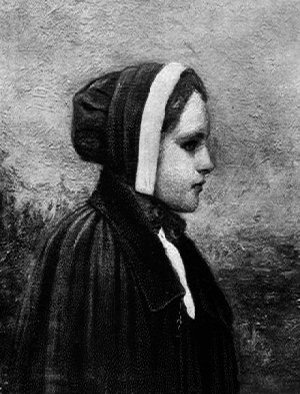

Credit: wikipedia.

To understand why this matters, it helps to look at real examples. Not from one place, but from different parts of the world.
1. The Case of Bridget Bishop
Bridget Bishop is often remembered as a “witch” in popular culture. Her story is used in ghost tours, books, and shows.
But in reality, she was a woman accused during a time of fear and mass hysteria. She was executed during the Salem Witch Trials. There was no real evidence against her.
Over time, her story became part of haunted folklore. People focus on mystery and fear. But the truth is much more serious. It reflects how quickly fear can turn into injustice.
When ghost hunting ignores this context, it risks repeating the same misunderstanding that led to her death.
2. The Story of Marie Delphine LaLaurie
This is a well-known figure in New Orleans history. Her story is often told in extreme ways. Many versions are filled with exaggerated or unverified details.
What is true is already disturbing enough. There is documented evidence of cruelty and abuse. That part of the history does not need to be exaggerated to feel impactful.
However, over time, her story has been turned into something almost theatrical. Some versions focus more on shock than on truth.
This creates two problems:
It spreads misinformation
It shifts focus away from the real victims
Ethical storytelling brings the focus back to what is known, not what sounds more dramatic.
3. The Legacy of Giles Corey
Giles Corey is another figure from the Salem trials. His death is often described in ways that sound almost unreal.
He was pressed to death during the trials. That part is true. But the way his story is told today sometimes leans into legend more than history.
People repeat dramatic details without questioning them. Over time, the story becomes less about the injustice he faced and more about the shock of how he died.
But when you step back, the real story is about resistance. He refused to enter a plea. That decision had meaning. It was not just a moment of horror. It was a statement.
That depth is often lost when the story is told only for its dramatic value.
What Ethical Ghost Hunting Looks Like
So, what should be done instead?
Ethical ghost hunting does not remove emotion. It simply grounds it in truth.
Here’s what that approach looks like in practice:
Acknowledge reality first
Start with what actually happened. Build the story from there.Avoid adding unverified details
If something cannot be confirmed, it should not be presented as fact.Keep the focus on people, not spectacle
Remember that these were real lives, not fictional characters.Explain the historical context
Help people understand why events unfolded the way they did.Let the story speak for itself
Truth does not need exaggeration to feel powerful.
Why People Still Believe in the Experience
Even without jump scares, ghost hunting can feel powerful. That is because belief is personal.
Some people truly feel they have experienced something unexplained. Others simply enjoy the atmosphere and the history.
Ethical ghost hunting allows both perspectives to exist.
It does not force a conclusion.
It does not try to prove something at all costs.
Instead, it says:
“If you feel something, that experience matters, but it does not need to be manufactured.”
Modern ghost hunting often moves too fast. It jumps from one moment to the next, chasing reactions.
But meaningful experiences usually happen when things slow down.
When you take time to:
Observe your surroundings
Listen carefully
Understand the history
You start to notice details that would otherwise be missed.
This is where real curiosity begins.
Ethical Ghost Hunting vs. Performative Ghost Hunting
Here is a simple comparison:
Ethical Ghost Hunting
Research-based
Calm and immersive
Focus on history
Open-ended experience
Performative Ghost Hunting
Reaction-based
Loud and chaotic
Focus on fear
Forced conclusions
The difference is clear. One builds knowledge. The other creates noise.
What Makes a Ghost Tour Ethical?
By this point, the idea of ethical ghost hunting probably feels clear. But when you are actually choosing a tour, things can get confusing. Many experiences sound similar on the surface.
So it helps to have a simple way to evaluate them.
Think of this as a quick checklist you can use before booking anything.
1. Consent and Access
A good tour respects the spaces it enters. This is the first thing to look for.
Are they allowed to be there?
Do they follow local rules and property boundaries?
Are private spaces treated with care?
Ethical tours do not cross lines just to make things feel more “exclusive.”
If a place has a history tied to real people, especially sensitive events, access should never feel intrusive.
2. Safety Comes First
Ghost hunting should never put people at risk. That includes both physical and emotional safety.
Look for tours that:
Choose safe, walkable routes
Avoid unsafe or restricted areas
Give clear instructions to guests
Maintain a calm and controlled environment
You should feel aware, not anxious. There is a big difference.
3. Respect for Sensitive History
This is where many tours fall short.
Ask yourself:
Do they treat serious events with care?
Are tragedies explained, not dramatized?
Do they avoid turning suffering into entertainment?
Ethical tours understand that some stories carry weight. They do not rush through them or exaggerate them.
4. Accuracy Over Drama
This is one of the biggest indicators of quality.
Here’s a quick comparison:
If a tour says… “This definitely happened exactly this way”
It may be a red flag: No historical nuance
If a tour says… “People believe this, but here’s what we know”
It may be a red flag: More balanced approach
Good tours are honest about what is known and what is not. They do not fill gaps with guesses.
5. No Forced Reactions
Pay attention to how the experience is designed.
Are there jump scares?
Are reactions being pushed or encouraged?
Does the guide try to “create moments”?
Ethical ghost tours do not need to manufacture fear. They trust the setting and the story.
6. Clear Context, Not Just Stories
Stories without context can feel incomplete.
A strong tour will:
Explain the time period
Connect events to the larger history
Help you understand why something happened
This makes the experience richer and more meaningful.
7. Space for Personal Interpretation
Not everyone experiences things the same way. And that is okay.
Ethical tours:
Do not force belief
Do not dismiss curiosity
Allow guests to form their own opinions
This balance is important. It keeps the experience open and thoughtful.
Why Accuracy Builds Better Experiences
It may seem like accuracy would make ghost hunting less exciting. But the opposite is true.
When stories are real:
They feel more grounded
They carry emotional weight
They stay with you longer
Truth has a way of being more unsettling than fiction. Not because it is louder, but because it is real.
Ethical ghost hunting welcomes questions. It does not avoid them.
Skepticism helps keep the experience honest. It prevents misinformation. It encourages deeper thinking.
This does not mean dismissing everything. It means being thoughtful about what is presented.
What Makes an Experience Memorable
People often remember how something made them feel, not just what happened.
Jump scares create short bursts of fear. But they fade quickly.
On the other hand, a well-told story, grounded in history, can stay with someone for years.
That is the difference between:
A moment of surprise
And a lasting impression
A Different Way to Experience Ghost Hunting
There is another way to approach ghost hunting. One that values history, context, and respect. Hottest Hell Tours is a historian-led tour company that approaches ghost hunting very differently.
Instead of chasing reactions, they build the atmosphere slowly. The tours are designed and led by trained historians and researchers. Every story shared is grounded in real history, not rumor or recycled myths. This means you are not just walking through a place. You are understanding it, piece by piece.
Hottest Hell Tours also take ethical storytelling seriously. That shows in how they present difficult histories. Nothing is exaggerated for shock. Nothing is included just to fill time. Each moment is intentional, and each story is handled with care.
You won’t find forced scares or exaggerated claims on their tours. There are no jump scares. There are no staged moments meant to make you react. Instead, the experience unfolds naturally. You listen, observe, and connect the details yourself.
A Thought to Leave With
Ghost hunting does not need to be loud to be powerful.
In fact, the quiet moments often matter more. The pauses. The stories. The spaces where history lingers.
Jump scares may grab attention, but they rarely hold it.
Understanding, on the other hand, stays.