
On a seemingly fine day in April 1803, Napoleon was seated in one of his favorite places. It was a bath scented with rose water. The location was Tuileries Palace in Paris. His thoughts weighed heavily on his mind. He wanted to control Britain. But reality showed him something completely opposite. He was broke. But more dangerously, he was sure a war with Britain would soon unfold.
The only option that gave him some peace at this moment was the existence of the U.S. The nation was new. Why not use it to generate the much-needed money? So, he decided to offer the U.S. an absurdly exciting offer. This offer changed American history altogether.
A Quick Look at the Louisiana Purchase
Before we jump into the facts, here’s a simple snapshot to set the scene:
Item: When
Details: 1803
Item: Who Sold the Land
Details: France
Item: Who Bought the Land
Details: United States
Item: Size of the Territory
Details: About 828,000 square miles
Item: Cost
Details: $15 million
Item: Modern States Included
Details: Parts of 15 U.S. states
Item: Why It Matters
Details: Doubled U.S. size and expanded westward growth
1. It Doubled the Size of the United States
Here’s the first astonishing fact about Louisiana Purchase history: the United States literally doubled in size overnight.
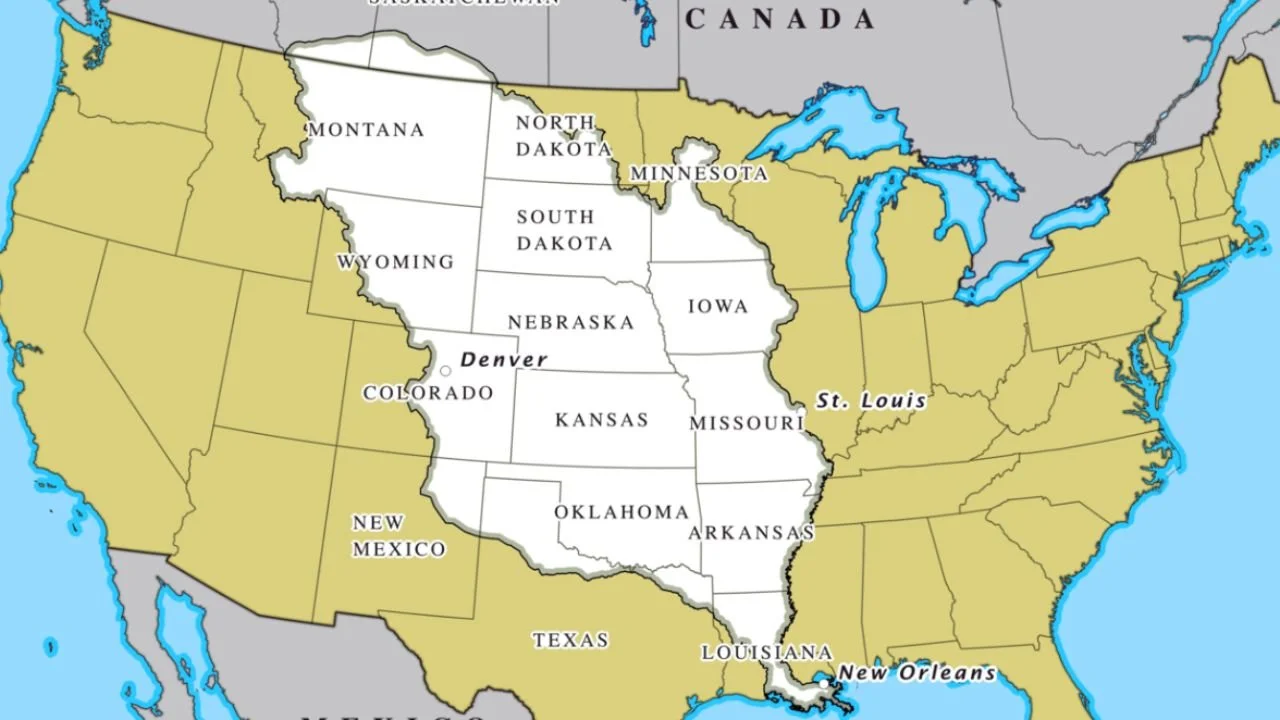
Before 1803, the United States was already huge compared to other countries in North America. But it was still smaller than what it would soon become. The Louisiana Territory stretched from the Mississippi River all the way to the Rocky Mountains. It included land that would one day become parts of 15 U.S. states.
When President Thomas Jefferson made the deal with France, suddenly the U.S. had twice as much land as before. That was not a small change. It changed how people thought about the future of the nation. It opened up space for farmers, settlers, explorers, and dreamers to look westward.
This doubling of land was one of the boldest moves in early U.S. history.
2. It Didn’t Really Cost Just $15 Million — The True Price Was Higher
Most people hear that the Louisiana Purchase cost $15 million. And yes, that is the number you will often see. But the real story is a bit more layered, and honestly, more interesting.
Let’s break it down in a simple way.
The Headline Price vs the Real Cost
Type of Cost: Purchase price
Amount: $15 million
Type of Cost: U.S. debt paid to France
Amount: ~ $3.75 million
Type of Cost: Interest and financing costs
Amount: ~ $4–5 million
Type of Cost: Total actual cost
Amount: $23 million+
The deal was signed at $15 million. But the United States ended up paying more than $23 million over time.
How Did the U.S. Pay for It?
At that time, the U.S. did not have $15 million sitting around. So, it had to borrow money. This is where things get interesting.
The U.S. worked with two major European banks:
Baring Brothers (based in London)
Hope & Co. (based in Amsterdam)
Here’s how the deal worked:
The U.S. issued bonds to raise money.
These banks bought the bonds at a discount.
Then they paid France in cash.
So in simple terms, France got money quickly. Meanwhile, the U.S. took on long-term debt.
When Was It Fully Paid Off?
This is another detail many people don’t know.
The United States did not finish paying for the Louisiana Purchase right away. In fact, it took about 20 years to clear the debt.
Final repayment was completed in 1823
So, what started as a quick land deal turned into a long financial commitment.
3. France Sold It Because of War, Strategy, and a Secret Treaty
One of the most interesting parts of Louisiana Purchase history is the question:
Why did France give up such a massive and valuable territory?
At first glance, it feels surprising. But once you look closely, the decision starts to make sense. And it all begins a few years before the sale.
It Started With a Secret Deal in 1800
Before France sold Louisiana to the United States, it had to get the land back from Spain.
This happened through the Treaty of San Ildefonso.
Here’s what happened:
In 1800, Spain secretly agreed to return Louisiana to France
This agreement was not widely announced at the time
The transfer made France a major power again in North America
For the United States, this was worrying. Spain had been a weaker neighbor. France, under Napoleon, was not.
Napoleon’s Big Plan (At First)
In the early 1800s, Napoleon Bonaparte had a clear vision. He wanted to rebuild a French empire in North America.
His plan looked something like this:
Use Louisiana as a food supply hub
Support French colonies in the Caribbean
Expand French influence across the region
At this point, selling Louisiana was not even part of the plan.
War in Europe Changed Everything
By 1803, the situation in Europe had become tense again. The war between France and Britain was about to restart.
War meant:
More soldiers needed
More money required
More focus on Europe instead of distant lands
At the same time, France was still dealing with the Haitian Revolution. That meant fewer resources and less control in the Americas.
Even Napoleon’s Inner Circle Had Doubts
Interestingly, not everyone around Napoleon agreed on what to do with Louisiana.
Some of his close advisors, including his brothers, had concerns:
They believed France should hold onto the territory
They saw it as a symbol of power
They worried that selling it would weaken France’s global position
However, Napoleon thought differently. He believed holding Louisiana would be risky, especially with the powerful British navy nearby.
The Final Decision in 1803
By early 1803, Napoleon made a bold shift in strategy. Instead of trying to defend Louisiana, he decided to sell it.
Here’s why:
He needed money for upcoming wars in Europe
He feared Britain might seize Louisiana if war began
He no longer saw the territory as essential without a strong Caribbean base
So, when the United States approached France to buy New Orleans, Napoleon surprised them. He offered all of Louisiana, not just the city.
How the Haitian Revolution Changed Everything
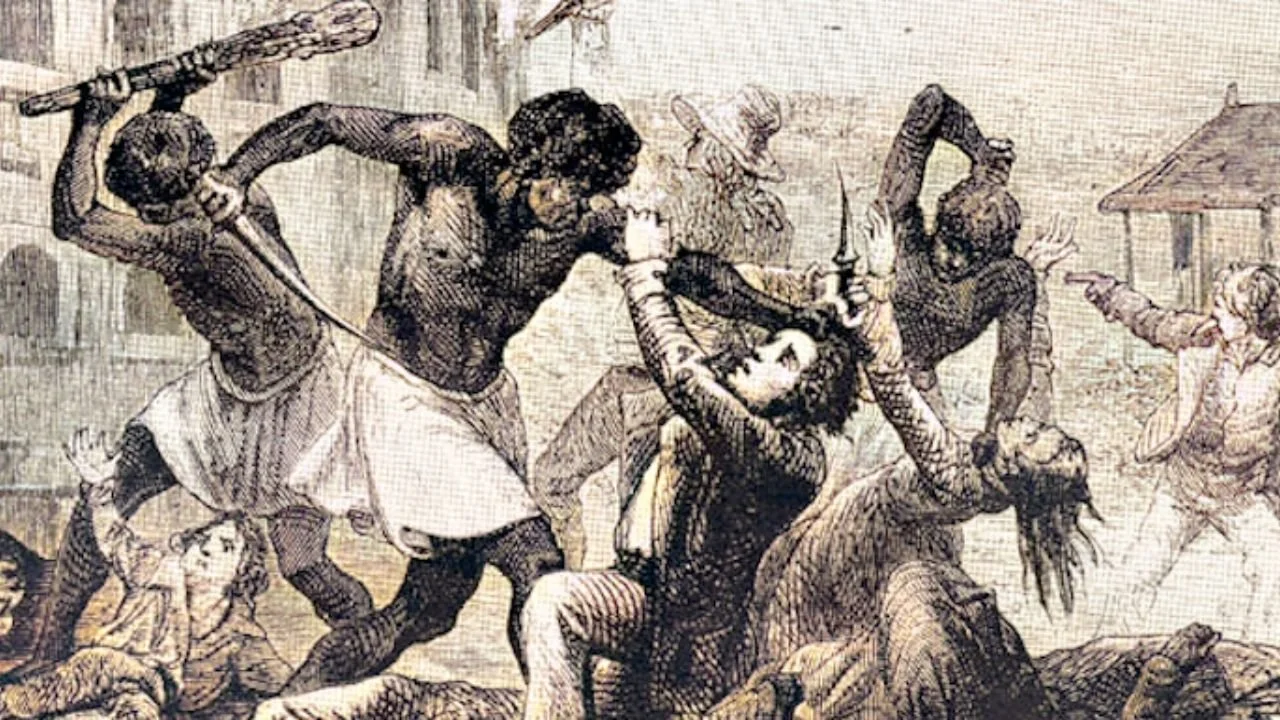

To truly understand Louisiana Purchase history, we need to look beyond the United States and France. We need to look at the Caribbean. More specifically, we need to look at Haiti.
At the time, Haiti was known as Saint-Domingue. It was France’s richest colony, it produced huge amounts of sugar and coffee. This made it incredibly valuable to the French economy.
But then, something powerful happened. A revolution began.
What Was the Haitian Revolution?
The Haitian Revolution was a massive uprising led by enslaved people. It started in 1791 and continued for over a decade.
One of its most important leaders was Toussaint Louverture. Although he did not immediately side with the enslaved people and initially aligned with opposing forces, he later switched sides. He went on to become a skilled general and a strong leader. Under his leadership, the rebels fought against French forces and gained control over large parts of the colony.
Here’s what makes this revolution so significant:
It was the only successful slave revolt in history that led to the creation of a nation
It directly challenged European colonial power
It disrupted France’s biggest source of wealth in the Americas
Why It Mattered to Napoleon
Now let’s connect this to France and the Louisiana Territory.
Napoleon originally had big plans. He wanted to rebuild a French empire in North America. Louisiana was supposed to support that empire by supplying food and resources to Haiti.
But things did not go as planned.
Here’s what changed:
French troops struggled to defeat the revolution in Haiti
Diseases like yellow fever killed thousands of soldiers
The cost of war kept rising
Control over Haiti slipped away
Without Haiti, Louisiana became much less valuable. It no longer had a strong purpose in Napoleon’s larger plan.
The Turning Point
Let’s simplify the situation:
Before the Revolution: Haiti was France’s richest colony
After the Revolution: Haiti was lost to revolution
Before the Revolution: Louisiana supported French empire
After the Revolution: Louisiana had less value
Before the Revolution: France planned expansion
After the Revolution: France faced war and losses
Because of this shift, Napoleon changed his strategy. Instead of trying to hold onto Louisiana, he decided to sell it.
How This Led to the Louisiana Purchase
The Haitian Revolution played a direct role in the Louisiana Purchase.
France lost its strongest colony in the Americas
Maintaining Louisiana became difficult and costly
Napoleon needed money for wars in Europe
Selling the land became the best option
So, when the United States showed interest, France agreed quickly.
In a way, the land deal that doubled the size of the U.S. was shaped by a revolution happening hundreds of miles away.
4. The Territory Included Parts of 15 Modern States
The size of the Louisiana Territory was massive. When Americans think of Louisiana today, we think of New Orleans, bayous, and Cajun culture. But the Louisiana Territory was much bigger.
Here is a list of modern states that were part of it:
Arkansas
Missouri
Iowa
Oklahoma
Kansas
Nebraska
Minnesota
North Dakota
South Dakota
New Mexico
Texas
Montana
Wyoming
Colorado
Louisiana
A few of these states were only partially inside the purchase area. But overall, this land spanned across the heartland of the continent.
Because of this, the purchase helped shape much of the United States we know today. Imagine trying to travel from Maine to Montana before this purchase; it wasn’t yet America’s land to claim.
5. Was It Even Legal? The Constitutional Debate Behind the Deal
The deal was not just bold. It was also legally uncertain. The U.S. Constitution did not clearly mention land purchases like this. It gave the president the power to make treaties. But it did not directly say he could acquire foreign territory.
This created confusion.
What Was Clear
What Was Unclear
President can make treaties
Can the U.S. buy foreign land?
Senate must approve treaties
Can territory be added this way?
So, while there was a legal path, it was not fully defined.
Thomas Jefferson Had Doubts
Thomas Jefferson was known for taking the Constitution seriously. He believed in a strict reading of its powers.
At first, he was unsure about the purchase. In fact, he even considered asking for a constitutional amendment. That would have made the decision fully clear and legal beyond doubt.
But there was a problem.
Time was limited
France might withdraw the offer
The opportunity was too valuable to lose
So Jefferson made a practical choice. He decided to move forward using the treaty power already given to the president.
The process still followed important legal steps. Here’s how it unfolded:
April 30, 1803 – The treaty was signed in Paris
October 20, 1803 – The U.S. Senate approved the treaty
1803 (later that year) – Congress approved the funds needed
So, even though there were doubts, the government followed a formal process.
Not Everyone Agreed
Even after approval, debates continued. Some leaders, especially from the Federalist Party, raised concerns.
Their worries included:
The Constitution did not clearly allow such a purchase
The country might become too large to govern
New western lands could shift political power
These concerns were serious at the time. They show that the deal was not universally celebrated right away.
In the end, the Louisiana Purchase moved forward. And over time, it became widely accepted as legal.
More importantly, it set a powerful example.
It showed that treaty powers could be used in broad ways
It expanded the role of the president in foreign policy
It helped define how the U.S. could grow beyond its original borders
6. It Sparked Exploration and Scientific Discovery
One of the most beloved parts of Louisiana Purchase history is the Lewis and Clark Expedition.
After the purchase, President Jefferson wanted to learn more about the land. He wanted maps. He wanted information about plants, animals, rivers, and people. So he chose two leaders: Meriwether Lewis and William Clark.
From 1804 to 1806, they and their team explored the territory. A key member of the expedition was Sacagawea, a Lemhi Shoshone woman, whose knowledge and guidance were essential to their success. She helped the group navigate difficult terrain, communicate with Native American tribes, and find food along the journey; support without which the expedition likely would not have been completed.
They met Native American tribes, made detailed journals, drew maps, and recorded animals and plants that many Americans had never seen. This journey also reflects a larger truth: many accomplishments of early U.S. expansion relied heavily on the knowledge and assistance of Indigenous peoples, even though, by the 1830s, many of these same communities were forcibly removed from their homelands.
Here are some notable takeaways from their journey:
They reached the Pacific Ocean.
They crossed mountains, rivers, and plains.
They survived storms, hunger, and unknown lands.
Without this expedition, early Americans would have had no clear idea of what lay beyond the Mississippi River. It was one of the earliest and greatest scientific journeys in U.S. history.
7. It Reshaped Life for Native Nations Already Living There
No discussion of Louisiana Purchase history is complete without talking about the people who were already living on that land.
When the United States made the purchase, the land was far from empty.
Here’s a simple breakdown:
What Was Clear: President can make treaties
What Was Unclear: Can the U.S. buy foreign land?
What Was Clear: Senate must approve treaties
What Was Unclear: Can territory be added this way?
This included farmers and traders. Families of European descent who had been living there for years also formed part of this population.
Native Nations Across the Land
Many different Native nations lived across the Louisiana Territory. Each had its own culture, language, and way of life.
Some of the well-known nations included:
Osage Nation (Ni-u-kon-ska)
Sioux Nation (Oseti Sakowin
Cheyenne (Tsitsistas)
Choctaw (Chahta)
Chickasaw (Chikasha)
These nations hunted, farmed, traded, and governed their own lands. Their presence shaped the region long before the United States arrived.
The Purchase Ignored Native Sovereignty
When the United States bought Louisiana from France, it did not consult, compensate, or gain consent from the indigenous nations who had lived on and governed these lands for centuries.
The agreement was based on European concepts of land ownership that treated land as something that could be transferred between empires, even when those empires did not truly control it.
In reality, Native nations remained sovereign and independent at the time of the purchase. The deal did not legally or morally extinguish their rights to the land.
From Land Deal to Displacement
The Louisiana Purchase set the stage for one of the most devastating policies in U.S. history: the forced removal of Native peoples from their ancestral lands.
As the United States expanded westward, it increasingly viewed Indigenous nations as obstacles to settlement. This led to policies that pushed tribes off their lands through treaties, coercion, and violence.
One of the most well-known outcomes of this expansion was the Indian Removal Act of 1830, a policy of Andrew Jackson, which authorized the forced relocation of thousands of Native Americans to lands west of the Mississippi River.
The Trail of Tears and Its Lasting Impact
This policy resulted in events like the Trail of Tears, where nearly 100,000 people from the Cherokee (Yun’wiya), Muscogee (Creek), Seminole (often called the “Unconquered People”), Chickasaw (Chikasha), and Choctaw (Chahta) nations were violently and forcibly removed from their homelands.
Thousands died during these journeys due to disease, starvation, harsh conditions, and violence.
The lands opened up by these removals were then used for American settlement, directly linking westward expansion to Native displacement.
Resistance and Survival
Not all Native nations accepted removal without resistance.
For example, the Seminole people in Florida fought a series of conflicts known as the Seminole Wars, resisting U.S. forces for decades. Some Seminole communities were never fully removed and continue to exist in their ancestral lands to this day.
Another example is from the Yun’wiya (Cherokee). In this case, half the tribe moved west and the other half chose to remain in the mountains of the present-day Carolinas. A devastating outcome to the identity and culture of the Yun’wiya.
Across the continent, Native nations used diplomacy, legal action, and armed resistance to defend their lands and sovereignty.
A More Complete and Honest Perspective
It is easy to focus on maps, money, and expansion. But this part of Louisiana Purchase history reminds us of something deeper.
This was not a peaceful transfer of unused land. It marked the beginning of intensified pressure, displacement, and cultural disruption for indigenous nations.
This was not empty land waiting to be claimed. It was already home to:
Established Native nations, including seven in the New Orleans region alone.
Existing settlements and communities
Complex systems of trade and culture
The legacy of the Louisiana Purchase includes both national growth and the long-term consequences faced by indigenous peoples, which are still felt today.
Voices and Stories From the Era
Sometimes facts alone don’t tell the whole story. What did people think at the time?
Thomas Jefferson saw the purchase as a chance for peace and growth. He believed a “nation of farmers” would thrive with more land.
Merchants and settlers saw land as opportunity. They believed they could make new lives.
Native nations experienced uncertainty, resistance, and loss. Many were forced into unequal treaties, displacement, and, in some cases, violent conflict and death.
European leaders watched closely. They saw the United States as a rising power.
These voices show the mix of hope, fear, ambition, and loss that defined the era.
How This Relates to Today
Almost every visitor to New Orleans or Louisiana remembers the French influence on culture and food. Mardi Gras. Jazz. Cajun cuisine. These things are reminders that the Louisiana Territory was a place of many cultures colliding, combining, and changing.
Because of this purchase:
American cities grew westward.
Trade expanded along rivers and rail.
People from different backgrounds mixed and settled.
Yet, none was possible without the often violent displacement of indigenous nations
Despite these challenges, many Native communities continue to preserve their cultures, languages, and histories.
A Journey Through History (and Beyond)
Louisiana Purchase history is a story about colonization, ambition, risk, and change. It reminds us how nations grow. It also reminds us of the people, especially Native Americans. They died because of those changes.
History is also the people, cultures, and lands that we connect with today. The Louisiana Purchase continues to shape America in ways both large and small.
If you are curious about other parts of American history, especially those with deep roots and surprising twists, you might enjoy experiences that bring history to life. Hottest Hell offers guided historical tours that explore stories of culture, community, myths, legends, and daily life. These tours help you feel the history under your feet as you walk the same streets where events once happened. Visitors learn about:
Colonial wars
Cultural crossroads
Folklore evolution
Myth and memory
These tours reveal how history feels stranger than fiction. Many guests leave with a deeper sense of place.
Louisiana Purchase history is part of that larger story. The land deal not only shaped the nation, it shaped culture too.
What stories will you uncover next as you walk through history?