
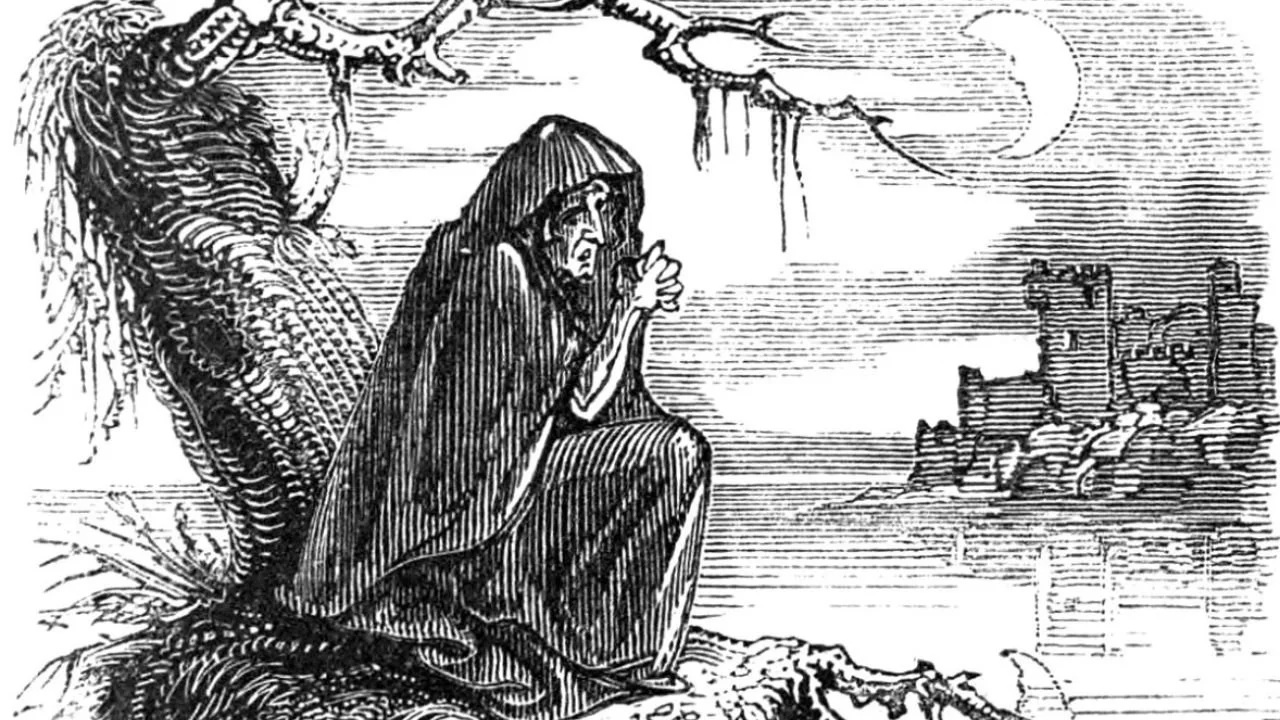
Today, the Banshee is a famous pop culture figure. She’s known for her distinct scream or howl. Some may call it a wail. Most people know of her as a supernatural songstress. Her howl signals an impending death.
This surface level information about banshee seems exciting to many. But few really dig deep into the origins of this legend. If you do so, you’ll unearth a wealth of information about this mysterious character.
That’s exactly what this blog will explore.
What Is a Banshee in Banshee Folklore?
In traditional banshee folklore, the banshee is not a monster. Instead, she acts as a supernatural messenger connected to certain families.
The word Banshee comes from the Irish phrase bean sídhe. That phrase means “woman of the fairy mound” in Irish Gaelic.
Ancient Irish traditions believed supernatural beings lived beneath sacred hills. These hills were called sídhe, a Gaelic word meaning fairy mounds.
According to folklore, the banshee belongs to that hidden world.
Her role remains unusual among ghost legends. The spirit does not attack or harm people. Instead, she mourns when death approaches.
People traditionally believed hearing her cry meant tragedy was near.
How to Pronounce “Banshee” in Irish
Banshee comes from bean sídhe. This is an Irish phrase. It means ‘woman of the fairy mound.’ Here’s a detailed breakdown of how it’s pronounced in Ireland.
Word: Bean
Language: Irish Gaelic
Meaning: Woman
Pronunciation: ban
Word: Sídhe
Language: Irish Gaelic
Meaning: Fairy mound or spirit world
Pronunciation: shee
Word: Bean sídhe
Language: Irish Gaelic phrase
Meaning: Woman of the fairy mound
Pronunciation: ban-shee
Irish speakers pronounce "bean" almost like the word “ban.” The second word sídhe sounds similar to “shee.”
When spoken together, the phrase becomes ban-shee.
The Origins of Banshee Folklore in Ireland
The roots of banshee folklore reach deep into early Irish history and belief. Stories about the wailing spirit did not appear suddenly. Instead, they slowly formed through centuries of cultural tradition.
Early Irish mythology often described supernatural beings connected to death and the Otherworld. These spirits lived near ancient hills, rivers, and burial sites. People believed those places acted as doorways to another realm.
Over time, older myth traditions blended with real funeral customs.
The ancient tradition of keening
One important influence came from a mourning practice called keening. Historical records show that keening existed in Ireland as early as the 8th century.
During funerals, women known as keeners sang emotional laments for the dead. Their voices carried sorrow through entire villages. These cries often echoed across fields and hills during funeral processions.
The sound left a powerful impression on communities.
Many historians believe those mournful cries helped shape the later image of the banshee.
A keening lament often included:
Wailing cries expressing grief
Chanted praise for the deceased
Repeated verses mourning the loss
Over centuries, the idea of a woman crying before death slowly entered folklore.
The first written reference to the banshee
Stories about supernatural mourners circulated in oral tradition for many generations. Eventually, written sources began recording the legend.
One of the earliest written references to a banshee appears around 1380. The story appears in a medieval Irish text known as the Cathreim Thoirdhealbhaigh, (KAT-ream TAR-lach). Anglicized, the title means, Wars of Turlough.
This historical narrative describes strange cries heard before the death of a noble figure. The sound resembles the later descriptions of a banshee wail.
Although the text does not use the modern word banshee, the story clearly reflected the same idea.
A supernatural cry warned of approaching death.
The “sinner’s spirit” tradition
Another strand of banshee folklore appears in later Irish belief. Some stories describe the banshee as the spirit of a woman punished for past sins.
According to this tradition, the spirit must wander the night forever. Her eternal task involves mourning the dead before their passing.
Folklore sometimes connects this idea to women who misused the keening ritual. Excessive or false mourning supposedly brought supernatural consequences.
These darker stories appear in later folklore collections. They reflect changing religious attitudes in Ireland after the medieval period.
Families traditionally linked to the banshee
Certain noble Irish families were believed to have their own banshee. The spirit supposedly followed the family line through generations.
Stories most often mention old Gaelic surnames.
Examples frequently appearing in folklore include:
O’Neill
O’Brien
O’Connor
O’Grady
O’Toole
According to tradition, members of these families sometimes heard the banshee before major deaths.
Many historians believe this belief strengthened family identity and storytelling traditions.
How these influences shaped the legend
Several cultural forces gradually combined to form the banshee legend.
Influence: Celtic mythology
Role in the legend: Introduced supernatural female spirits
Influence: Keening funeral rituals
Role in the legend: Inspired the wailing cry
Influence: Medieval chronicles
Role in the legend: Recorded early supernatural warnings
Influence: Religious folklore
Role in the legend: Added the wandering spirit tradition
The Morrígan Connection in Banshee Folklore
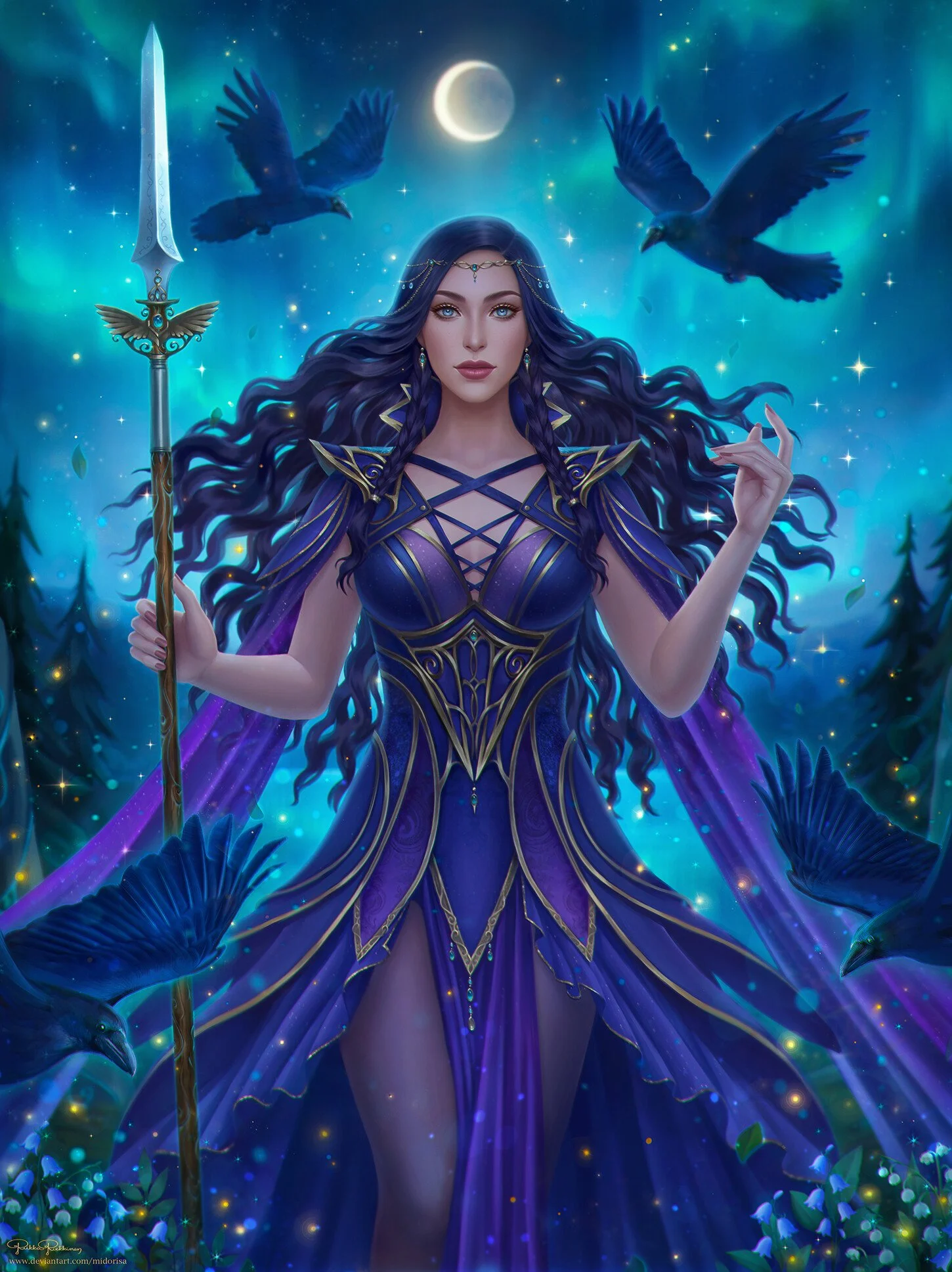
Credit: https://www.aawiccan.org/morrigan
The Morrígan is not a simple figure in Irish mythology. Instead, she appears as a complex goddess linked with prophecy and the Otherworld.
Many legends describe her taking different forms.
Common forms associated with the Morrígan include:
A mysterious woman appearing before battle
A crow or raven flying over the battlefield
A prophetic spirit foretelling death
These images strongly echo the themes found in banshee folklore.
Both figures appear shortly before tragedy. Both figures warn of death rather than causing it.
The Badb and the Washer at the Ford
Another important connection appears through a figure known as Badb. She is sometimes considered one aspect of the Morrígan.
Badb often appears in myths as a crow watching over battlefields. She also produces terrifying cries that frighten warriors and predict death.
Some medieval Irish texts describe Badb giving a loud, eerie scream before battles begin.
Those descriptions sound surprisingly similar to the famous banshee wail.
Irish mythology also includes a spirit known as the Washer at the Ford. This supernatural woman washes the bloody clothing of warriors destined to die.
That image closely resembles the washerwoman figure already present in banshee folklore.
Over time, these overlapping traditions may have blended together.
Aoibheall and the O’Brien banshee
Another interesting link appears through a legendary fairy woman named Aoibheall (A-veal).
Aoibheall appears in medieval Irish stories. She is described as a powerful spirit connected to the region of Munster, spanning six counties in Southern Irleand. Some folklore traditions describe her as the banshee associated with the powerful O’Brien family.
Historical poems describe Aoibheall appearing to warriors before battle. Her presence again connects prophecy with death.
This pattern appears repeatedly across Irish mythology.
A supernatural woman appears. A warning follows. Death soon arrives.
How these figures connect
Looking closely at these myths reveals several shared themes.
Mythological figure: Morrígan
Key trait: Goddess of fate and war
Connection to banshee folklore: Appears before death or battle
Mythological figure: Badb
Key trait: War spirit with a terrifying cry
Connection to banshee folklore: Echoes the banshee wail
Mythological figure: Washer at the Ford
Key trait: Washes clothing of the doomed
Connection to banshee folklore: Similar to banshee washing legends
Mythological figure: Aoibheall
Key trait: Fairy woman tied to noble families
Connection to banshee folklore: Linked to family banshees
How the Banshee Appears in Irish Stories
Descriptions of the banshee change depending on the region. Some tales describe a terrifying figure wandering at night. Other stories describe a sorrowful woman quietly mourning.
Still, several common features appear repeatedly.
Common descriptions of the banshee
A pale woman wearing a gray cloak
Long flowing white or silver hair
A sorrowful face with red eyes from crying
A ghostly figure seen near rivers or trees
Several stories also describe the banshee washing clothing beside streams. These garments supposedly belonged to people about to die.
A related spirit appears in Scottish folklore.
That creature is called the Bean Nighe, often translated as “washerwoman of the ford.”
Although the traditions differ slightly, both spirits connect death with mourning.
The Good vs. Evil Banshee Distinction in Banshee Folklore
Many people imagine the banshee as a single ghostly figure. However, banshee folklore often describes more than one type of spirit. Irish stories sometimes distinguish between compassionate banshees and darker, more hostile versions.
This distinction appears in several regional traditions. Storytellers noticed that not every banshee behaved the same way. Some spirits mourned deeply for families. Others appeared angry or bitter.
Over time, folklore separated these spirits into two broad types.
The compassionate banshee
In many stories, the banshee appears as a sorrowful and caring figure. Her presence reflects grief rather than malice. She mourns because someone connected to the family will soon die.
Descriptions of this gentler banshee often include:
A beautiful or graceful woman
Long flowing hair and pale clothing
A soft, mournful singing voice
A cry filled with sadness and concern
Some Irish legends describe the spirit singing a quiet lament instead of screaming. That sound resembles traditional keening songs once heard at funerals.
In these stories, the banshee almost acts like a guardian spirit.
Her cry serves as a warning so families can prepare emotionally for loss.
The darker banshee figure
Other traditions describe a much more unsettling spirit. These banshees appear twisted or frightening rather than sorrowful.
Stories sometimes portray them as hostile toward certain individuals.
Accounts of these darker banshees often mention:
A distorted or terrifying appearance
A loud, harsh scream rather than a lament
Behavior that feels angry rather than mournful
A presence that celebrates the death of an enemy
These darker figures appear less frequently in Irish folklore. Still, they appear in certain regional tales and later storytelling traditions.
Comparing the two traditions
The contrast between these versions appears clearly in folklore.
Type of banshee: Compassionate banshee
Description: Beautiful woman mourning for a family
Emotional tone: Grief and concern
Type of banshee: Dark banshee
Description: Distorted or hostile apparition
Emotional tone: Anger or hatred
The Famous Cry in Banshee Folklore
The most famous part of banshee folklore is the sound itself. Witnesses often describe the cry as deeply unsettling.
Some say the sound resembles a woman sobbing with grief. Others describe a long scream echoing across the hills.
Irish countryside nights can feel very quiet and still. A strange cry traveling through the dark easily sparks imagination.
Picture a lonely road in rural Ireland after sunset. Fog settles over fields and old stone walls. Suddenly a distant wail cuts through the silence.
Many listeners naturally ask the same question.
Was that an animal?
Or was it something far stranger?
Stories often grow from moments like this.
Where Banshee Folklore Is Most Common
Banshee legends appear throughout Ireland, especially in rural regions. Storytelling traditions helped preserve the myth across generations.
Villages often passed folklore through oral history. Grandparents repeated these tales to younger family members.
Certain areas appear frequently in banshee stories.
These regions include:
County Cork
County Kerry
County Galway
County Tipperary
County Donegal
Ireland’s dramatic landscape also adds atmosphere to the legend.
Ancient ruins, misty valleys, and quiet countryside roads easily inspire supernatural stories.
Historical Stories of Banshee Sightings
Many historical accounts mention banshee encounters. These reports usually appear in letters, diaries, and local folklore records.
One famous story connects the banshee to the family of Brian Boru. According to legend, a banshee cried before his death in 1014.
Other stories describe travelers hearing eerie cries near Irish castles. Soon afterward, someone connected to the household reportedly died.
These accounts cannot be proven scientifically. Still, they reveal how strongly the legend shaped Irish beliefs.
People remembered strange sounds when tragedy followed.
Why Death Messengers Appear in Many Cultures
Interestingly, the banshee is not unique in global folklore. Many cultures describe supernatural figures connected with death.
These figures often act as messengers or guides.
Culture: Irish folklore
Death messenger: Banshee
Culture: Scottish folklore
Death messenger: Bean Nighe
Culture: Norse mythology
Death messenger: Valkyries
Culture: Greek mythology
Death messenger: The Fates
Humans often search for meaning during times of loss. Folklore sometimes provides symbolic explanations for sudden tragedy.
The banshee fits perfectly into that emotional space.
Scientific Explanations Behind Banshee Legends
Researchers have suggested several natural explanations for banshee sightings. Many strange nighttime sounds come from animals.
One possible source is the Barn Owl. Barn owls produce harsh screeching calls during the night.
These calls sometimes resemble human screams.
Foxes also produce loud cries during mating season. Their calls often sound eerie in quiet rural landscapes.
Wind can also create strange noises around ruins or valleys.
Imagine hearing such sounds centuries ago without modern explanations. Fear and imagination could easily shape a ghost story.
Over time, those stories developed into full legends.
How Literature and Media Spread Banshee Folklore
Writers helped preserve Irish folklore during the eighteenth and nineteenth centuries. Scholars began recording stories that once existed only in oral tradition.
Banshee tales soon appeared in books, poems, and travel accounts.
Later, films and television introduced the legend to global audiences.
Modern stories sometimes portray the banshee as a dangerous monster. Traditional folklore paints a more tragic picture.
The spirit mourns rather than hunts.
That difference often surprises readers discovering the legend for the first time.
Why Banshee Folklore Still Fascinates People
The banshee remains one of Ireland’s most recognizable supernatural figures. Tourists often hear the legend while visiting historic castles.
Writers and historians continue studying these stories today.
The legend survives because it speaks directly to human emotions.
Loss and grief touch every culture.
Unlike many ghosts, the banshee expresses sorrow rather than anger. Her cry warns families that tragedy may arrive soon.
Some listeners even interpret the cry as a final act of compassion.
Instead of facing death without warning, families receive a supernatural signal.
That idea gives the legend surprising emotional depth.
Legends, History, and Haunted Storytelling
Folklore rarely appears from nowhere. Most legends grow from real traditions, landscapes, and fears.
Banshee stories likely developed through funeral customs, natural sounds, and centuries of storytelling.
Modern historians still explore these cultural connections.
The researchers behind Hottest Hell Tours focus on stories that blend history with folklore. Our tours explore haunted legends while separating myth from documented events.
Historical context often reveals why certain ghost stories survive longer than others.
Banshee folklore continues to echo through Irish culture because it reflects something deeply human.
Grief never disappears from history.
And sometimes a haunting cry across the night raises a question that still lingers today.
What if some legends began with a sound that nobody could explain?