
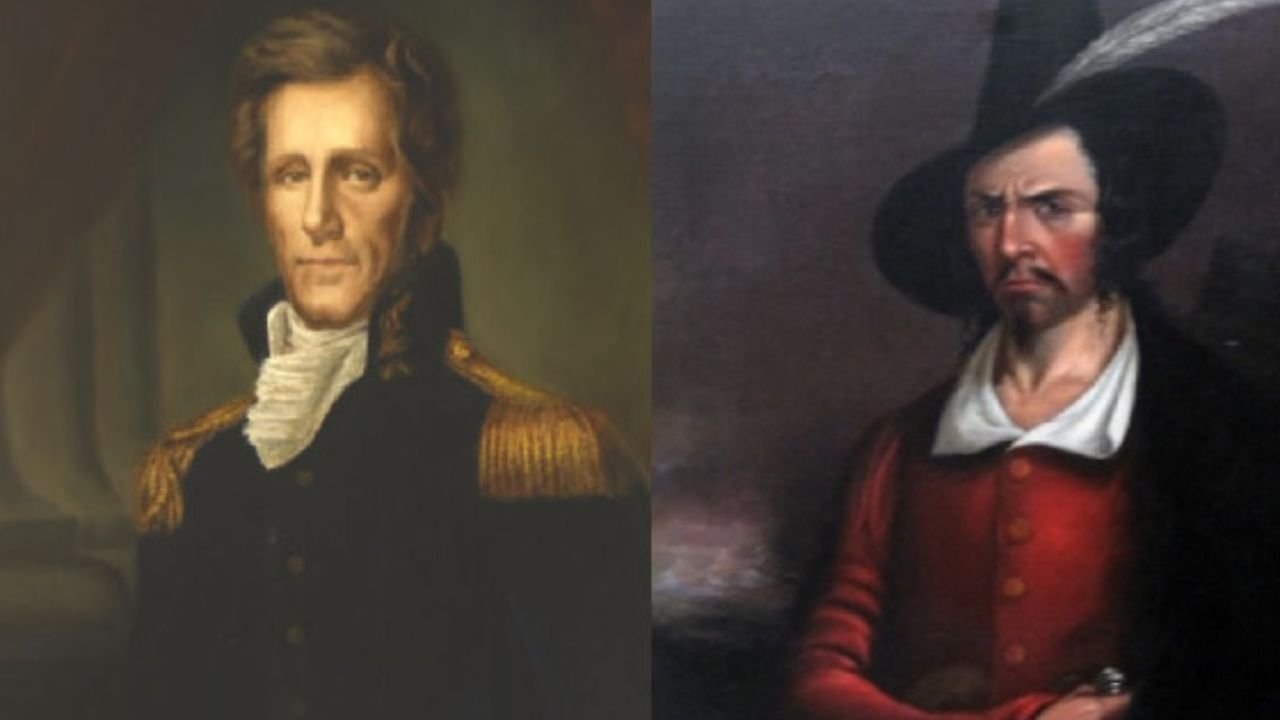
The story of Andrew Jackson at battle of New Orleans is also the story of a pirate. That pirate was Jean Lafitte. He was a privateer who haunted the Gulf of Mexico. Their meeting in 1814 changed the fate of New Orleans forever.
Setting the Stage In New Orleans
In late 1814, the United States was still fighting the War of 1812. Great Britain wanted to capture New Orleans and control the Mississippi River. Control of that river meant control of trade and the American frontier.
General Andrew Jackson arrived in New Orleans on December 1, 1814. He found a city with weak defenses and many nervous people. The city had only about one thousand inexperienced troops for defense.
New Orleans was also surrounded by swamps, bayous, and winding waterways. Those passages made the city vulnerable but also offered defensive possibilities. Jackson quickly realized he needed local knowledge and unconventional allies.
Who Was Jean Lafitte
Jean Lafitte was born around 1780, likely in southwestern France. Some historians link his origins to the French Caribbean. His early life remains unclear and heavily debated by scholars.
He later settled along the Louisiana coast near Barataria Bay. This remote region became his operational base. The waterways allowed fast movement and easy concealment.
Lafitte’s brother Pierre Lafitte played a central leadership role. Pierre handled business operations and political contacts while Jean focused on maritime control and logistics. The brothers led a group called the Baratarians, operating as privateers and smugglers. They raided ships across the Gulf of Mexico.
Their main trade was not luxury goods or weapons, but the illegal slave trade, which became their primary business. Captured people were sold through coastal smuggling networks. This trade generated massive profits and political protection.
In New Orleans, Lafitte ran a public-facing business front. According to legend, the Blacksmith Shop on Bourbon Street served as cover. It looked like a normal workshop to outsiders, but behind it, smuggling deals were quietly arranged.
Local buyers moved goods through hidden supply routes. City officials often ignored the operation. The network survived for many years because of corruption.
The American government viewed Lafitte as a criminal leader and Louisiana’s governor offered a reward for his capture. But Lafitte mocked the offer with open sarcasm. He even offered money for the governor’s kidnapping.
By 1814, federal forces attacked his base at Barataria. American officers seized ships, cannons, and cargo and many of his men were captured. Lafitte himself escaped, but his power was weakened. His influence remained, but his control declined. This collapse pushed him toward a new alliance.
The September 1814 Raid on Grand Terre
The raid on Grand Terre occurred in September 1814. This island served as Lafitte’s main base in Barataria Bay. During the raid, American forces seized major resources:
Eight ships were captured and removed
Twenty cannons were taken from the base
Roughly five hundred thousand dollars in goods were confiscated
Those goods included weapons, cargo, and trade materials. Many of Lafitte’s men were captured during the operation. His infrastructure suffered serious damage and his trading network was badly disrupted.
This raid happened months before cooperation began. It created deep mistrust between both sides. Later, these same American leaders accepted Lafitte’s help. Former enemies became wartime partners. Opposition turned into cooperation under pressure.
The British Offer and Lafitte’s Choice
While planning the campaign for New Orleans, the British saw Lafitte’s value. A British officer approached Lafitte with an offer of money and rank.
The British Offer to Lafitte: Specific Details
British planners saw Lafitte as a strategic asset. A British officer delivered a direct and formal offer. The offer included thirty thousand dollars in cash. The proposal also promised a captain’s commission in the Royal Navy.
This was a concrete military contract offer. It was strategic wartime negotiation. The British wanted Lafitte’s guidance because they wanted:
Access to hidden waterways.
Navigation support through bayous.
Intelligence about coastal defenses.
The deal would have changed the campaign completely. British troops could have moved inland more quickly. Supply routes would have become more secure. Local navigation obstacles would have disappeared.
Lafitte knew Louisiana waterways and bayous better than almost anyone. If he joined the British, their attack could become devastating. Instead, he decided to warn American authorities about the British plans.
He sent letters to Louisiana officials describing the British proposal. He also offered to help defend New Orleans in exchange for pardons. At first, many American officials still distrusted the pirate leader.
The First Contact With Andrew Jackson
Andrew Jackson initially saw Lafitte as a “hellish bandit.” He did not like pirates and thought they threatened American security. However, the looming British threat forced him to reconsider.
By mid December 1814, Jackson agreed to meet with Lafitte. This meeting took place as British forces approached the Gulf Coast. Jackson understood that local knowledge could offset his weaker numbers.
Lafitte promised to support the American side if his men were pardoned. He offered skilled artillerymen, sailors, and supplies for the defense. Jackson accepted the offer after considering the danger to New Orleans.
On December 19, 1814, the Louisiana legislature backed Jackson’s decision. They passed a resolution recommending pardons for Lafitte’s followers. This move opened the door for the Baratarians to serve openly.
How Lafitte’s Men Helped Jackson
Once the deal was made, Lafitte urged his men to join the Americans. Many enlisted in the New Orleans militia or as artillery specialists. Others served as sailors to man American ships defending the city.
Lafitte’s men helped strengthen defenses along key approaches. They provided cannons, gunpowder, and experienced crews for batteries. Their skill with artillery soon became extremely important in battle.
Lafitte also advised Jackson about the geography of the region. He understood where British troops might try to land and advance. His guidance shaped how the American line of defense was built.
Lafitte suggested extending Jackson’s defensive line into a nearby swamp. This move reduced the chance of British forces outflanking the Americans. Jackson accepted the suggestion, and the line became far more secure.
The Treaty of Ghent Context
One of the most important facts often gets missed. The war had technically already ended.
The soldiers simply did not know this yet. The Treaty of Ghent was signed on December 24, 1814.
This treaty formally ended the War of 1812. It was signed in Ghent, in modern-day Belgium.
However, news traveled very slowly in that era. There were no telegraphs and no rapid communication systems.
Neither army knew the war was over. Neither side had received the treaty news. Neither command had official confirmation.
The Andrew Jackson Battle of New Orleans
The Battle of New Orleans happened on January 8, 1815. This fighting occurred fifteen days after the Treaty of Ghent signing. However, news of peace had not reached North America. As a result, both armies believed the war continued.
British forces advanced toward the city with full confidence. American defenders prepared because the invasion still felt real. Because of this delay, history remembers a battle after peace. Even with a signed treaty, the battlefield still demanded blood.
Andrew Jackson built his defensive line along the Rodriguez Canal. This canal formed a natural barrier outside New Orleans. Earthworks and artillery strengthened the defensive position. Together, these fortifications created a deadly kill zone.
Jackson’s army came from many different backgrounds. His force included regular soldiers and local militia. Frontiersmen fought beside free African Americans and Native allies. Sailors and river men also filled the defensive lines.
About fifty Baratarians manned key artillery positions. Their gunners controlled several heavy cannons along the canal.
Two leaders, Dominique You and Renato Beluche, commanded batteries. Their disciplined fire shattered repeated British advances.
British troops were highly trained professional soldiers. Many were Napoleonic War veterans with battlefield experience. These men had defeated European armies across multiple campaigns. Confidence from past victories shaped their aggressive assault strategy.
Major General Edward Pakenham led the British attack. His troops advanced in tight formations across open ground. Jackson’s artillery and rifle fire tore through their lines. British ranks collapsed under relentless defensive fire.
American losses remained extremely low during the battle. But British casualties reached devastating levels within a short time. This victory transformed Jackson into a national hero overnight.
Exact Casualty Numbers
These numbers reveal how uneven the battle truly was.
Battle Casualties at New Orleans
British Forces
Total Losses: Approximately 2,459
Killed: 386
Wounded: 1,521
Missing: 552
American Forces
Total Losses: Approximately 333
Killed: Not separately listed
Wounded: Not separately listed
Missing: Not separately listed
British losses were extremely heavy during the main assault.Large formations advanced into concentrated American fire. Poor visibility and terrain increased confusion during the attack. British officers were also heavily targeted during the fighting.
American losses remained comparatively low across the battlefield. American positions were protected because of defensive earthworks. Prepared artillery lines created devastating defensive fire. American defense was strongly protected by terrain and fortifications.
Quick Look at Key Details
Jackson arrives in New Orleans
What happened: Andrew Jackson arrives in New Orleans on December 1, 1814, and finds the city poorly defended.
Lafitte’s offer
What happened: Jean Lafitte promises support if his men receive pardons.
Legislature action
What happened: The Louisiana legislature passes a resolution on December 19, 1814 supporting pardons for Lafitte’s men.
Main battle date
What happened: January 8, 1815 — the final major clash of the Battle of New Orleans.
Lafitte’s role
What happened: Lafitte supplies artillery crews, strategic advice, and logistical support.
Result
What happened: A decisive American victory and rising national fame for Andrew Jackson.
Why Jackson Needed Lafitte So Badly
Jackson was brave and aggressive. But he lacked certain resources. He needed more gunpowder, more cannons, and more experienced artillerymen. The regular army alone could not fully cover all approaches to the city.
Lafitte’s men filled exactly those gaps at the right moment. They were used to handling shipboard cannons under dangerous conditions. That experience translated into accurate fire from the earthworks.
Their knowledge of the bayous also helped Jackson deploy his forces. They understood where the ground turned to marsh and where troops could pass. This understanding turned difficult terrain into a defensive advantage.
In a sense, the Andrew Jackson battle of New Orleans combined two worlds. One world was the formal army with uniforms and official ranks. The other world was the shadowy domain of smugglers and privateers.
What Happened to Lafitte After the Battle
After the victory, the United States recognized Lafitte’s contribution. President James Madison granted full pardons to the Baratarians. Their wartime service wiped away many of their earlier offenses.
However, Lafitte did not fully become a quiet citizen after the war. He eventually left Louisiana and resumed privateering elsewhere in the Gulf. His later adventures took him toward Texas and beyond official control.
Jackson’s path moved in a very different direction after New Orleans. The battle helped launch his national political career on a grand scale. He later became the seventh president of the United States.
Still, their brief alliance remains one of the war’s most dramatic stories. An American general and a Gulf pirate stood together against a global empire. Their unlikely partnership helped secure the city and the young nation.
Why This Story Still Fascinates New Orleans
New Orleans is a city where history and legend mix every night. The story of Jackson and Lafitte fits perfectly into that mood. You have politics, war, smuggling, and a dramatic last stand.
Walk through the French Quarter, and you still feel echoes of that time. Streets near the river once saw Lafitte’s goods move in secret. Nearby fields and plantations became the line where Jackson made his stand.
Stories about Lafitte’s hidden tunnels, treasure, and ghostly appearances still circulate. Some locations claim ties to his operations or his followers. That mix of real history and whispered myth shapes the city’s character.
The Andrew Jackson battle of New Orleans is not just a textbook event. It is a living narrative woven into tours, tales, and local legends. Visitors hear about generals, pirates, ghosts, and the city’s darker corners. This keeps their interest alive.
Stroll Lafitte’s Pirate Paths with Hottest Hell

Hottest Hell Tours lets you trace the shadowy steps of Lafitte and Jackson. Start at Armstrong Park near the French Quarter, where pirate whispers linger. Our adults-only Walking the Devil’s Empire tour reveals New Orleans’ wicked past.
Guides share true stories of murder, crime, and hauntings from the era. Visit Lafitte’s Blacksmith Shop, one of America’s oldest bars and pirate haunts. Hear how smugglers like Lafitte operated in these very streets before the battle.
Small groups of twenty or fewer ensure personal tales of the pirate-general pact. Our locally owned experts avoid tricks and focus on researched, real history. It’s perfect for feeling the pulse of the city that pirates helped defend in 1814.