
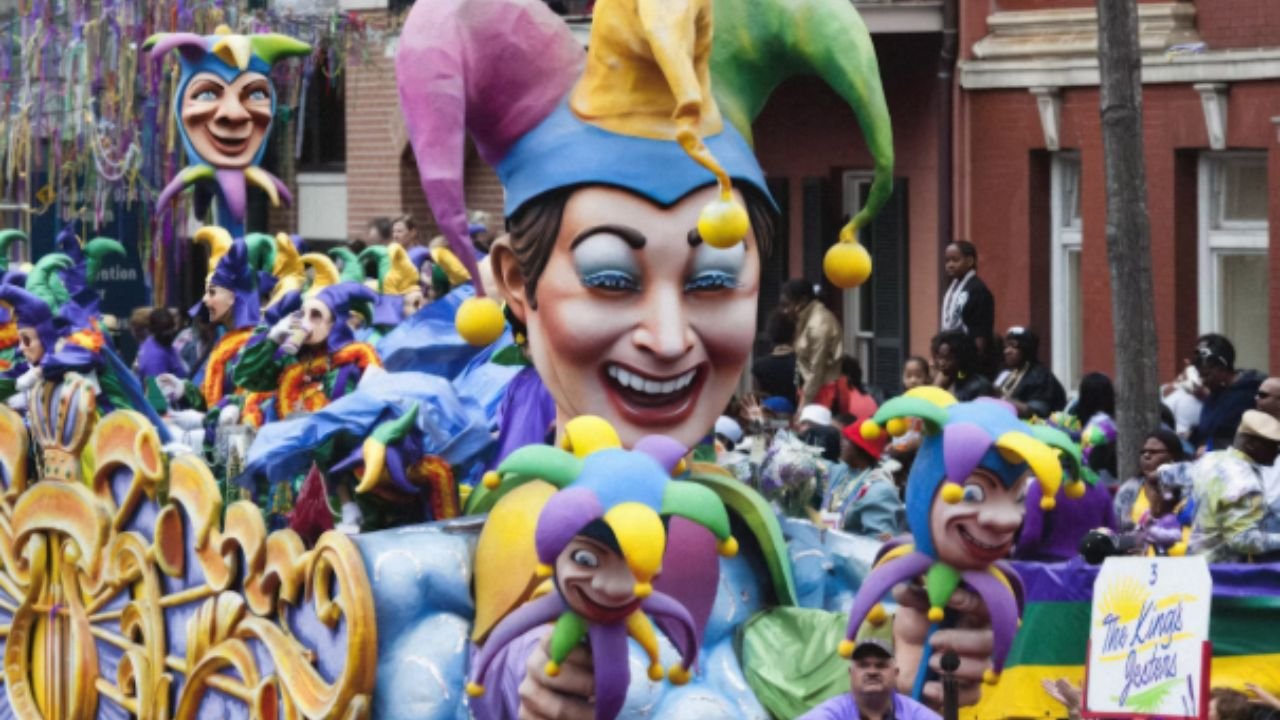
February in New Orleans does not look like February anywhere else. There is no quiet winter lull here. By the time the month begins, Carnival season is already in full swing. Parade schedules are posted everywhere. Mardi Gras is so much more than the final day of the Carnival season. It is the conclusion of a structured, centuries-old season that began in the early 1700s and has never fully stopped. New Orleans in February is the best way to watch that season reach its peak.
What Mardi Gras Actually Means
The name comes directly from French. Mardi means Tuesday. Gras means fat. Fat Tuesday is the translation, and it describes the day precisely. For centuries, Catholics were forbidden during Lent from consuming not just meat but all animal products, including eggs, butter, and milk. Fat Tuesday was the last opportunity to use those ingredients up. The name stuck because the practice stuck.
It’s important to consider the religious context here. Mardi Gras always falls exactly 47 days before Easter. That accounts for the forty days of Lent plus seven Sundays. These do not count as fast days in traditional observance. Because Easter's date shifts each year, so does Mardi Gras. It can fall as early as February 3 or as late as March 9. The variation is tied to the Paschal Full Moon, the first full moon after the spring equinox. In the Christian calendar, it falls on March 21.
The broader period that precedes Fat Tuesday is called Carnival. The word itself likely traces to the Medieval Latin carnelevarium. It means to take away or remove meat. The Carnival season officially begins on January 6, the Feast of the Epiphany, also known as Three Kings Day. Every parade, every ball, and every king cake consumed between that date and Mardi Gras Day falls within the season of Carnival. Mardi Gras is not separate from Carnival. It is Carnival's final day.
How Old Is This Celebration?
The roots of Carnival go back well before Christianity existed. Laurie Wilkie is an archaeologist at the University of California, Berkeley. In his viewpoint, the Carnival celebrations began as pagan fertility festivals, long before they were absorbed into the Christian calendar. Scholars have connected them to Saturnalia, the ancient Roman feast honoring Saturn, and to Lupercalia. It is a Roman festival held each February to celebrate love and purify the city. Others trace the customs to older Indo-European spring lore from Germanic and Slavic cultures. The exact lineage is debated. What is not debated is that these festivals predate the Catholic Church, which absorbed them rather than eliminated them.
When Christianity arrived in Rome, these traditions were already deeply embedded in the calendar. The Church incorporated Carnival into the period before Lent as a practical accommodation. The feast before the fast became official. By the twelfth century, Carnival as a recognizable pre-Lenten season was practiced across Europe. The major practice areas were France, Spain, and Italy. From there, it crossed the Atlantic.
When Mardi Gras Came to Louisiana
French-Canadian explorers Pierre Le Moyne d'Iberville and his brother Jean Baptiste Le Moyne Sieur de Bienville brought Mardi Gras to North America. On March 3, 1699, the brothers camped about 60 miles south of where New Orleans would later be built. They knew the date was Fat Tuesday. They held a small celebration and named the spot Pointe du Mardi Gras.
Bienville established Fort Louis de la Louisiane in 1702, in what is now Mobile, Alabama. The small settlement there held America's first recorded Mardi Gras celebration in 1703. Mardi Gras continued to be celebrated in Mobile even after New Orleans was founded in 1718. New Orleans eventually became the better-known location. But Mobile holds the documented claim to the first American celebration.
After the city's founding in 1718, Mardi Gras was celebrated in New Orleans relatively quickly. The Spanish took control of the region in the late eighteenth century. They periodically attempted to restrict or ban the celebrations. By 1781, Spanish colonial authorities had formally forbidden Free People of Color and enslaved people from masking or mimicking whites during Carnival. By 1812, when Louisiana became a state, the celebrations returned more openly. A group of students danced in the streets wearing colorful costumes in 1827. The first officially recorded Mardi Gras street parade in New Orleans took place in 1837.
The Krewe System That Built Modern Mardi Gras
The celebrations of the antebellum period were quite disorderly. Public drunkenness, fights, and property damage made the holiday controversial. The turning point came in 1857. A new organization called the Mistick Krewe of Comus stepped in. Comus members costumed themselves as the Demon Actors from John Milton's Paradise Lost and staged a dignified nighttime street procession followed by a private ball at the Gaiety Theatre. That structure, the public procession followed by the exclusive ball, became the template everything else was built on.
Comus also introduced the krewe's essential mystique. Members remained anonymous. Identities were not disclosed. The element of mystery that audiences still associate with float riders today came directly from Comus. Within fifteen years, two more krewes had formed: the Twelfth Night Revelers and Rex. Rex distinguished itself by introducing a daytime parade and billing its monarch as the King of Carnival. The five original krewes were Comus, Momus, Twelfth Night, Rex, and Proteus. They were exclusively composed of wealthy white men. As a result, new krewes formed throughout the early twentieth century to accommodate those who had been excluded. Women, African Americans, Irish, Italian, and German New Orleanians all built their own organizations. In 1991, New Orleans City Council member Dorothy Mae Taylor passed an ordinance to desegregate Mardi Gras parades. Krewes like Comus, Momus and Proteus refused to integrate, and are banned from parading. Today, the city has over seventy active krewes.
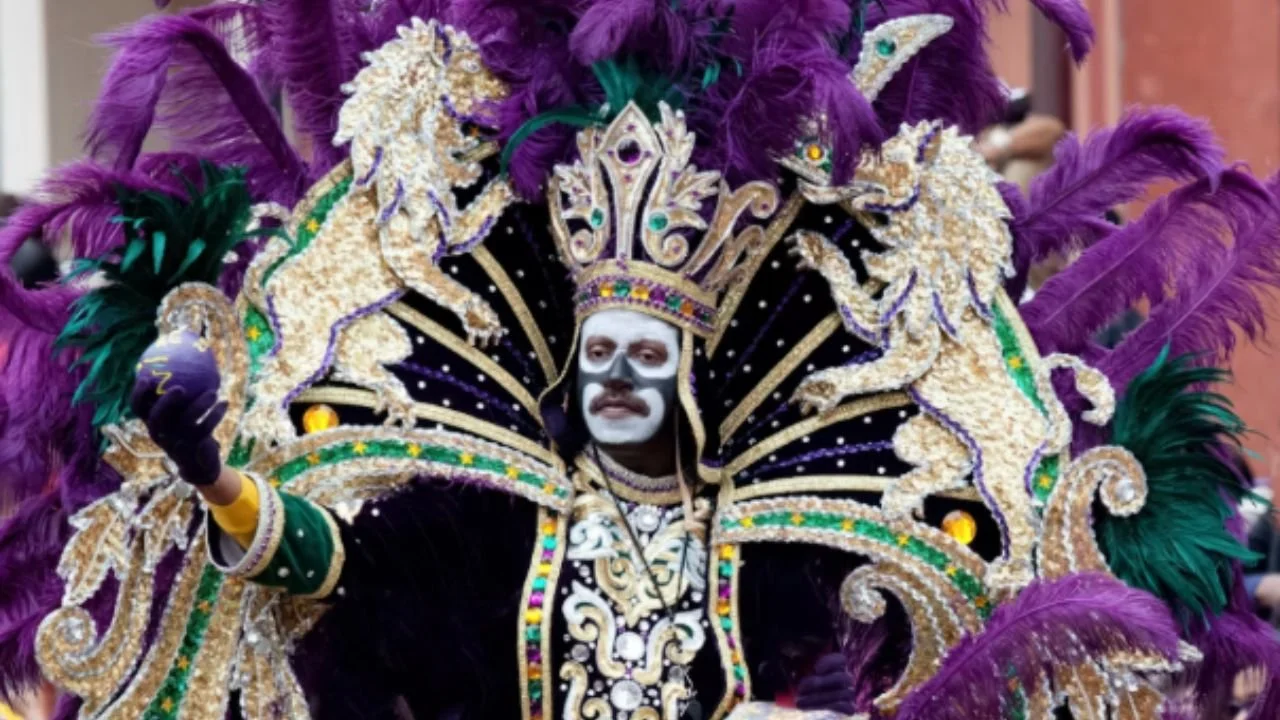
The Krewe of Zulu holds a distinctive place in that history. Founded in 1909, it is one of the oldest African American krewes in the city. Zulu parades on Mardi Gras Day and is known for throwing hand-painted, glitter-covered coconuts. The coconuts are prized throws, highly sought by parade-goers every year.
The Traditions: What They Mean and Where They Came From
The Colors
In 1872, the Rex organization selected purple, gold, and green as the official colors of Mardi Gras. Some accounts connect the colors to Russian Grand Duke Alexei Alexandrovich Romanoff, who visited New Orleans that year. The meaning was formalized in 1892 during the Rex parade themed "Symbolism of Colors." Purple was assigned to represent justice. Gold to represent power. Green to represent faith.
Masks and Costumes
Masks have been part of Mardi Gras from the beginning. During the early celebrations, masking allowed people to move outside their social class. Behind a mask, a laborer and a merchant occupied the same street as equals, at least temporarily. Women who masked, however, were risked having their reputations questioned regardless. The Louisiana State Museum notes that attempts to restrict masking lasted well into the twentieth century. Officials feared political unrest and the anonymity that masking afforded enslaved people.
Today, float riders are required by Louisiana law to wear masks during parades. It is a legal requirement.
The Mardi Gras Indians, also known as Black Masking Indians, are a separate masking tradition. Although they have less clearly documented roots, they are credited with paying homage to the Native American tribes who helped enslaved Africans escape to freedom in the North. These groups, made up of Black New Orleanians, create elaborate hand-sewn suits adorned with beads and feathers. Each suit takes an entire year to construct. They parade on Mardi Gras Day. They are among the most visually extraordinary traditions in the entire celebration.
King Cake
King cake is the food of Carnival season. The tradition traces to the Catholic Epiphany. It celebrates the visit of the Three Wise Men to the infant Jesus on January 6. Early versions of the cake contained a hidden bean or nut. Whoever received it was crowned king or queen for the day. In Louisiana, the hidden item became a small plastic baby. Whoever finds the baby must provide the next king cake.
According to Arthur Hardy, publisher of the Mardi Gras Guide, more than 750,000 king cakes are sold in New Orleans each year during Carnival season. Many thousands more are shipped across the country. The cakes are made available starting January 6. They vanish from bakery shelves as soon as Fat Tuesday ends.
Beads and Throws
The practice of throwing items to parade-goers is believed to have been popularized by the Rex organization in the late 1890s and early 1900s. Beads were made of glass, originally manufactured in what was then Czechoslovakia. They were manufactured throughout the 1950s and 1960s. The market shifted to Japan and then to China. Today, almost all production occurs there. The sheer volume of accumulated beads has created serious infrastructure problems. A survey of New Orleans storm drains conducted by city authorities found approximately 93,000 pounds of beads clogging the drainage system. Today, many krewes are offering hand-made specialty throws, or items with every-day use such as socks, tissues, and decorative sunglasses.
Flambeaux
The flambeaux, iron poles carrying open flames carried alongside parade floats, date to the first Comus parade in 1857. They were originally necessary to light nighttime processions before electric infrastructure existed. They were carried primarily by Black men, both enslaved individuals and free Creoles. The latter performed elaborate dances while carrying the torches. Spectators would throw coins into the street as tips. Flambeaux are no longer functionally necessary, but they remain an active tradition. Carriers still walk alongside major parades, and audiences still throw tips.
Mardi Gras Day Itself
The day of Mardi Gras is dense with activity from early morning onward. The Krewe of Zulu rolls at 8 a.m. The Krewe of Rex follows. Both are televised locally. The streets brim with costumes that range from elaborate handmade creations to simple masks. Krewe balls take place throughout the season, mostly by invitation only. The season closes at midnight on Mardi Gras Day. It is when Lent officially begins. Police have historically patrolled at midnight to signal the transition.
The Courir du Mardi Gras is a rural Louisiana tradition that runs parallel to the urban celebrations. Costumed riders on horseback travel through the countryside, begging from farmhouse to farmhouse for ingredients to make a communal gumbo. The tradition closely mirrors medieval European village festivals. It includes ritual clowning, begging, and role reversal. It has been documented in isolated Cajun communities and reflects the deepest medieval roots of the Carnival season.
Understanding the Season, Not Just the Day
Many visitors come to New Orleans for the final days before Fat Tuesday. They see the biggest parades and celebrations. But that is only part of Mardi Gras.
The Carnival season starts weeks before Fat Tuesday. It includes parades, Mardi Gras balls, king cake traditions, neighborhood celebrations, music, and long-standing customs. These events also reflect the history of Mardi Gras in New Orleans.
Hottest Hell Tours operates year-round, including during Carnival season. We offer historian-guided walking tours through the French Quarter. February is a good time to explore the area at night.
Many buildings in the French Quarter date back to the period when Mardi Gras traditions developed in New Orleans. A historian can provide more context about these places and their connection to the city's past.
The tours are adults-only, with groups limited to 20 people. The guides are credentialed historians and published researchers. They use historical sources when telling stories on the tours. They also explain when a story is based on legend rather than documented fact.
That approach is especially useful when learning about Mardi Gras history. The tradition has changed over time. Its history also includes questions about race, class, access, and exclusion. February offers visitors a chance to experience Mardi Gras while also learning about the history behind it.
Frequently Asked Questions
1. What is the true history of Mardi Gras?
Mardi Gras predates Christianity and is likely descended from Roman pagan festivals including Saturnalia and Lupercalia, plus older Indo-European spring traditions. The Catholic Church absorbed these pre-Lenten customs into the religious calendar during the medieval period. French explorers brought the celebration to North America in 1699. The first American Mardi Gras took place in Mobile, Alabama, in 1703. New Orleans adopted the celebration after its founding in 1718 and eventually became the city most associated with it globally.
2. Why is Mardi Gras celebrated in New Orleans?
New Orleans' French colonial origins established the celebration there from the beginning. The city was founded in 1718 by French colonists who brought Catholic Carnival traditions with them. Its uniquely diverse population of French, Spanish, Creole, African, and Caribbean residents shaped those traditions into something distinct. The krewe system, established in 1857, gave the celebration permanent organizational structure. Louisiana is also the only US state where Fat Tuesday is a legal state holiday.
3. When did Mardi Gras start in New Orleans?
Mardi Gras was celebrated in New Orleans shortly after the city's founding in 1718. The first officially recorded street parade took place in 1837. The modern framework of organized krewe parades began in 1857. This was when the Mistick Krewe of Comus staged the first themed, torchlit nighttime procession with floats and a private ball. Two more major krewes, the Twelfth Night Revelers and Rex, followed within fifteen years.