
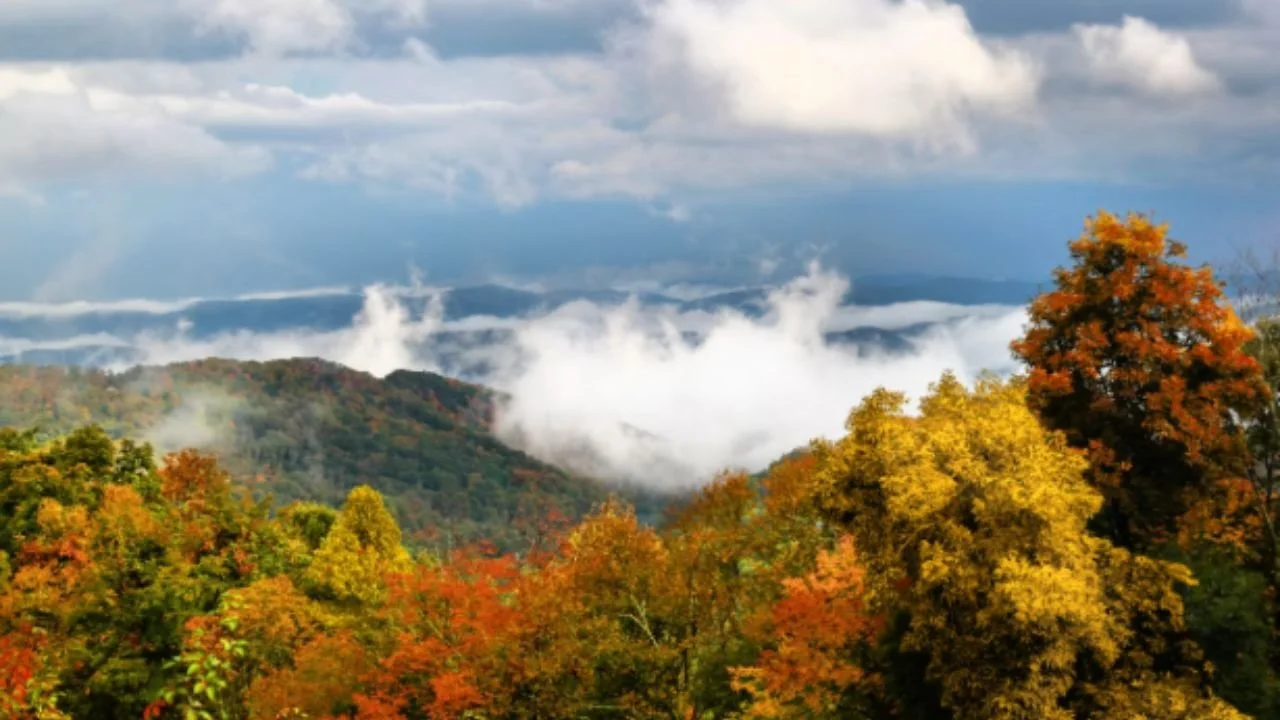
The Appalachian Mountains have always had a reputation for strange things. Some stories involve monsters. Others involve ghosts, lights, curses, or unlucky household habits. Some stories have documented origins, while others grew through generations of retelling. A few became something stranger along the way. That makes one question especially difficult.
What is actually true?
The answer is not as black and white as “real” or “fake.” Folklore doesn’t work that way. A reported encounter can be real without proving a monster exists. A legend can be historically important without being historically factual. This distinction should always be noted when discussing Appalachia.
The mountains stretch roughly 2,000 miles across eastern North America. Their landscape contains deep hollows, steep slopes, dense forests, and isolated communities. This setting has helped create fertile ground for stories about hidden things. But Appalachia is not simply a giant haunted forest.
Its folklore comes from particular communities and particular histories. Some traditions are Cherokee and others were formed through later Appalachian communities. Still others became famous through newspapers, television, tourism, and modern internet culture.
So grab your flashlight. We are going looking for the monsters. But not blindly. We are also checking their paperwork.
Why Does Appalachia Have So Much Folklore?
The Appalachian Mountains are extraordinarily old. Some rocks at their core formed nearly 1.2 billion years ago. This makes it older than many familiar features of Earth's history. The mountains also remain remarkably biodiverse. Their elevations, slopes, rainfall, and temperatures create countless ecological niches.
Some forests still feel remarkably removed from modern life. This means that here, humans have encountered unfamiliar landscapes. Such places naturally trigger folklore. Why? Because a strange sound travels differently through dense woods. Mist changes familiar shapes. Animals appear briefly, then disappear. Darkness does the rest.
Folklorist Carl Lindahl connects Appalachian storytelling with the region's powerful natural environment. The landscape can feel enormous beside the people living within it. That feeling can produce supernatural stories. But folklore does not just frighten people.
Stories can teach people how to behave. They can warn children away from dangerous places and can explain things people cannot easily understand.
The Monsters of Appalachian Folklore
Different Appalachian monsters have different origins. Note this distinction. Some creatures belong to specific Indigenous traditions. Others developed from modern reports.
Treating them as one giant monster family erases those differences.
Spearfinger: A Cherokee Story With Teeth
Spearfinger is among the most frightening figures associated with Southern Appalachia. The tradition comes from Cherokee storytelling. She is also known as U'tlun'ta in the sources examined here. Her name refers to her pointed, spear-like finger.
Stories describe her as a shapeshifter. She could appear as someone familiar and trustworthy. That made her particularly dangerous to unsuspecting people. The legend describes her skin as stone-like. Her spear finger could cut into her victims. The stories also associate her with consuming human livers. That is nightmare fuel.
But the important point is cultural context. Spearfinger is not simply an Appalachian “monster.” She belongs to a specific Cherokee storytelling tradition. That difference should remain visible.
Modern articles sometimes turn Indigenous figures into generic Halloween creatures. This strips away meaning. It turns living cultural traditions into spooky merchandise. The right approach is to tell the story without flattening its origins.
The Wampus Cat Has More Than One Story
The Wampus Cat appears frequently in Appalachian folklore discussions. Some modern versions portray a large feline creature. Other accounts connect the figure with a supernatural woman or protective spirit. The Wampus Cat is not one perfectly preserved story. Its modern identity reflects different retellings.
One source also notes that the name “Wampus Cat” gained wider attention through a North Carolina newspaper. That creates an interesting problem. Sometimes the history of a monster is actually the history of its name. That is worth remembering before declaring something “ancient.”
A creature can have older cultural roots, but its modern label may still be relatively recent. Folklore evolves and sometimes the monster gets a rebrand.
Bigfoot: Older Traditions, Modern Branding
Bigfoot is perhaps America's most recognizable cryptid. Stories of wild, human-like beings existed before the modern word “Bigfoot.” Different Indigenous communities have their own traditions involving unusual beings.
Those traditions should not be treated as identical. The modern Bigfoot phenomenon developed much later. In 1958, California logger Jerry Crew reported finding unusually large footprints. Newspaper coverage helped popularize the name “Bigfoot.”
The Appalachian Mountains later became part of the creature's wider mythology. Reports have appeared across Appalachian regions. That does not establish that Bigfoot exists. It establishes something else. People have reported seeing something they interpreted as Bigfoot.
Those are different claims. That distinction is the difference between folklore and evidence.
Mothman: A Monster Born From Reports
Mothman has a more precise modern origin. The story began around Point Pleasant, West Virginia, in 1966. Two couples reported seeing a strange humanoid figure near the former TNT area. They described a large creature with wings and glowing eyes. Other reports followed.
The story quickly attracted newspaper attention and changed a reported encounter into regional folklore. Then came the Silver Bridge disaster. On December 15, 1967, the bridge collapsed, taking away the lives of forty-six people.
Later stories connected Mothman with the tragedy. But there is an important distinction. The bridge collapse has an engineering explanation. The Mothman connection belongs to the legend. Those two histories should not be confused.
Mothman does not need supernatural powers to be fascinating. The real story involves witnesses, newspapers, public fear, and cultural memory. That is plenty strange already.
The Flatwoods Monster: Alien, Owl, Meteor, or Something Else?
The Flatwoods Monster appeared in West Virginia in 1952. On September 12, residents reported a strange light in the sky. Several people went toward the reported location and described a bizarre figure. Descriptions included a large body, unusual head shape, and glowing features. Some witnesses also later reported physical symptoms.That sounds like an excellent alien story. But it is where skepticism becomes useful.
A meteor was visible across the region that night. Some explanations suggest the witnesses may have seen a barn owl. Other explanations involve hysteria and physical exertion. None of those explanations proves the entire event. None proves an extraterrestrial creature either.
What we have is a documented episode of reported unusual experiences. The supernatural interpretation remains unproven. That uncertainty is the interesting part.
The Brown Mountain Lights: When the Mystery Glows
The Brown Mountain Lights are another classic Appalachian mystery. Reports describe strange lights appearing around Brown Mountain, North Carolina. Witnesses have described different colors and movements.
The history gets murky quickly. Some accounts trace written reports to the eighteenth century. Others dispute that dating. It’s important to take that disagreement into consideration.
One commonly repeated explanation identifies distant train lights. This explanation does not satisfy everyone. Reports continued afterward.
That creates a perfect folklore problem. A phenomenon can have ordinary possible explanations. People can still experience something they cannot identify. The question then becomes this. What did people actually see?
That is usually a better question than “Was it supernatural?”
The Moon-Eyed People: Where Legend Gets Dangerous
The Moon-Eyed People are among the most controversial stories in Appalachian folklore. Modern descriptions portray them as small, pale, nocturnal people. Some accounts connect them with Cherokee traditions. Other versions connect them with Welsh Prince Madoc.
This is where the reader needs to be cautious. The Welsh connection has become part of modern speculation. It does not become a historical fact through repetition.
Fort Mountain in Georgia also became associated with the story. Some people have claimed the site's stone wall belonged to these mysterious people. The provided sources do not establish that claim as fact. Nor do they establish that the Moon-Eyed People were pre-Columbian Europeans.
Note this distinction. The temptation is obvious. Ancient mountains, mysterious ruins, pale people, Welsh princes, secret migrations.
It sounds like a supernatural thriller. History, though, demands receipts.
Appalachian Superstitions Were Not All About Monsters
All strange Appalachian traditions do not involve a creature. Some beliefs concern luck, weather, death, family, food, and everyday behavior. One tradition warns against opening a knife that you cannot close yourself. Another says spilled salt should be thrown over your shoulder. Some concern New Year's Day. Black-eyed peas and greens appear in traditional New Year's meals.
Other beliefs warn against washing clothes on New Year's Day. Some traditions involve weather. Cows lying down were sometimes treated as a sign of approaching rain. Planting according to the moon also appears among reported Appalachian practices.
Then there are beliefs surrounding death. Some traditions say mirrors should be covered after someone dies. There is another that says windows should be opened so the soul can leave. These beliefs tell us that superstition does not always mean irrationality.
People have always created patterns from uncertain experiences. Before modern weather forecasting, people watched animals and plants. Before modern medicine, people developed protective rituals. Before modern explanations of disease, death demanded meaning.
Some practices persisted long after their original reasoning disappeared. That is how folklore survives.
So, Which Appalachian Monsters Are Real?
We cannot prove most of them. There is no verified evidence presented in these sources proving Bigfoot exists. There is no verified evidence establishing Mothman as a physical creature. The Flatwoods Monster remains an unexplained historical report with competing explanations. The Brown Mountain Lights remain a longstanding mystery.
That does not make these stories worthless. It makes them folklore. A legend can be culturally real without being physically proven. A community can remember a story for generations. A witness can sincerely describe something extraordinary. A newspaper can turn an encounter into a regional sensation.
None of those things automatically proves the supernatural. They do prove that people tell stories. These stories can reveal what communities fear, value, remember, and protect. That may be the most interesting monster hiding in the mountains.
The Internet Is Changing Appalachian Folklore
Modern technology has created a new folklore machine. TikTok and other social platforms have popularized the idea of “Haunted Appalachia.” Stories can now travel thousands of miles within hours. That alters folklore. A local story can become national entertainment overnight. A creature can receive a new backstory through social media. A warning can become a creepypasta. A local tradition can become a generic “Appalachian monster.”
The danger is not simply misinformation. It is cultural flattening. Appalachia contains many different communities and traditions. Reducing all of them to spooky woods and mysterious hill people misses the point.
The mountains are not frightening because their residents are strange. The landscape itself is powerful and history is complicated. The folklore is layered. Most importantly, the people who preserve those traditions deserve more respect than a cheap scare can provide.
The Best Monsters Are Sometimes the Ones We Cannot Prove
So, are Appalachian monsters real? Maybe. That answer is deliberately unsatisfying. There is not enough evidence here to declare most cryptids physically real. There is also no need to mock people who report unusual experiences.
A witness may be completely sincere. But their interpretation can still be wrong. Those ideas can coexist. That is where good folklore research lives.
We can enjoy the darkness without inventing evidence. We can respect belief without presenting belief as fact. We can tell frightening stories without exploiting the communities behind them. Sometimes the truth is stranger than the monster. That is the part worth chasing.
Where Folklore Meets History
At Hottest Hell Tours, we have a similar philosophy. We love a strange story. But we prefer stories that can survive daylight. We are a historian-led New Orleans tour company focused on dark history, paranormal stories, and the city's stranger truths.
Our approach does not depend on jump scares. It does not require inventing a monster around every shadow. Instead, our guides dig into history and the stories people carried forward. That means asking difficult questions.
What actually happened?
Who recorded it?
Who changed the story?
Why did the legend survive?
What gets lost when a complicated history becomes a spooky attraction?
Those questions matter in New Orleans. They matter in Appalachia, too. Because folklore is not simply a collection of monsters. It is a record of human beings trying to understand strange things. Sometimes those strange things are supernatural and sometimes they are historical. Often, humans are weird enough without any help from ghosts!
FAQs
What are the monsters in Appalachia called?
Appalachian folklore includes many creatures and spirits. Common examples include the Mothman, Wampus Cat, Snallygaster, and Bell Witch. Some stories come from older Indigenous, European, and African traditions. Others developed through local storytelling, newspapers, and modern folklore.
What is the myth behind the Appalachian Mountains?
There is no single Appalachian creation myth. Different Indigenous nations have their own stories about the mountains, land, and people. European settlers later added their own legends. Appalachian folklore grew from many cultures rather than one shared mythology.
How many Appalachian Trail hikers go missing?
There is no reliable official number of Appalachian Trail hikers who “go missing.” Hikers may become overdue, leave the trail, or need rescue. Some cases remain unresolved. Claims that many hikers regularly vanish without explanation are not supported by solid evidence.
What mythical creatures are in the Appalachian Mountains?
Appalachian folklore includes many legendary creatures. Stories feature the Mothman, Wampus Cat, Spearfinger, Boo Hag, and various witches and spirits. These traditions differ by region and culture. Some creatures have documented folklore roots, while others became popular through modern storytelling.
Is the wendigo in Appalachia?
The Wendigo is traditionally associated with Algonquian-speaking Indigenous peoples of the Great Lakes and northeastern woodlands. It is not originally an Appalachian creature. Modern stories sometimes place it in Appalachia, but that reflects newer popular culture rather than its traditional geographic roots.
Why not whistle in Appalachia?
Some Appalachian traditions warn against whistling at night. The belief varies by community, but whistling could be seen as inviting unwanted spirits, bad luck, or strange visitors. It is folklore, not a proven danger. Similar warnings about nighttime whistling appear in other cultures.