
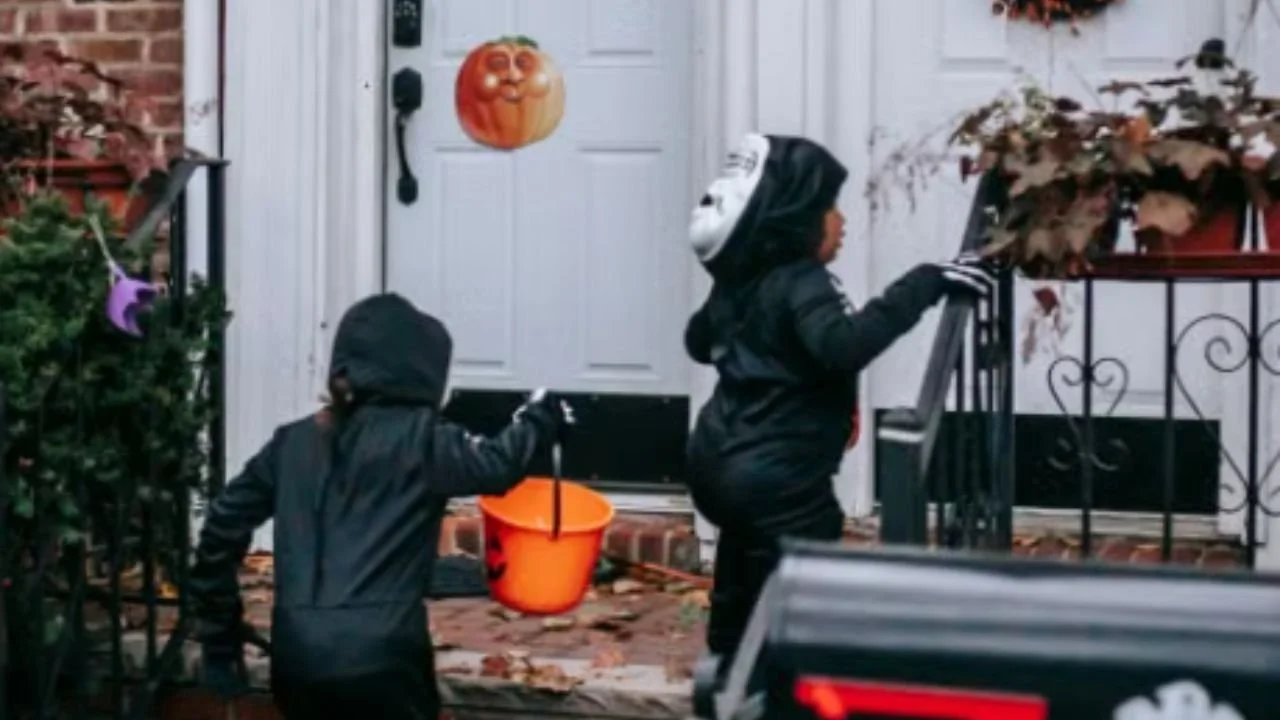
As October nears its end, the mood across cultures globally turns reflective. Maybe it's the coming of the colder months or the sense of a season’s end. Many communities turn their attention to those who don't remain among them. Some places call it Halloween. The festival remembers the dead. It is also a period of spiritual reflection. During this time, people feel that the boundary separating the living and the dead becomes hazy.
Today, the name Halloween brings to mind certain images. These are those of people dressed in costumes with bowls of candies. But it does not fully embody the festival’s spirit. Contrarily, it only shows its superficial surface. The real roots of the festivals lie in ancient seasonal events. They are present in cultural traditions that have stood up to the rough test of time.
Halloween deserves a deeper understanding. But one cannot have that if they look only at a single nation. While it may not be called Halloween, different countries honor the dead in varying ways. It’s only when we look at all of them, do we realize that the need to remember the dead is a natural part of human nature.
The Celtic Origins: Samhain and the End of Harvest
One of the earliest influences on modern Halloween comes from Samhain. It is an ancient Celtic festival from Ireland and Scotland.
Samhain marked the end of the harvest season and the beginning of winter. This was a difficult time of year. Food was scarce. The cold was returning. Communities prepared for survival through the dark months ahead.
It was also believed that during Samhain, the veil between the living and the dead became thin. Spirits were thought to return to the world of the living. Some were welcomed. Others were feared.
People lit bonfires to protect themselves. They wore disguises to confuse wandering spirits. Food offerings were left out to appease unseen forces. These customs are often seen as early roots of modern Halloween costumes and traditions.
Samhain was not focused on fear alone. It was also a moment of transition. It marked change and respect for ancestors and the natural cycle of life.
México: Día de los Muertos and the Return of Loved Ones
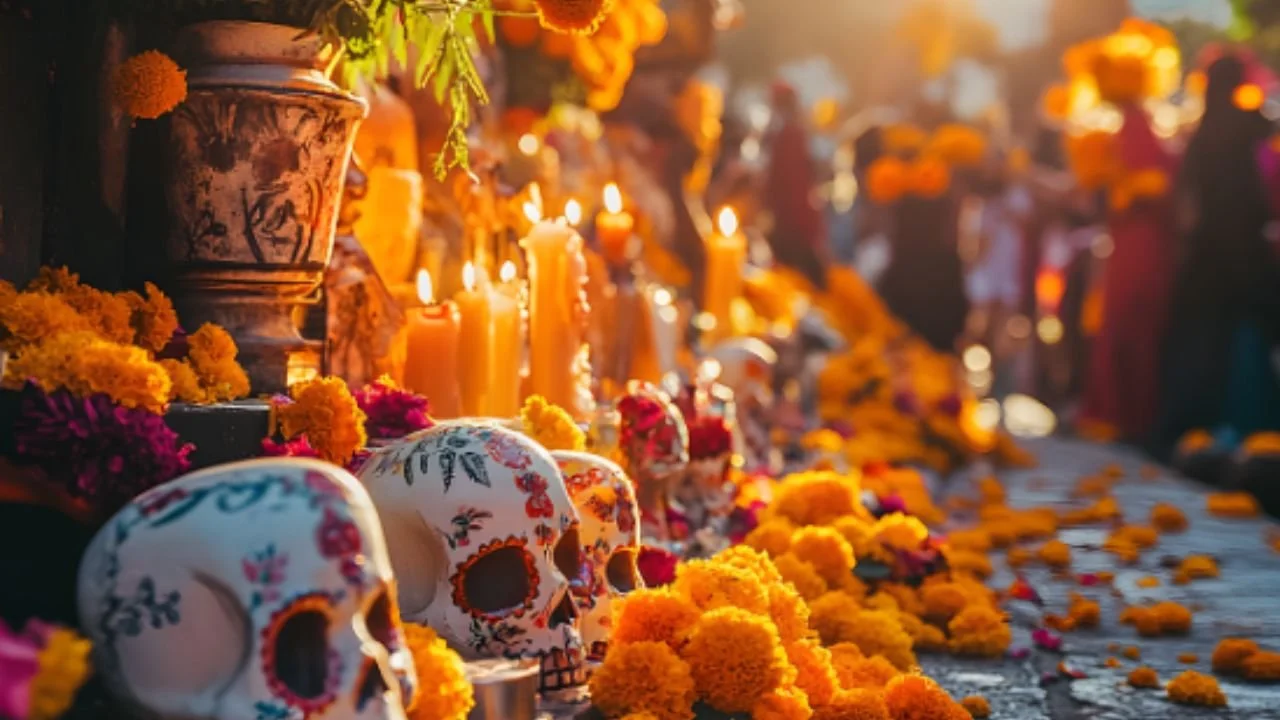
In Mexico, Día de los Muertos is a famous celebration for those who’ve gone. It happens on the first two days of November. The gathering is full of joy. The happiness element comes from the belief of the families that the dead spirits return for a short time on Earth. They come to visit those dear to them.
Altars adorn the homes and graves of the dead. Several things are placed on these altars. These include the pictures of the dead and their personal items. Candles are lit and food and drinks are served as well. A vivid orange marigold is something that an onlooker will find most abundantly at this time. The flower is believed to show the spirits the way to their living homes.
Sugar skulls are another important symbol. They represent death, but in a playful and artistic way. They are not meant to be scary. Instead, they reflect the idea that death is part of life.
Families often visit graves and clean them. Then, they spend time there together. It is a social and emotional gathering and not a somber event. For this reason, Día de los Muertos differs from many Halloween traditions that focus on fear. It focuses on memory, love, and continuity. It is about staying connected to those who have passed on.
United States: Modern Halloween and Commercial Tradition
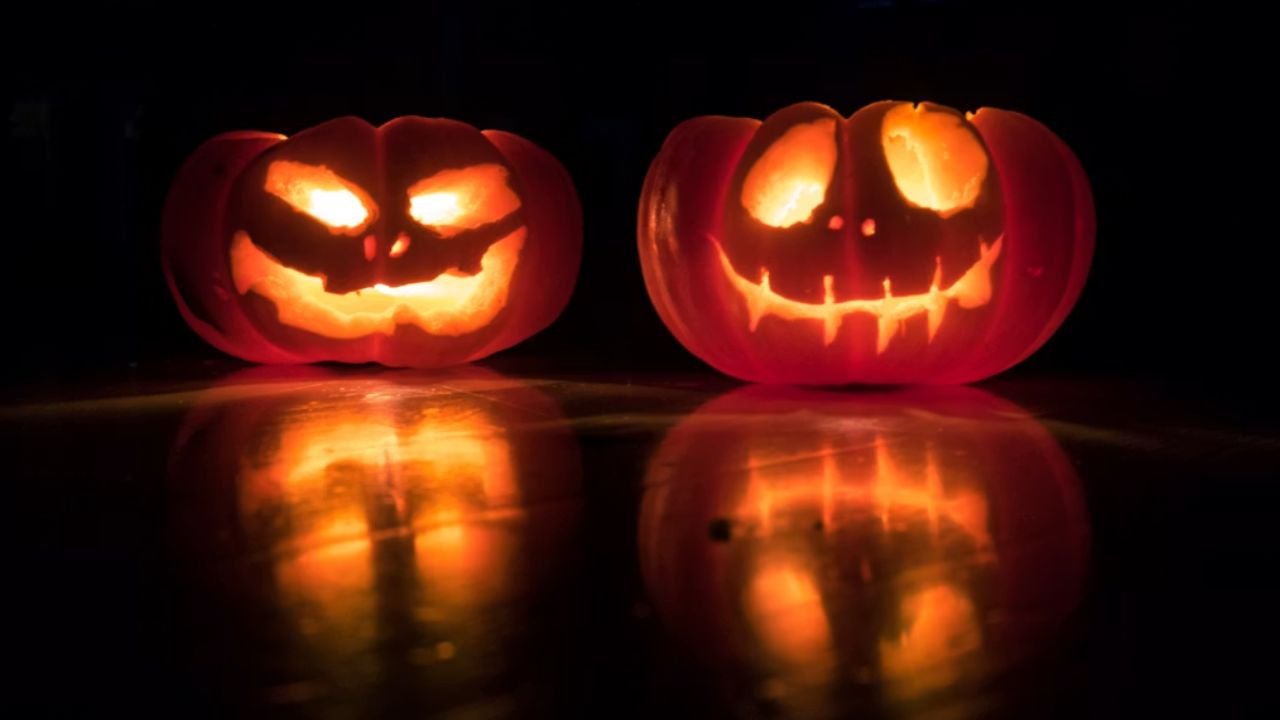
In the United States, Halloween has become a major cultural event. It is widely celebrated on October 31st. Modern Halloween includes trick-or-treating and costume parties. Haunted houses and decorative displays are also very popular. Children dress in costumes and go door-to-door collecting candy. Adults often participate in themed events and community celebrations.
The holiday blends old European traditions with modern entertainment culture. However, in recent years, Halloween here has become less about spiritual beliefs and more about seasonal fun.
Pumpkins are turned into the shape of a face. The finished piece is called a jack-o’-lantern. They are all pervasive during this time. One can find them here, there, everywhere. This tradition stems from Irish folklore. The original versions did not use pumpkins. They used turnips. Pumpkins became famous in North America way afterward.
Ireland and Scotland: Remembering Samhain Traditions
In Ireland and Scotland, where Samhain originated, many cultural echoes still remain. Today, Samhain is not widely celebrated in its ancient form. However, its influence is still present in seasonal festivals.
Some modern celebrations include storytelling and historical reenactments. These events focus on preserving heritage rather than superstition. In rural traditions, there is still a sense that late October and early November carry a reflective mood. It is a time when families remember ancestors and mark the new season.
Ireland, in particular, has strongly influenced global Halloween culture. Many of the customs now seen around the world, like costumes, jack-o’-lanterns, and supernatural themes, can be traced back to Irish folklore.
China: The Hungry Ghost Festival
In Chinese tradition, the Hungry Ghost Festival honors the dead. It usually takes place in the seventh month of the lunar calendar. During this time, it is believed that restless spirits return to the living world.
Families prepare offerings such as food, incense, and paper objects that are burned for the spirits. These are meant to provide for ancestors in the afterlife. In some regions, people also perform public ceremonies. This includes opera performances and rituals to entertain wandering spirits.
The Hungry Ghost Festival is rooted in respect and balance. It is not about fear alone. It is about maintaining harmony between the living and the dead. It reflects a belief that ancestors continue to influence the living world and should be honored properly.
Japan: Obon Festival and Ancestral Return
In Japan, the Obon Festival honors ancestors. Obon usually takes place in summer. But it shares similar themes with Halloween traditions around the world. It is believed that ancestral spirits return to visit their families during this period.
People clean graves and place offerings at household altars. Lanterns are lit to guide spirits home. At the end of the festival, floating lanterns are sometimes released into rivers to guide spirits back to the spirit world.
Obon is a time of family reunion. Many people travel back to their hometowns to take part in ceremonies and traditions. It is a peaceful and reflective festival. The focus is on gratitude and connection across generations.
Philippines: Pangangaluluwa and Visiting Souls
In the Philippines, a tradition called Pangangaluluwa is sometimes associated with the Halloween season. Historically, groups of people would go from house to house singing and asking for prayers for souls in purgatory. It has similarities to caroling, but with a spiritual focus.
Over time, this tradition has become less common in its original form. But it is still remembered in some regions and cultural events. Modern Filipino Halloween celebrations are also influenced by Western customs. Trick-or-treating and costume parties are two major influences. However, the spiritual theme of remembering the dead still remains present in many communities.
Africa: Ancestral Remembrance and Spiritual Connection
Across many African cultures, the dead are not considered gone. They are seen as part of the ongoing family and community structure. There is no single continent-wide “Halloween.” But many communities have traditions that honor ancestors throughout the year.
In some regions, families make offerings and hold ceremonies. They share meals in remembrance of the deceased. Ancestors are believed to provide guidance and protection. These practices are deeply rooted in spiritual belief systems that emphasize continuity between generations.
Rather than a single festival, remembrance is integrated into daily life and seasonal rituals.
A Global Theme: Different Cultures, Shared Meaning
When looking at Halloween traditions around the world, it becomes clear that almost every culture has a way of remembering the dead. Some traditions are joyful and colorful. Others are quiet and reflective. Some focus on spirits returning to visit. Others focus on honoring ancestors and maintaining balance between worlds.
Even though the symbols and rituals differ, the meaning is often similar. People want to remember those they have lost. They want to feel connected across time. They want to understand death not just as an end, but as part of a larger cycle.
Halloween, in its modern form, is just one expression of this universal human idea.
Why These Stories Still Matter
Halloween may look like costumes and candy on the surface. However, its roots and global parallels run much deeper. From Samhain in Ireland to Día de los Muertos in Mexico and Obon in Japan, cultures around the world continue to honor the dead in meaningful ways.
These traditions remind us that history is not just something in books. It lives in rituals, stories, and memory.
That is also the philosophy behind Hottest Hell Tours. The focus is not on spectacle or exaggerated fear, but on real history and the human stories behind it. When we understand how different cultures remember the dead, we also understand why storytelling, especially honest storytelling, matters so much in places like New Orleans, where history and myth are always close together.
FAQs
In which country is Halloween most celebrated?
The United States is the country where Halloween is most widely celebrated. People decorate their homes, wear costumes, carve pumpkins, attend parties, and take children trick-or-treating every October 31.
What is the most popular Halloween tradition?
Trick-or-treating is the most popular Halloween tradition. Children dress in costumes and visit homes to collect candy. Many neighborhoods also decorate houses to make the experience more festive and fun.
Does Japan celebrate Halloween?
Yes, Japan celebrates Halloween, but differently from many countries. Costumes, parades, and themed events are popular. Traditional ancestor festivals like Obon remain separate from modern Halloween celebrations.