How Long Have Vampires Been In America? Not as Long as You Might Want

Burne-Jones-le-Vampire.jpg

You asked for vampire lore, and we’ve got the bloody goods for y’all. But first….we need to talk.

We know you know tales of vampirism stretch back centuries. We totally understand why visions of Jacques St. Germain draining nubile young women erotically on Royal Street, or an ancient-but-ageless Lestat strolling toned and shirtless through the mists that cling to live oaks at night, get your motor going. We want nothing more than to deliver great, homegrown vampire stories pulled right off the pages of reeeeeally old Acadian settler swamp diaries to your door.

But we can’t.

Reality is that for the first 200 years folks were here in Louisiana we were so busy worrying about the winged blood-suckers spreading yellow fever and malaria that we didn’t have much reserve energy for stressing bout fanged boogeymen. This isn’t to say we were too cool to be scared of boogeymen and shadows. The rougarou/loupgarou legend is just one of many out of wild and ruthless Cajun country, and nearly every community of every caste and color in New Orleans has feared their own demons and devils.

But between the pirates, white-hot pissed indigenous tribes killing settlers, gators, feral animals, plagues, and OH YES THE WARS, we were too busy trying not to die for a while there to sit and tell vampire stories.

Until the early 1900s.

As The Washington Post noted in 1902, America finally starting catching Europe’s vampire fever around the time British artist Philip Burne-Jones’s piece “The Vampire” made its stateside debut. (The painting is often misattributed to Burne-Jones’ famous father, Sir Edward, but it’s def Philip’s work.) Inspired by and often displayed with the poem of the same title by Rudyard Kipling, it depicts a pale-skinned woman, neck and shoulders tantalizingly exposed, straddled with a satisfied look on her face the body of a helpless, limp, mustachioed man drained of blood...an image which downright stimulated Americans.

Fun Fact: This painting was a spiteful troll job by Burne-Jones against his ex-lover. The married actress who modeled for several of his paintings dumped him to stay with her husband, so he immortalized her as a ruthless predator sucking a man (who looked like him) dry. Super mature, Phil.

The poem and haterade painting were first released in the UK in 1897, and between Kipling’s words—the poem is about how heterosexual relationships are the worst, PS—and Burne-Jones’ gothically erotic depiction sparked wide interest among upper crust art fans who otherwise wouldn’t have cared much about poor peoples’ ghost stories.

All of a sudden little-known books from the late-1800s, like historian Lucy M.J. Garnett’s “The Women of Turkey and Their Folk-Lore,” were being read by educated men and quoted in American newspapers. Garnett’s book, published in 1890, was cited widely, helping lay the foundation for eventual local vampires stars like Bill Compton and Edward Cullen.

Garnett had spent two decades living among “the peasantry and common folk of Turkey, Greece, Montenegro, Bosnia, and Croatia, among others,” and was therefore considered a leading expert on vampire lore at the turn of the century. The Los Angeles Times used her as an expert in an article titled “Myth of the Vampire Revived by Painting,” printed July 12, 1902, which was about the public reaction to Burne-Jones’ painting and Kiplings’ poem:

“Perhaps the most ghastly of Greek and Turkish superstitions is that of the vampire,” Garnett explained, “generally known in the Balkan Peninsula by the Slavonic name of ‘Vrykolakas.’ It is customary among the Greeks and other peoples of the peninsula to exhume the body of a deceased relative at the end of three years, in order to ascertain if it is properly decomposed. Should this not be the case, the Vrykolakas (‘the restless one’) is supposed to be possessed of the power of rising from the grave and roaming abroad, reveling in the blood of his or her victims.”

Garret went on to list the assumed “causes” of vampirism, which included:

  1. Having perpetrated or having been the victim of a crime

  2. Having wronged someone who then died mad about that wrong 

  3. Having been cursed by someone powerful enough to effectively curse you 

She even specified that #3 was perpetrated primarily by members of the clergy, though technically anyone could curse you with vampirism if they were heated enough. “‘May the earth not eat you’ is a common expression in the mouth of an angry Greek; the a vampire is not, as some authorities have contended, a disembodied soul, but an undissolved body,” she explained.

This last detail was particularly mind-blowing at the time, a deviation from Britain and France’s depictions of vampires as parasitic ghouls in search of human vessels.

Garnett’s time interviewing the “Balkan peasantry” added layers of humanity to our public perception of vampires, including the burden of vampirism on communities as a whole:

“Vampirism is believed to be hereditary in certain families, the members of which are regarded with aversion by their neighbors and shunned as much as possible,” she wrote. “Their services are, however, called into requisition when there is a vampire to be laid, as they have the reputation of possessing special powers in that direction.”

She also noted that those “services” were something used to manipulate entire towns: 

“Many vampire panics are no doubt attributable to rumors set on foot by persons who profit by such superstitions. In 1872, the whole population of Adrianople was thrown into a state of commotion by the reported nightly appearance of a specter in an elevated part of the town known as Kyik, inhabited both by Greeks and Tyrks. The specter was represented as a Vrykolakas by persons who affirmed they had seen it lurking in the shadows of the house—a long, lank, female with a cadaverous face, and clad in a winding sheet. The Christian priests and Moslem hanjas, who were equally appealed to in this emergency, strove in vain during a fortnight to exorcise the wanderer by their prayers and incantations. Finally, a rumor began to be circulated that the only person possessing the power of freeing the town from this haunting specter was a turkish djinji, or magician, famous for his power over evil spirits, who lived in another town, and who would consequently require a large fee for his services.”

They did end up hiring the magician and he did indeed vanquish the “vampire,’ who was probably a girlfriend he sent out to terrorize towns when cash got low.

So yeah, point is, because America’s relationship with vampirism is still relatively new compared to the rest of the world, we don’t have many pieces of LOCAL lore that aren’t contemporary creations. It would be cool to say we had evidence of a 250-year-old vamp riding a gator down Bayou St. John with a lithe Creole limp in his arms, but all we really have are police reports of goth kids falling in the water after Voodoo Fest.

Miss Lucy M.J. Garnett had a bunch of old-ass vampire stories, however…so we’ll be sharing one of those with y’all this weekend. In the meantime, checkout Kipling’s vampire poem for a glimpse into how much that man did NOT love dating.

How does a pirate become a pirate?

We asked, you voted and….apparently y’all want vampire lore, true crime, AND pirate stories pretty equally. So, unlike other elections, we’re gonna make sure no one is unhappy with the final outcome and give the people what they want. First up? Piracy!

We went to Hottest Hell’s resident pirate scholar, our beloved bearded guide Doug, and asked him to break down for you what makes a pirate a pirate. The answer isn’t a peg leg or a combination of guyliner and gold teeth…it’s a piece of paper. We’ll let Doug take it from here:

“The air was akin to boiling soup and filled with clouds of mosquitos on September 3, 1814, the day British officers approached the most infamous of New Orleans’ smugglers. They came to Frenchman Jean Lafitte in the shallows of Barataria Bay bearing both a gift and an ultimatum: “Either you accept our gift, or we burn your entire smuggling operation to the ground.” Famously, Jean Lafitte rejected the gift and immediately wrote to the US government—the same one he’d spent a lifetime thwarting—tattling on the Brits and saying he was now Team America if they’d have him.

The “gift” in this case? The one thing that could’ve made an honest man out of a nefarious Gulf pirate. It was simple letter signed off under King George III himself, commonly referred to as a “Letter of Marque.” As defined, such a letter is “a license to fit out an armed vessel and use it in the capture of enemy merchant shipping, and to commit acts which would otherwise have constituted piracy.” (Piracy otherwise being a crime.)

These letters were not strictly applied to “merchant vessels,” however—they were, obviously, extended to pirates, like Lafitte, as well. And a pirate’s ship, upon receiving this piece of paper, becomes a “privateer.” Privateers are defined as “an armed ship owned and officered by private individuals holding a government commission and authorized for use in war, especially in the capture of enemy merchant shipping.”

(Remember this last bit. We’ll circle back to it later.)

From the year 1243 all the way up until 1856, issuing letters of marque to dangerous criminals was quite common in France, Spain, England, and even here in the United States, because why not? Sounds like a great idea!

Letters allowed the privateer to capture an “enemy vessel,” bring a case to an Admiralty Court, and possibly gain ownership of their new prize. It also gave the privateer permission to cross international borders for the purpose of “reprisals” against pretty much anything the government considered an injury or insult.

The first of these “Privateer Commissions” (old timey talk for “doin’ the government’s dirty work”) were issued in England in 1243 by King Henry III. His privateers were a very select few, sent to capture the king’s enemies at sea in return for half of the valuables on board. The other half went to the crown. By the 1560’s, the French, Spanish, and Dutch also had their own hired sea thugs.

The most famous of privateer captains at that time was Sir Francis Drake, who looks less skeptical in portraits than Lafitte did. On top of completing the second circumnavigation of the globe ever, Drake ushered in an era of violent conflicts with the Spanish off the coasts of the Americas. And, in true monarch fashion, Queen Elizabeth I handled it by denouncing his actions…while still taking her share of his profits.

By 1604 Spain felt like a global punching bag, taking beatings on all sides from English and Dutch privateers. This was when Hugo Grotius wrote a seminal work on international law, “Of the Law of Prize and Booty.” This treatise was actually a defense of Holland’s privateering actions against the Spanish crown. And, given that every other empire was doing it, all the monarchs of the other nations decided simply not to talk about it. After all, not even hypocritical rulers wish to look like hypocritical rulers.

“Okay, Doug. So if everyone was doing it, then why did the practice come to an end?”

I’m glad that you asked. You see, at the end of the Crimean War several nations met in Paris to finally denounce the use of privateering by signing The Paris Declaration of 1856. However, one nation was suspiciously absent. Can you guess who?

That’s right! It was the United States! In fact, Article 1 (section VIII) of our constitution still lists issuing “letters of marque and reprisal” as one of the enumerated powers of Congress. And five short years after the rest of the world said, “Let’s stop hiring pirates,” both the Union and the Confederacy made use of privateer vessels. (More on that in another post.)

To this day the article hasn’t been taken out.

Anyway, fun fact for any steampunk fans out there: AIRSHIP pirates were a real thing? It’s true! During World War II, a private company out of Sunnyvale, California, flew a commercial class blimp called the Resolute to hunt submarines. So, how were these blimp-riders pirates? They were a.) armed civilians, b.) on an armed craft, c.) bombing vessels from the air, and d.) were never issued letters of marque and reprisal. So….what else would you call them?”

Now that you know a bit more about being a pirate, some of our upcoming tales of pirate shenanigans will be a lot less confusing.

94187328_650292415814761_3747669040923934720_n.jpg

Celebrating 4/20? Don't Forget to Spark One Up for New Orleans' Cannabis Culture

The international holiday of 4/20 is upon us, and if you’re going to celebrate by ingesting The Devil’s Lettuce somewhere in the United States, you’ll want to raise an edible to New Orleans and its loooong history of helping establish marijuana culture in this country.

Sure, Texas usually gets credit for being the birth canal through which Wacky Tobacky entered the States. The most popular historical narrative is that Mexican refugees fleeing the violence of revolution brought smokable weed and cannabis seeds across the border around 1910. (Texans passed the earliest ordinance against the substance by 1914 not so much because they had a problem with marijuana, which caused considerably fewer problems for locals than the abundantly available combo of alcohol and cocaine, but because they, you know, had a problem with Mexicans.)

And while this narrative is factually correct, it leaves out cannabis had already introduced itself to the American South many years prior, right next door in Louisiana. It’s just that New Orleanians, as a thriving but scrappy international port, didn’t care nearly as much as Texans about what foreigners (or anyone else) put in their pipes and smoked.

So how did ganja get to New Orleans first? Human fuckery, mostly.

“SO….LIKE….WHAT IF WE GET THE SLAVES HIGH THO?”

Marijuana’s use as an intoxicant in North America is woven right into our country’s shameful slave-owning past. Indigenous to Asia, “narcotic marijuana” (aka the kind of “hemp” that gets you high vs. the kind ethical Etsy tote bags are made from) crossed from the Far East over a bridge of Portuguese and British slave traders, who used sativa to keep slaves submissive. The Brits and their unpaid servants imported from India brought it to the Caribbean while establishing plantations in Jamaica in the 1850s, where cannabis’ intoxicating—but ultimately super-soothing—effects reduced the likelihood enslaved individuals would get pissed and start murdering the masters:

“British authorities brought 1.5 million “surplus laborers” from India to labor-short islands in the Caribbean. Indentured Indian workers brought their ganja with them…and it was tolerated so long as sugar production did not suffer. Ganja’s use was closely wrapped up with that of rum, so that the two drugs became intertwined in the cycle of work and poverty that characterized [indentured] life on the sugar plantation,” writes Professor Barney Warf in his “An Historical Geography of Cannabis.”

But that wasn’t the first time Europeans used reefer as a psychedelic olive branch with the people they were subjugating.

In 16th century Brazil, Portuguese masters encouraged their slaves to plant marijuana IN the sugar cane fields they were tending. Giving slaves the “freedom” to plant and cultivate their own supply of their favorite medication gave the illusion of being benevolent masters while cunningly ensuring an oppressed majority was personally invested in the success of the sugar cane crops—some rogue slaves might have spitefully sabotaged the boss’s plants, but not if it meant their own cannabis crops would suffer.

Anyway, point is the Caribbean was flush with weed long before the Mexican Revolution, and boats loaded up with sailors from Jamaica and Antigua ported with regularity in New Orleans.

JAZZ VIPERS AND THE REEFER MAN

Because folks down South spent so much of the 1800’s trying not to die—war, plagues, poverty, and natural disasters were a preeeetty big part of the second half of that century—and because Caribbean sailors weren’t known for posting a lot of poetic stoner updates on Facebook at the time, cannabis doesn’t really start stepping into historical documents until the early 1900s, when Prohibition and the Jazz Age conspire to make Mary Jane one of the coolest kids in the Crescent City.

As Caribbean immigrants finally began to establish distinct footholds in NOLA, like Storyville, their herbal practices were passed first to other members of the black community, then to the poor white Bohemians unafraid to make music or mingle socially with people of color.

By the 1920s “Jazz Vipers”—local slang for musicians who got high, like Louis Armstrong—had become one of the signature archetypes of New Orleans, as synonymous with the city as curvaceous Storyville madams on porches or blushing Uptown debutantes in pearls. Brothels began to set aside parlor rooms specifically for jazz and smoking grass, as the combination of live music and weed gained the same popularity drinkin’ and whorin’ already enjoyed.

This, naturally, scandalized the more staid, deeply Christian residents of New Orleans, causing Prohibitionists to begin demanding a ban on marijuana. Desperate to drive young, not-yet-corrupted New Orleanians away from the influences of the Jazz Man and his friend, The Reefer Man, unintentionally hilarious propaganda about the “common effects” of weed started circulating widely.

“In many respects the action of cannabis sativa is similar to that of alcohol and morphine. Its toxic effects are ecstasy, merriment, uncontrollable laughter, self-satisfaction, bizarre ideas lacking in continuity, and its results are extreme hyperacidity with occasionally attacks of nausea and vomiting. It has also been described as producing, in moderate doses, from mild intoxication to a dead drunk, drowsy and semi-comatose condition, lapsing in a dreamy state with a rapid flow of ideas of a sexual nature, and ending in a deep sleep interrupted by dreams. On awakening there is a feeling of great dejection and prostration. Large doses produce excitement, delusions, hallucinations, rapid flow of ideas, a high state of ecstasy, psychomotor activity with a tendency to willful damage and violence, and a temporary amnesia of all that has transpired. In cases of prolonged addiction especially in the Malays, the somnolent action of cannabis indica is replaced with complete loss of judgment and of restraint, the same effect so frequently observed in alcoholic intoxication,” one especially heavy-handed excerpt from a propaganda piece titled THE MARIHUANA MENACE warned.

(PS: Science has since made clear sativa is NOTHING like alcohol or morphine, both of which can cause organ failure, overdose, and death.)

The Marihuana Menace was, unfortunately, presented to the Louisiana State Medical Society this week in history back in 1931, scaring the shit out of a lot of casual alcoholics with medical licenses and going on to become one of the most-cited pieces of literature during the “Reefer Madness” phase of American history.

We say “unfortunately” because while it was true that marijuana, like any intoxicant, could be and was sometimes abused, the paper was tainted with outright lies about what sativa and indica could do. Like this gem:

“Captain Dhunjibhoy says: "I shall not hesitate to believe any one who commits acts of violence under the influence of the drug and pleads complete amnesia of the crime on recovery…I put this drug above alcohol, opium and cocaine, with regards to injurious tendencies in the causation of insanity in India."

Or this one:

“Hemp is a direct cerebral poison which causes the following types of insanity: 1) acute delirious mania; 2) chronic mania; 3) dementia.”

Pretty damning stuff, if you leave out that

a.) Captain Dhunjibhoy ran an asylum, so the side effects of cannabis he witnessed were in people already suffering from severe mental illness, and

b.) The All-India Opium Act of 1878 made the gooey sister of heroin almost impossible for Indian civilians to obtain, so of course Dhunjibhoy experienced very few issues with it.

Technically speaking marijuana use in Louisiana became an illegal activity in the mid-1920s. And just as we did when Prohibition of alcohol hit, New Orleans rolled its eyes and turned back to the music with favorite vices in hand.

While the state as a whole is still hamstrung by some of the more Draconian laws about ganja in the nation, New Orleans continues to lead the charge in attempting to introduce common-sense weed legislation into the conversation. Most recently we decriminalized possession of the substance in sections of Orleans Parish, an effort to stop filling local jails with non-violent individuals guilty only of ‘bizarre ideas lacking in continuity.’

Marie Laveau and the Legacy of New Orleans' Pandemic Nurses

New Orleans needs her Marie Laveaus right now.

One of the wetter, hotter, buggier places in North America, New Orleans has been a perfect petri dish for diseases since it was first hand-drawn onto a map. Our early gutters almost never worked, and when they did were full of human waste. Water purification was an art form that took us centuries to perfect. (Spoiler Alert: We still haven’t mastered it.) Our aggressive mosquito population could, and did, lay thousands of eggs pretty much anywhere, from cisterns to horse troughs to puddles to spoons left in a wet sink too long. As a result, small outbreaks of cholera, malaria, and other “fevers” frequently plagued colonists in the 1700s. 

These small outbreaks, fueled by the growth of the city and our traffic as an international port, eventually snowballed into a half dozen epidemics between 1837 and 1853. The latter was “the big one,” a Yellow Fever nightmare so virulent it killed one out of every ten citizens. Those who survived often claimed to have had a secret weapon—“fever nurses” like our voodoo queen, Marie Laveau, and her many sisters in healing work. 

For the record, being a “nurse” of any kind has always been hard and often thankless work, but it was particularly thankless in the years before 1900. “Nursing” didn’t become a profession a person could study until 1861, when Elizabeth Blackwell began offering training for the women who assisted military doctors on battlefields. This was expanded only slightly by 1873, when New York City starting hosting nursing classes for those who were NOT helping in war efforts. And it was 1886 before the Philadelphia Hospital School of Nursing graduated its first class, to the outright derision of some good-ole-boy doctors watching from the Deep South. 

1853’s yellow fever epidemic was therefore an especially miiiiserable time to be a nurse of any kind. 

Frontline medical doctors responding to “the Saffron Scourge” were paid around $60 a week for their work, which included therapies as problematic as bloodletting and as outright stupid as feeding patients mercury or other poisons. Those who traveled from distant locales to assist were welcomed into the city’s finest hotels and befriended by our rich, given seats of honor at their upper crust dinner parties. Food and transportation was provided for them. They cleaned no bed pans, emptied no buckets of bloody vomit, and spent no time ministering to the emotional needs of the critically ill. 

Nurses, by comparison, were paid only $4 a day, less if they were women of color. Those shipped in from out-of-state were denied welcome at nice hotels, forced to bunk in boarding houses or on the floors of acquaintances. They did the essential work of keeping thousands of infected individuals clean, hydrated, nourished, which did more to combat the infection than, say, blood-letting. They comforted the dying and cheered on those capable of recovering. The ones like Marie also gathered herbs and roots to brew medicinal teas that were, for the most part, actually medicinal. (More on that below.) 

But the nurses received no places of honor at the dinner tables of the upper crust. 

They were shunned instead. 

“The social elite placed even local white nurses among society’s dregs,” notes historian Randall Hall in his essay ‘Southern Conservativism at Work.’ Unless, of course, those nurses agreed to do the work for free AND not have sex, in which case they were cool. 

“Volunteer [nurses] from the city’s Catholic and Episcopal orders were given much praise and credit because their maternal, unpaid care and their religious example reinforced orthodox southern sentiment,” notes Hall.  

But Marie Laveau was not about to work for free or give up sex to earn the validation of assholes who saw her, her daughters, and her friends as subhuman. Instead, she focused on helping as many members of the poor and enslaved community as she could, and made New Orleans’ elite come begging for her help. 

Which they did, since their fancy new doctor friends couldn’t do much except jam poison up their anuses.  

Eventually Marie Laveau was called by The Howards, a group of civic-minded white men who used their wealth to provide health care to the less fortunate, to work with fever patients. “A committee of gentlemen, appointed at a mass meeting held at Globe Hall, waited on Marie and requested her on behalf of the people to minister to the fever stricken. She went out and fought the pestilence where it was thickest and many alive today owe their salvation to her devotion,” Laveau’s daughter recalled.  

She was not the only one. The Howard Association reportedly organized around 3000 women to support communities afflicted by the disease across the south. Laveau, and the female healers like her, used combinations of massage, proper hydration, steaming, good nutrition, and “ptisans”—various strengths of herbal teas--to support the immune and nervous systems of their horrifically weak and ill patients. Journals indicate that with these nurses came real medicine: elderberry bark, vervain, ginseng, rhubarb, snakeroot, acacia, sage, and hemp are just a fraction of the documented plants Laveau and her sisters utilized to bring down fevers, ease vomiting, and clear lungs of fluid. 

All of these plants have since proven in clinical studies to be more effective—and significantly less dangerous—than the majority of treatments prescribed by medical doctors of the time. 

Fever nurses also changed the bedding of the suffers, properly sanitized rooms, helped enforce quarantine boundaries, taught the undereducated how to maintain their health in the future, and instructed community members on how to prevent illness spread through cleaner living. Multiple newspapers and diary entries from the time document the efficacy of the nurses’ work, even if their own medical peers and society’s “elite” failed to. Days after her death, The Times-Pic wrote of Marie: 

“She was very successful as a nurse, wonderful stories being told of her exploits at the sickbed. In yellow fever and cholera epidemics she was always called upon to nurse the sick, and always responded promptly. Her skills and knowledge earned her the friendship and approbation, of those sufficiently cultivated, but the ignorant attributed her success to unnatural means and held her in constant dread.”

Without the significant effort and community education provided by Marie Laveau and fever nurses, there’s no telling how much higher 1853’s already catastrophic death toll could have been. 

Here’s to all of New Orleans’ “Marie Laveaus” out there working their magick during COVID-19.

1 2.JPG

375,000 Dead Rats: That Time "The Black Death" Visited New Orleans

Did you know that New Orleans once hosted The Black Plague itself? It’s true. (We’re hospitable like that.)

It appeared in 1914 when Swedish sailor Charles Lundene arrived in the city, found himself a firm bed at The Volunteers of America Home…and within days began burning up with agonizing fever. After four days of his groaning and delirium, residents of this boarding house—located at 713 St. Joseph Street—called for help for the 49-year-old man. Charles was rushed to Charity Hospital, isolated, and examined by a small team of very nervous doctors who noticed severe swelling in his armpits and groin. On the last day of his life his fever was 105. The Swede died, and his autopsy confirmed what those nervous caregivers had surmised: bubonic plague, the infamous “Black Death” which had decimated swaths of Europe during the 14th century. 

A second case popped up the day after the Swede’s death, followed by one new case every three days for the next 3 months. By August 7th—when a 22-year-old car cleaner working at a shop on Louisville and Nashville Streets presented with a “femoral bubo,” the egg-sized swelling of infected glands characteristic of plague—just 14 cases in humans had been documented. Which is, by Black Plague standards anyway, a pretty low rate of infection. 

This was because New Orleans and the federal government not only had a healthy working relationship at the time, but powerful and competent leaders who took on the plague with the ferocity of an old priest and an young priest attending an exorcism. 

Rather than arguing over the ridiculousness of a “foreign disease” like bubonic plague landing in Louisiana, or downplaying the truth in order to give residents/tourists a false sense of security, officials immediately stormed the Volunteers of America Home and moved all residents into quarantine at a plantation home outside the city. Everything inside the boarding home was pulled out and burned in a public bonfire right on St. Joseph, and armed guards were deployed to keep everyone in the neighborhood IN their neighborhood to prevent spread. Rat populations in the city were aggressively trapped and tested, with workers catching around 375,000 rats.  

Which is NOT easy. As one journalist noted in May 1915, “the examination of rats is a matter requiring considerable skill and much experience, and whenever there is a plague outbreak as many sanitary officers as possible should visit the scene and thoroughly familiarize themselves with the methods to be used in diagnosing, studying, and combatting the disease.” Those methods were dipping every dead rat in kerosene to kill the fleas, carefully combing the dead fleas out of the rat’s fur, looking at the dead soaked fleas under a microscope to see if they were infected, dissecting each rat to find the "tell-tale lesions that indicated the likely presence of plague,” a keeping painstaking notes of the entire disgusting process. 

What a party! 

Additionally, over 6000 railcars, 4200 buildings, and 101 ships were inspected and fumigated in a SINGLE WEEK by just 380 workers. If the rat infestation was found to be too problematic, New Orleans leveled the building entirely. 7000 structures were ultimately demolished, including the historic St. Louis Hotel on Canal Street. 

When the epicenter of the rat issue revealed itself to be our Stuyvesant Docks, the city waged a borderline nuclear attack on anything with a tail and whiskers in the area. They burned a LOT of shit down in the process, but also put into place new protocols—from assigning guards to gangplanks to kill any rats which tried to escape newly docked boats, to complete maritime quarantines—which would go on to redefine “rat proofing” in ports across the nation. 

Keep in mind this was over one hundred years ago, all done without the benefit of computers or cell phones or even a nice Toyota Camry rental to help speed up travel from fumigation to fumigation. 

Because of the decisive, no nonsense leadership demonstrated by Mayor Martin Behrman and The Board of Health of Orleans, as well as firm support from President Woodrow Wilson, Surgeon General Rupert Blue, and the Supreme Court of the State of Louisiana, cases dwindled to nothing by Thanksgiving of that year. Within six months, a filthy swamp city built on the backs of undereducated pirates and French hookers had “entirely averted the disastrous menace of the plague.” 

It was an accomplishment that improved quality of life for all New Orleanians, because not being overrun with infected rats and vermin is something the very poor and the very rich can enjoy equally. 

By 1915 it was written into law that “every building, outhouse, and other superstructure, stable, lot, open area, and other premise, sidewalk, street and alley, now constructed or hereafter to be constructed in the city of New Orleans, shall be rat proofed.” This was made possible through a variety of methods, including:

- requiring landlords to put trash in proper trash cans while it waited to be collected instead of slopping shit everywhere 

- mandated concrete layers of no less than 3 inches under the wooden floorboards in houses, businesses, and outhouses 

- raising some structures onto pillars of no less than 18 inches 

- requiring restaurants and grocers to store “foodstuffs” in “hermetically sealed containers impervious to rats” 

- altering how the city handled it’s considerable amount of horse poop

What also played a role in New Orleans’ success was “germ theory,” aka science proving that black plague was caused by toxic bacteria rather than Jews (yes, there was really a time when Jewish people, and then Chinese people, and then both, were blamed for plague) or bad smells. The United States government was even able to send NOLA’s medical professionals a serum which could put a serious dent in active  bubonic infection, something those poor Europeans eating emeralds and drinking urine did NOT have at their disposal during the outbreak in 1347. 

When it was all over, the 1914 outbreak produced 31 cases of plague. 10 were fatal. 

Between 1900 and 2017, according to the Louisiana Office of Public Health, 1045 confirmed or probable cases of plague have occurred in the United States. Not all were bubonic. Around 7 cases a year are still reported domestically, the majority of which now stem from kids and bro-hikers poking at dead rodents they find outside.  

Forgotten New Orleans History: The Pandemic That Turned Children Into Monsters

Remember that time a plague turned 5 million adults and children into living corpses/hell spawn all over the world, including New Orleans? No? 

That’s because the EL, or encephalitis lethargica, struck during two even larger headline-makers: World War I, and the Spanish Flu pandemic of 1918. (Which should have been named “The Kansas Flu” because that’s where it originated, but the American government hid it with propaganda because that’s how we roll.) Symptoms of EL in some cases included fever, aches, altered behavior, and mania, and that all sucks. But some poor sufferers were struck with something far worse: Paralysis, immobility, kinetic tics, delirium, catatonia, altered speech and “pseudosomnolence.”

The latter was a state wherein victims would sleep abnormally long periods but remember everything happening around them while they did. Some would fall asleep while chewing food or using the bathroom. Family members described witnessing loved ones sleep like the dead for days, eyes open, unresponsive but alive, only to waken suddenly with memories of the household conversations they had “slept” through.

“They neither conveyed nor felt the feeling of life; they were as insubstantial as ghosts, and as passive as zombies,” wrote neurologist Oliver Sacks of patients in 1973.   

Many of these “zombies” died. Around 50% of survivors went on to develop Parkinson’s Disease later, suggesting significant damage left by the initial infection to a host’s central nervous system and microbiome. And while EL did kill a great number of people internationally in the 1900s—it is believed about 1 million of the afflicted perished, though some were never formally diagnosed—the most disturbing effects were reserved for children who survived it.

Later determined to be a form of brain infection, EL transformed one third of its young victims into monsters and criminals. Previously sweet and well-behaved kids tried to rape or murder their own siblings. They smeared feces, screamed primally, and destroyed furniture. One boy tried to bite off another boy’s genitals, and an 8-year-old girl pulled out all of her teeth before plucking out her own eyes. These children later articulated horror at their own deeds, describing an almost zombie-like inability to stop from committing heinous acts which repulsed them. Most ended up in prisons or institutions. Some committed suicide. 

Individuals between the ages of 10 and 45 were most likely to contract EL, with 50% of all cases occurring in those 10 to 30. Researchers posited that it was triggered by environmental toxins, viral/bacterial infection, autoimmunity…or a perfect storm of all three. 

In 1922, New Orleans’ doctors tried to solve the mystery of this sickness when dozen of cases landed in Louisiana. Dr. C. S. Holbrook implored his colleagues at the time to not dismiss EL as a foreign illness which couldn’t possibly infect good ole American patriots: “We have been inclined to look upon this disease as unique and not to be expected or found within our state. [But] lethargic encephalitis is right in our community and a large number of cases of this disease are within the state. Fever is present in the early stages of the disease, the temperature ranging from 101 to 103.5 in some cases. Radiating pains in the arms and legs with headache have even presented as early symptoms in many cases and this pain has persisted throughout the course of the disease in a few instances, and has been very difficult to control.”

Transcripts of Holbrook’s talks with fellow NOLA doctors revealed universal frustration that there was no test available to help diagnose patients. Dr. C. V. Unsworth: “I have seen twelve cases of encephalitis lethargica so-called, and my experience has been the it is difficult to make a positive diagnosis of the disease…I believe it is secondary. It follows some acute infection. Most of the cases I have seen have followed measles and influenza. The more excitable the cases, the more grave the prognosis is. The quiet cases will sometimes get well.” Dr. E. McC. Connely, added: “The diagnosis is very difficult. No one seems to have worked out any definite test that will aid us in making it.”  

One hundred years later we still refer to EL as a “diagnosis of exclusion.” Meaning “still have no test for it.” 

While today almost no one knows the term “encephalitis lethargica” (staying relevant is even hard for infectious diseases), some may recognize it in pop culture: 1990’s Awakenings, starring Robert De Niro and Robin Willians, showcased EL and the efforts of 1960s researchers to cure it. (Spoiler Alert: They didn’t.)

But the filmmakers definitely left out the parts about post-infectious demon children, because some things really ruin inspiring tales of American compassion. And little girls pulling out their own teeth is definitely one of them. 

You can read more about in Molly Caldwell Crosby’s “Asleep: The Forgetten Epidemic” and Jennifer Wright’s excellent “Get Well Soon.” 

Remembering Mark Essex, the New Orleans Sniper

Mark Essex 1.jpg

“Only a pig would read shit on the ceiling.” That was the hand-painted message which greeted police from the plaster roof of a shabby New Orleans apartment on January 7, 1973. Similarly, unnerving messages were scrawled on the walls, murderous phrases like “My death lies in the bloody death of racist pigs” and “Kill pig Nixon and all his running dogs.”

Earlier that day, loud bangs had been reported on Loyola Avenue in the heart of the city’s business district. Police were immediately dispatched to the 300th block of the busy area.

They were ambushed by sniper gunfire, the beginning of a deadly day-long siege on the city perpetrated by a single man. 

Mark Essex, AWOL military man and resident of the apartment covered in hateful messages, had broken into the New Orleans' Howard Johnson hotel and murdered a manager, assistant manager, and two newlyweds en route to the roof. There, he and a sniper rifle waited eagerly for law enforcement to arrive. On that day, he was a man very much ready to wage war.

For years Essex had quietly seethed over racist abuse he suffered in the Navy, going so far as to desert his post over the harsh words and physical harassment inflicted upon him by white officers and recruits. After being court marshaled and discharged dishonorably for his desertion, Essex drifted from city to city while pursuing a relationship with The Black Panthers. (He did not ultimately manage to join the Panthers, but read their propaganda voraciously.) He studied radical Muslim theology and the guerrilla warfare tactics of revolutionaries in other countries, looking for ways to fight back against the white oppression he saw being inflicted upon his African American community. Essex finally landed in New Orleans in 1972, a black man in the deepest South bearing witness to additional acts of racism on a near-daily basis.

It was November 1972 when Essex was finally triggered into action by the racially-charged police killing of two African American students in Baton Rouge. (They were gunned down by law enforcement during a protest.) Essex decided he would even the score by hunting white police officers specifically.

His destructive plan had already been partially executed before he hit HoJo’s—Essex walked into the downtown N.O. Police Department on New Year's Eve and shot two officers, killing them before fleeing the premises. He went into hiding for one week, emerging on January 7th to gun down a grocery store owner he believed had given information to the police before carjacking his way over to the hotel.

From his perfect and well-protected vantage point, Essex targeted cops, firemen, and white civilians as first responders worked to empty the building and neighboring structures. Newspapers reported that nearly 100 officers eventually made it to the scene, but none could get a clear shot of the loner sniper on the roof. Law enforcement was also unclear as to whether there was one gunman or many—Essex did a masterful job of setting fires and utilizing firecrackers within the hotel to create the illusion multiple shooters were inside the building.

It took a military helicopter on loan from Belle Chasse, Louisiana, and many hours of exchanged fire to draw Essex out of his concrete hidey-hole. When he finally slipped into the line of fire, dozens of police snipers discharged their weapons at once while the soldiers in the chopper rained bullets upon him.

Essex was ultimately shot around 200 times, but not before he killed 9 people and wounded 13.

Records show that before his murder spree Essex had been, by all accounts, a model citizen. A Kansas native, friends and family remembered him as congenial and well-liked. He attended church, sang in the choir, and got good grades. He stayed out of trouble with the law and graduated a dental technician training program with honors before enlisting in the military. Adjudicators involved in his Navy court marshaling even confirmed that there was evidence Essex had been targeted and abused while in the Navy, a detail which suggests it took the United States Military to turn a good man into a wrathful criminal.

Tragically, Essex’s killings may have been preventable. In the days after Christmas 1972, the escalating Mark, who had adopted the name Mata, penned a note to a local TV station describing his exact plan in detail:

“Africa greets you. On Dec. 31, 1972, aprx. 11 pm, the downtown New Orleans Police Department will be attacked. Reason — many, but the death of two innocent brothers will be avenged. And many others. P.S.Tell pig Giarrusso the felony action squad ain’t shit. - MATA”

(That last line was a casual ‘fuck you’ to then Chief of Police Joseph I. Giarrusso.)

Sadly, the letter wasn’t opened at the TV station until days after the first killing at the police department, too late to save the lives of those killed on New Year's Eve or January 7.

Mark Essex’s killing spree isn’t even close to New Orleans’ bloodiest day of mass murder. (That one is an even more haunting story we’ll leave for another time.) But it is one of the more haunting days in our city’s more recent history, one which many locals still remember as the number of mass shootings in America continues to rise.

What Does Twelfth Night Mean to New Orleans?

tweltfh night.jpg

It’s the day of the feast, y’all!

For those of you new to NOLA history and lore, The Feast of The Epiphany is the day some Catholic cities like New Orleans celebrate those Three Wise Men and their swag bag of gifts rolling up on the only infant more famous than Baby Yoda, Jesus Christ himself. Feast day, aka Twelfth Night, kicks off our beloved, bedazzled, and delightfully bizarre Carnival season, the weeks-long, parade-laden, cake and booze binge which culminates in a city-wide costume party on Mardi Gras Day. We mark the start of the season, unsurprisingly, with parades, including one eye-catching procession of saints and sinners which goes straight through the French Quarter, The Krewe of Joan D’Arc.

NOLA newcomers, history nerds, aspiring knights, and revolutionaries should all head down to the Quarter this evening for this walking (and sometimes mounted) parade honoring Saint Joan. (Joan of Arc’s birthday coincides with Epiphany, and Joan was Super French and Christian, and New Orleans is Super French and Christian, hence a parade for Joan of Arc to kick off Carnival. It all makes more sense if you’re drinking.) Joan, of course, is the famed female war hero who was commanded by God to help liberate the city of Orleans, France, from British attack and then was burned alive as a heretic for making dudes feel so inadequate. Folks attending this particular parade can expect to see tons of medieval garb, costumes playing with French and religious iconography, drunken knights, and a looootta angels/saints cutting a raucous path through one of the oldest cities in the United States...it’s not a bad way to start the week.

Hottest Hell closes for the Twelfth Night revelry but will be back to our regularly scheduled tours on Tuesday. 

3 Tips for Choosing a New Orleans Ghost Tour


3.png

Once upon a time, only a small number of freaks, criminals, and REALLY lost travelers wandered the streets of the French Quarter at night. Today, however, we’re one of THE top destinations in a wanderlust world! Many visitors don’t want to pass through New Orleans without getting an authentic taste of the mayhem, music, hauntings, and true crime that have made our city oddly seductive. So many people wanna know NOLA better that we now have 300+ tour companies operating within the Crescent City every day!  

That’s great news if you’re a ghost groupie or dark tourist, but challenging if you’re trying to sort through hundreds of ads to find and book the best ghost tour in New Orleans.

  How exactly can a traveler cut through the sales pitches and spooky stock images to score an authentically excellent tour? Here are three tips to help you find the right experience for you and your people.


 1. Size Matters - Dream Small

1.png

  Group size, specifically. Because when it comes to tours, bigger is rarely better.  

Unless you’ve booked a private tour, who you’re surrounded by on any given outing is largely up Odin, Lilith, or whatever deity you trust. We’re fortunate as a city to attract some pretty kind, wildly entertaining visitors. But reality is that not everyone who lands in NOLA is friendly, considerate, or polite...and the bigger the group, the higher the likelihood you’ll get stuck spending your 95 minutes of touring next to Basic Becky and Her Very Drunk Bachelorette Party Wearing Penis Tiaras, or Teddy From Texas Who Talks Through Ev-er-y-thing.  

(Note: A few operators, including Hottest Hell, have policies that restrict drunk guests from participating in tours, so if you book with us we can at least protect you from Basic Becky and the Drunk Bachelorettes.)  

Additionally, huge tour groups can put so much strain on guides that even the most skilled bards can’t deliver their best performance. Conducting a tour in New Orleans is like doing a solo Broadway performance for 90+ minutes...but in the middle of Times Square during rush hour, instead of inside a lovely quiet theatre. 

In addition to remembering 300+ years of New Orleans history, guides have to do headcounts at every stop, lead your posse down narrow streets, make sure they’re seen and heard by all touristas at all times, and answer y’alls questions. When a guide is trying to do all that for 30 people on the very old, very crowded streets of the French Quarter, you can imagine some paying patrons end up not being able to hear very well, or finding themselves struggling to connect to the stories from the back of an oversized pack. You reeeally don’t want that patron to be you.  

To avoid getting stuck in a supersized mess, dream small. Look for companies that advertise capping their groups (Any more than 20 and things can get meh.) And don’t forget the value of private tours, where it’s just you, your favorite friends or family, a guide, and whatever cold beverages or snacks you wanna nibble while you’re exploring this twisted playground.


 2. Less is More: Avoid “All Inclusive/4-in-1” Sales Pitches

pitchman1.png


You know what you can’t get all at once? Everything a city as old and weird as New Orleans has to offer. So be wary of any companies claiming to show it all. 

Reader poll: Would you prefer to be served a full stein of rich, nutty, cold lager made by a master brewer, or a gallon of watered-down piss beer poured by a cranky truck stop bartender? 

Most people prefer quality over quantity, especially when they’re treating themselves or their loved ones. 

When the New Orleans haunted and historic tour industry first started to grow, the French Quarter was a lot like a truck stop dive bar. Vampires, ghosts, murders, voodoo, pirates, witchcraft, scandals, gators, saints, sex workers, swamps, corruption—we had it all, so we poured it all into one giant glass and slid it down the bar at whoever wanted it. 

The problem is, there’s SO much fascinating history that there’s no way to fit it all into a single tour. Guests back then often got watered down legends or missed out on dozens of mind-expanding tales as guides rushed through NOLA’s standard “greatest hits,” trying to please everyone. 

Years later, with sooooo many tour companies operational and more visitors to the city than ever before, we’ve grown for the better as an industry. We are now able to cater to the tastes of our diverse guests with specificity, and many guides are trained to be the narrative equivalent of master brewers. Lager, ale, stout, wine—whatever your “thing” is, there’s a master guide waiting to provide it. 

Rather than booking the 4-in-1, cafeteria-style tours from days gone by, ask yourself what kind of experience you’re personally looking for. Want to meet some gators? www.cajunprideswamptours.com/. Got an obsession with old-timey medicine and oddities? NOLA has that too: www.pharmacymuseum.org/. Looking to learn more about just how deadly and supernatural New Orleans is and has always been? We’ve got our own “Devil’s Empire” experience ready for you: www.hottesthell.com/the-tour.

Whatever you’re into, no matter how weird, we promise—NOLA has something specifically for you! Find your perfect fit, bypass the tours that try to please everyone and instead pick what will most please YOU. Gone are the days where you have to settle for two hours of bland, non-specific “culture” wrapped in Mardi Gras beads and Cajun spices.


 3. Beware Companies that Don’t Brag On Their Guides

guides.png

A tour is only ever as good as the guide who gives it. You’re trusting a guide with your time, money, and safety for an evening, so the qualifications and experience level of that person is a massive player in whether you have a blast or end up wanting a refund.  

Sadly, some tour companies don’t care much about quality, facts, user experience, or the happiness of their own guides—all they want is your money. And it shows. 

Because these operators disappoint both guests AND guides, their turnover rates for employees are very high. Great guides quit and open their own companies or partner with operators who support their education and growth as keepers of our city’s history. 

When a tour company doesn’t feature the names and bios of their guides on their web pages or social media, ask yourself, “why?” It’s like a concert promoter not sharing the names of the bands on a bill.  

The two biggest reasons why tour operators here do it?

  1. Excellent guides don’t stick around long enough for those companies to have the chance to brag on them

  2. The guides are under-qualified or under-experienced, and the bios reflect that, so they don’t publish them 

Stalk the web pages, Instagram, Facebook, and TripAdvisor review pages of tour companies which look appealing BEFORE YOU BOOK. Sometimes reviews can offer a glimpse of what you’ll see on your tour, making a booking with confidence easier. 

If they’re sharing photos of, customer review quotes about, and/or the faces and resumes of their guides, you can rest easy that’s a tour operator who cares about the happiness of its guests and employees equally. 

And as an added bonus, reviews and bios can help you find the tour, and narrator, of your dreams. Just keep a little list when doing vacation research. If you see a review that explains a guide was crazy passionate, totally hilarious, or went above and beyond to service their guests, write their name and the company they work for down. Then go check out their bios and look for common interests you share. That list will ultimately make purchasing your experience without buyer’s remorse much easier. 

Plus? Tour guides loooooove when you know a little about them or their background when you arrive. If you show up excited about taking THEIR tour, trust us on this one—they will give their ALL to provide you with the best experience they can. Service industry magic at its finest! 

By the way, have you met our guides yet? They’re pretty amazing: www.hottesthell.com/about-us


So that’s it. A few quick and easy ways to begin sorting through the hundreds of options NOLA has waiting for you. If you do decide that true crime tales with a touch of the paranormal are your favorite, we’re excited to serve you soon. If you end up with another company, we hope to pass your smiling face as we all walk these beautiful streets.

OPIUM and COCAINE AND LEECHES, OH MY: Haunting Medicine in Historic New Orleans


Deaths-Laboratory.png

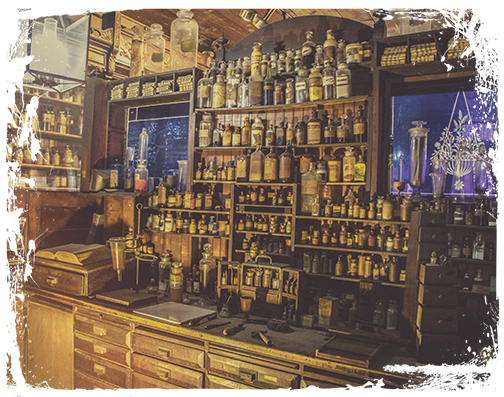
Historically, North Americans have treated doctors, surgeons, and pharmacists like gods. This inclination is an odd, perhaps misguided choice, considering this country’s long tradition of poisoning or butchering patients in their hours of desperate need. Which may be why one of the most haunted buildings awaiting visitors of modern-day New Orleans is our Pharmacy Museum. Located in the French Quarter, the building was originally home to the very first regulated pharmacy in the country and run by Louis Joseph Dufilho, Jr., aka America’s O.G. licensed pharmacist. With a spacious street-level store, courtyard full of medicinal plants, and two stories of upstairs living quarters which eventually were turned in a medical ward for those dying of yellow fever, the building was an essential part of the life in the early French Quarter, patronized by some of the sickest people New Orleans could cough up. 

Dr. Joseph Dupas, who purchased the pharmacy building from Dufilho in 1855 for $18,000, was a purported mad doctor—his sinister experiments some of those eventual yellow fever patients were subjected to will be discussed in a follow-up post. But on an average day you’d easily come face to face with a variety of demented and questionable implementations. To name a few: leeches, opium, cocaine, alcohol, arsenic, and a lotta bootleg voodoo remedies being sold under code names to white patrons too embarrassed to support healers of color. 

You know, typical Walgreens stuff. 

The New Orleans Pharmacy Museum

The New Orleans Pharmacy Museum

AIN’T NO PARTY LIKE A PHARMACIST’S PARTY

Much of early “medicine,” no matter how dignified titles like “licensed pharmacist” make it sound, were just intoxicants, like pure grain alcohol, with a dash of something therapeutic thrown in because science y’all. Some medications were genuinely beneficial plant or chemical extracts, but as “modern medicine”—and the propaganda advertising it—rose, patrons affluent enough to invest at pharmacies began turning away from the natural remedies and get into “the hard stuff." Only poor people and people of color relied on dirty roots and witch’s brews, you see. Plus it was hard to argue drinking ginger tea felt better than smoking opium when New Orleanians were feeling funky. 

Here are a few of New Orleans’ favorite bad medicines, and their vile side effects, from days gone by:

Arsenic, Mercury, and Lead. 

  • “The only difference between poison and medicine is the dose,” the old adage says, and it’s mostly true. Nearly anything, from Vitamin A to baby aspirin, can be used as a therapy or a deadly agent depending on how much you’re shoveling into a human body. The trouble is that we didn’t fully understand until the last century how much damage even a pinch of poison could cause, especially in the case of heavy metals which accumulate in tissues for years before organs fail and cancers grow. One example is arsenic, a known carcinogen that New Orleanians used to treat sexually transmitted diseases. Nobel Prize winner Paul Ehrlich actually turned arsenic into Salvarsan, a famous syphilis treatment which was used with some efficacy for years until the discovery of penicillin. Mercury, the highly toxic heavy metal, was also used to heal the genitals of unfortunate NOLA denizens, usually in the form of ointment or pills for syphilis sores. It was also found in gum powders formulated to help teething babies—because what parent wouldn’t want to rub a neurotoxin into their child’s mouth? Another toxic heavy metal, lead, also made the cut. Lead oxide was the remedy of choice for boils and skin ulcers for centuries, while lead acetate was used to treat tuberculosis. Some pharmacists took the party to the next level and used a combination of lead acetate and opium as a solution for loose bowels...not exactly Imodium. Side Effects: Heavy metal poisoning causes abdominal cramping, vomiting, shortness of breath, tingling hands and feet, paralysis, dementia, infertility, anemia, seizures, coma, insanity, and death. 

A syphilitic man, wife, and mistress, being treated via mercury pills

A syphilitic man, wife, and mistress, being treated via mercury pills

LEECHES

  • When you live in a swamp one thing abundantly available is leeches. In pharmacies, they even got their own fancypants porcelain jar! Moreover, compared to some of the crazy shit early medical pros were using on people, those wriggling buggers were actually one of the most effective and least dangerous therapeutic interventions a patient could hope to receive. Because leeches secrete anticoagulants—blood thinners—via saliva into whomever they’re latched on to, they’ve used as a cheap and low-risk treatment for blood clots. In early New Orleans, they were also used to treat infections and neurological fits believed to be caused by “an excess of blood.” Some practitioners used them to bring down localized swelling in cases like tonsillitis and hemorrhoids...yes, leeches for hemorrhoids. Side Effects: Oozing and potentially deadly bacterial infections from tainted leeches; having a leech dangling from your swollen anus. 

Casual Leeches

Casual Leeches

Blood Letting

  • Speaking of “an excess of blood,” we used to blame a LOT of health problems on the theory a person could have too much blood in their body, or too much “bad blood.” Since the fifth century, people all over the world have tried to solve infections, fevers, and emotional issues like hysteria by opening veins and hoping the fever would run out of the body. Unfortunately, that’s not how blood or infections work, at all, and overzealous blood-letters could easily bleed an already ailing patient to death—like the time doctors pulled around 3.75 LITERS, more than half the blood in the entire human body, out of founding father George Washington as he lay struggling with an upper respiratory infection. (That intervention was...um...not effective, PS. Washington died.) Anyway, bloodletting didn’t happen in the pharmacy itself, but the shop was a place that could stock a variety of sharp, weird, Saw II looking devices used to puncture veins and control blood flow. Side Effects: Fainting, anemia, infection from rusted or unclean tools, bleeding to death even if you’re the President.  

Bloodletting

Bloodletting

Opium

  • One of the most potent pain killers eeeeeeever, it’s not been hard to understand why opium has had such staying power throughout medical history. A vital part of battlefield medicine during the Civil War—you really, REALLY didn’t want to have a limb amputated or take a bullet without it—the substance was a boon for healers and the recently mauled alike. Moreover, because of its constipating effects, opium was a reliable aid for common illnesses where explosive diarrhea could become deadly, including cholera and dysentery. Patients suffering from racking coughs or severe insomnia may have been prescribed remedies with small quantities of opium mixed in, and those with anxiety attacks or severe depression found getting wrecked on opium—the most potent narcotic on the market at that time—to be a pretty satisfactory alternative to talking about their feelings. Unfortunately, just like today, addiction was a serious problem. Physicians using opium to treat mood disorders often noted that some depressed patients became verbally abusive while on it, and withdrawals (chills, grey face, uncontrollable sweating, tremors, delirium, vomiting, searing nerve pain, etc.) could be worse than the illness it was initially prescribed to treat. It is estimated that around 200,000 opium addicts lived in the United States during the 19th century, a number that seems almost adorably tiny compared to the millions of opiate addicts modern medicine has managed to create in the last few decades. Side Effects: Nausea, vomiting, weight loss, agonizing constipation not received by enemas, sedation, impotence, inability to orgasm, heart attack, respiratory arrest, death. 

Opium and Cocaine

Opium and Cocaine

Cocaine

  • If there’s one “wonder drug” medical professionals loved the most, cocaine was it for a while...and not just because it made early settlers feels like Scarface. Cocaine was a highly effective analgesic (a numbing agent) and stimulant and made a variety of surgeries and medical procedures easier to execute AND survive. Just a few drops of cocaine solution could paralyze and numb an eyeball entirely, making ocular surgery pain free for the first time. Sinus surgery, removing adenoids or tonsils, and oral surgery all benefited greatly from the advent of cocaine, and patients loved not having their body cut into with scalpels while they could feel it. As of 1900, New Orleanians could walk into the pharmacy and grab a gram of pure cocaine for $0.25, using it to numb tooth pain, boost mood, or stay awake. Some parents used it to treat “shyness” in children. Medical professionals often likened it to coffee or tea and scoffed at its addictive risks. By the 20th century, cocaine was one of the Top 5 best selling pharmaceuticals in the nation, with coke-laced sodas, cigars, snuff powders, and injections readily available. Some heavy housewives and portly gentlemen even used it as an appetite suppressant, making cocaine one of our earliest “diet pills.” You know how this story ends, of course—addiction, tragedy, and eventual government regulation. Not surprisingly, a large number of our early coke addicts ended up being doctors and pharmacists, which may explain our long medical tradition of docs talking relentlessly and not being able to listen for more than 7 seconds without interrupting. Side Effects: Racing heartbeat, heart attack, clenched jaws, insomnia, mania, psychosis, renal disease, death, and writing 46-minute jazz songs with no melody.


Visitors with bent minds and an interest in medical macabre can get a glimpse of bottles, boxes, needles, implements, and all kinds of odd medical paraphernalia by visiting the Pharmacy Museum itself. To learn more about some of our city’s dark history of plagues, medical abuse, and turning poor patients into very bitter ghosts, book a tour with Hottest Hell, and subscribe to our newsletter for weekly blog updates.